
Evidence-led beginner guide
Beginner Mistakes With Wenwan Walnuts (and How to Avoid Them)
Most first-year problems come from a small set of avoidable decisions. A beginner buys for shine instead of condition, chooses a pair that does not fit the hand, or tries to force months of surface change into a few days. This guide turns those mistakes into a simple routine that protects both the pair and the enjoyment of learning.
Background
Wenwan walnuts are tactile objects that reward repetition, observation, and patience. Online listings encourage the opposite: fast decisions, dramatic photographs, and confident variety claims. A new collector therefore needs a process that slows the decision down. The aim is not to buy the rarest name or create the darkest surface. It is to choose an honest pair, learn how it moves, and keep its environment stable enough that natural change can be observed over time.
In plain terms
A beginner mistake is any common action that causes avoidable shell damage, hides the true condition of a pair, wastes money, or creates expectations the hobby cannot meet. Normal wear, small asymmetry, and slow colour change are not mistakes; they are part of working with natural shells.
Why it matters
Most early errors are cheap to prevent and difficult to undo. A cracked shell cannot be restored to its original structure, a coating can obscure the surface you wanted to study, and an uncomfortable pair is likely to remain in a box. Learning a conservative routine at the beginning produces better decisions long after the first purchase.
A step-by-step approach
- Buy one learning pair first. Choose a modest pair with clear condition photographs and spend several weeks using it before considering another. Real handling teaches fit, texture, and balance better than comparing listing photos.
- Check fit before status. A pair should fill the palm without forcing the fingers apart. If you cannot handle it in person, compare the listed width with an object you can hold and ask for measurements of both walnuts.
- Record the starting condition. Photograph the top, sides, base, and any marks under plain light. These images become evidence of gradual change and prevent memory from turning every small difference into a problem.
- Use clean, dry hands. This simple habit reduces grime in the grooves and removes the imagined need for aggressive cleaning. Stop if the pair becomes damp or uncomfortable.
- Choose a stable storage place. Keep the pair away from windows, heaters, hot cars, damp rooms, and sudden environmental changes. Stability matters more than buying accessories.
- Change one habit at a time. If you adjust handling or brushing, do not also add oil or a new cleaner. A single change lets you see what actually helped or caused a problem.
How to judge it
- A useful first pair feels comfortable enough that you want to pick it up regularly.
- Honest condition is more valuable for learning than dramatic colour with an unclear history.
- The two shells should look related in size and outline without appearing mechanically identical.
- Healthy early change is usually gradual and more visible on high contact points than deep grooves.
Original photo evidence
These photographs were taken for Play Walnut. The notes describe only what the image can support and state what remains unknown.
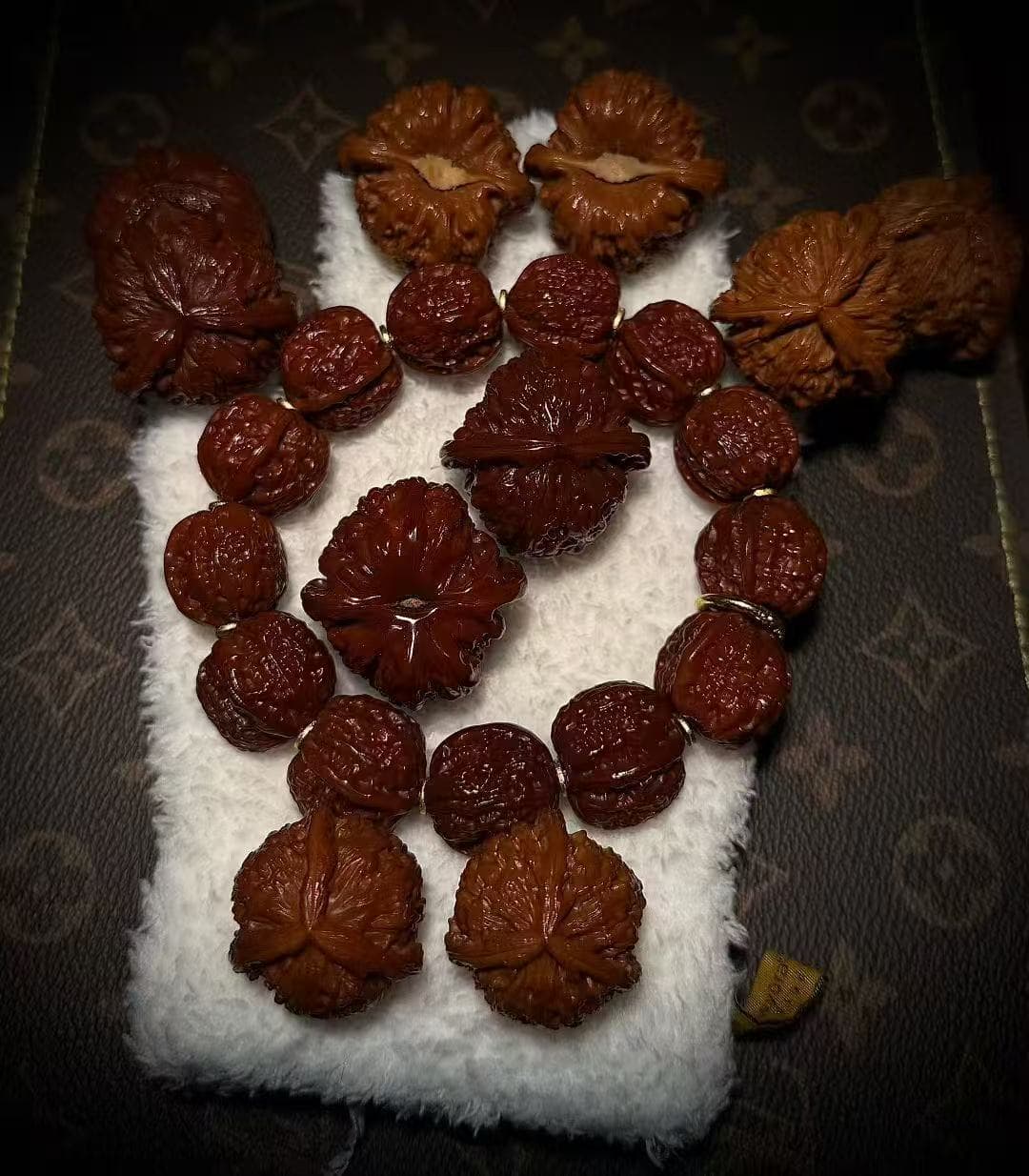
Original reference photograph for a whole-pair check
What to observe: Begin with the overall outline, then move to texture and visible condition instead of letting one glossy area control the decision.
What this photo cannot prove: This image alone cannot verify species, origin, age, treatment history, or market value.
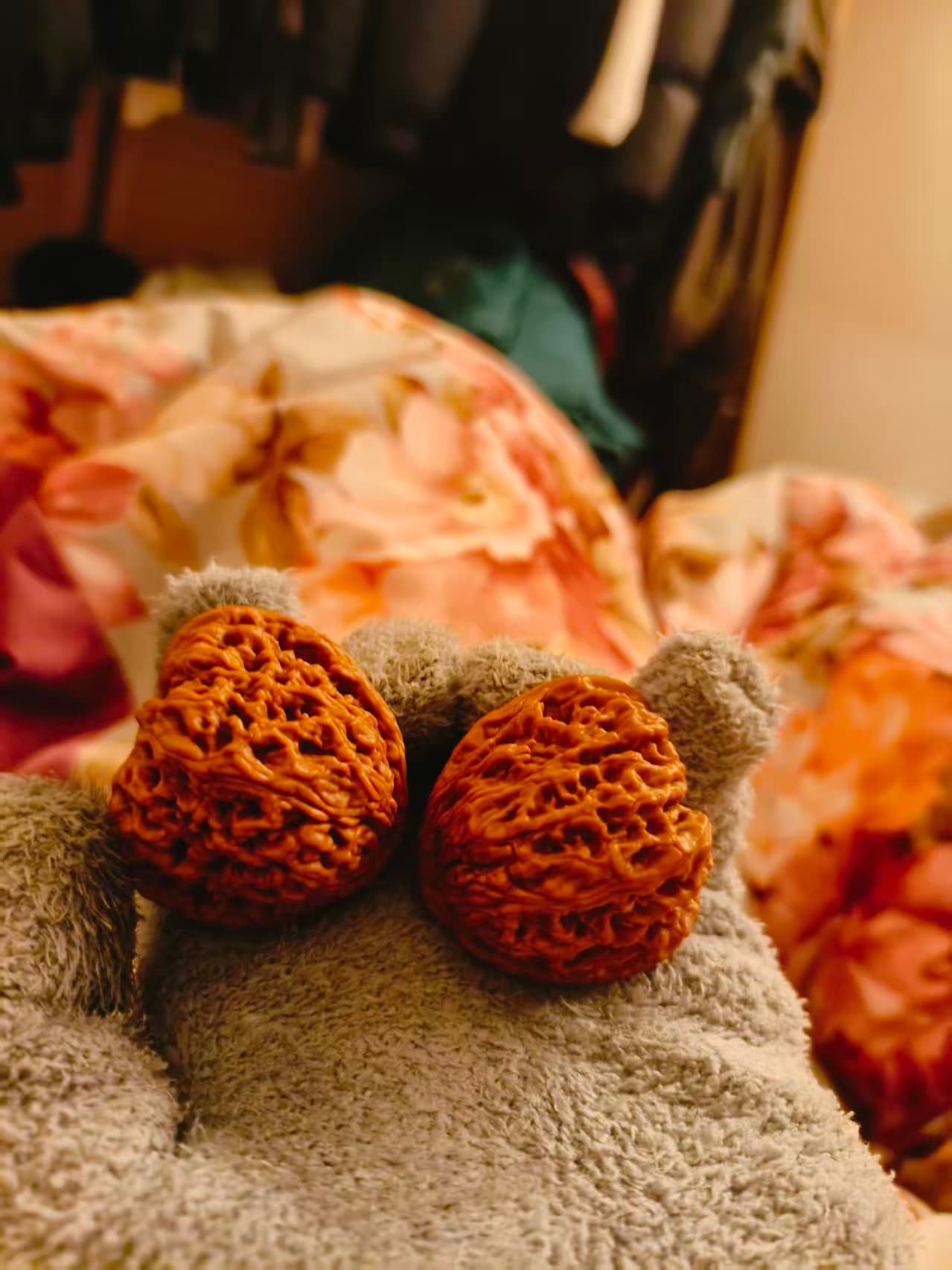
Original reference photograph for condition practice
What to observe: Use the grooves and high points as a repeatable scan path when looking for cracks, filler, dye, or uneven polish.
What this photo cannot prove: A photograph can flag areas for inspection but cannot replace handling, side views, measurements, or seller disclosure.
Original photography and editorial analysis by Play Walnut Editor.
Real-world examples
- A buyer chooses the largest pair in the listing, then avoids using it because the fingers must stretch to keep control. A smaller pair would have created more practice and less strain.
- A newcomer applies oil every few days to chase colour. The surface becomes uneven and attracts dust, making it harder to understand what handling alone would have done.
- A pair is displayed on a sunny shelf. One side receives more heat and light, so the owner later sees uneven colour and a hairline opening near the seam.
Common mistakes
- Treating shine as proof of age, quality, or genuine patina.
- Buying by a famous variety name while ignoring measurements, condition, and fit.
- Soaking or scrubbing a shell because a dry brush does not produce an instant result.
- Handling for long sessions through pain, numbness, or skin irritation.
- Storing the pair in direct sun, near heat, or in a sealed damp container.
- Comparing a new pair with edited seller photographs instead of its own starting images.
Advice for first-time owners
Treat the first year as practice rather than performance. The best learning pair is not the most expensive one; it is the pair whose condition you understand and whose size lets you develop a calm movement. Keep a simple photo record, use conservative care, and ask what evidence supports every strong seller claim. If an action promises instant colour, guaranteed value, or effortless authentication, it is probably solving the wrong problem.
Key takeaways
- Comfort, condition, and consistency matter more than size, shine, or a prestigious label.
- Clean hands and stable storage prevent more problems than products can repair.
- Your own photographs are the fairest record of change.
- A market name is context, not proof of species, origin, age, or value.
Frequently asked questions
Should a beginner oil Wenwan walnuts?
Routine oiling is not necessary for a first pair. If the previous treatment is unknown, adding another substance makes the surface harder to read. Start with clean, dry handling and stop if the shell becomes sticky or smells unusual.
How soon should I see patina?
There is no universal schedule. Shell condition, handling frequency, storage, and earlier treatment all matter. Compare photographs over months rather than expecting a dramatic weekly change.
Is an expensive pair easier to learn with?
Not automatically. A costly pair may make a beginner afraid to use it. An honest, comfortable pair with clear condition is usually a better teacher.
The short version
Beginners do not need a complicated ritual. They need an honest pair, a comfortable movement, clean hands, stable storage, and enough patience to observe rather than force change. Those habits protect the shell and make every later buying decision more informed.
Sources, method, and limitations
- Peer-reviewed Wenwan walnut identity study — Used for the cautious point that collector names can cover more than one Juglans lineage and cannot prove species by appearance alone.
- Play Walnut editorial method — The routine reflects conservative handling, original photography, and comparison of visible condition. It is educational guidance, not authentication, medical advice, or a valuation service.