
Shape
Start with the overall outline, crown, shoulder, and base. Those details help you compare market shape labels, but a photograph alone cannot authenticate a named variety.
Describe the visible form before applying a label.
Compare varietiesOriginal visual archive
Study Chinese hand walnut examples photographed by the site owner, then narrow them by media type or observation category.
Original photographs by Play Walnut. Every caption is based on what is visible in the frame; an image is not used to invent a variety, origin, age, value, or authenticity claim.
Start with the overall outline, crown, shoulder, and base. Those details help you compare market shape labels, but a photograph alone cannot authenticate a named variety.
Describe the visible form before applying a label.
Compare varietiesFollow major ridges from crown to base, then compare groove depth and branching. Lighting and angle can make the same relief look very different.
Texture can be described from a photo, not fully authenticated by it.
Texture glossaryCompare two shells in the same frame: outline, dimensions, texture scale, colour under shared light, and visible condition. Weight and comfort still require measurements or handling.
Natural pairs can coordinate without being identical.
Selection guideCompare highlights with shadowed grooves and ask what lighting was used. Colour and gloss alone cannot prove age, natural patina, oil use, wax, or polishing history.
Surface appearance is evidence to question, not a complete history.
How patina developsScan high ridges, grooves, crown, and base for visible cracks, losses, filled areas, or abrupt colour changes. Confirm uncertain areas in person or through closer views.
A photograph can screen visible concerns, not certify condition.
Repair and treatment checksThe collection also includes walnut-bead objects and real storage or display scenes so beginners can distinguish object types and photographic context. Continue with the variety guide, selection checklist, and beginner guide.
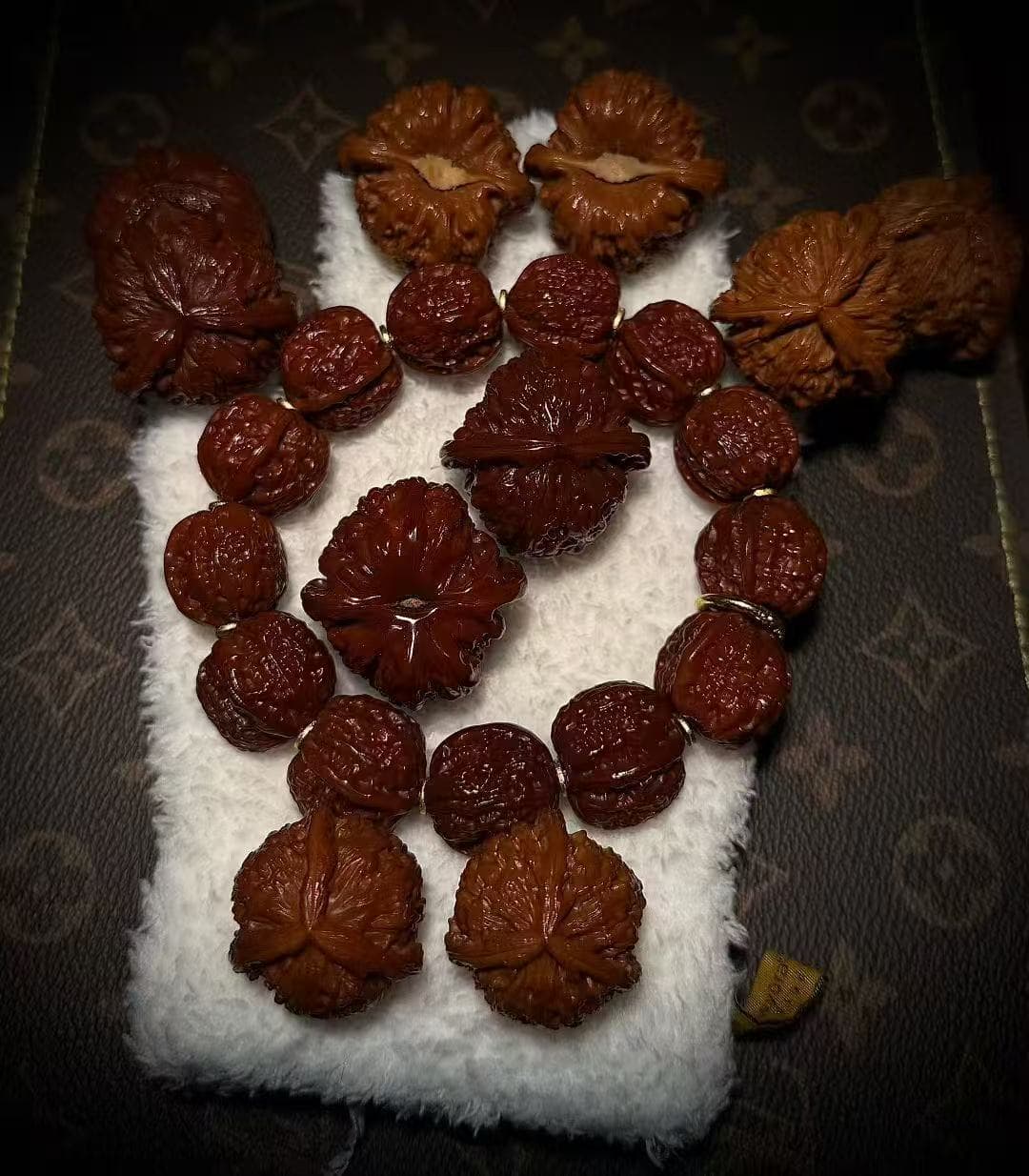
Ref. 1 / Collection Reference
Mixed Walnut Collection on White Fabric (Photo 1)
Use the shared background to compare relative size and colour, while remembering that the dark room light changes the apparent surface tone.
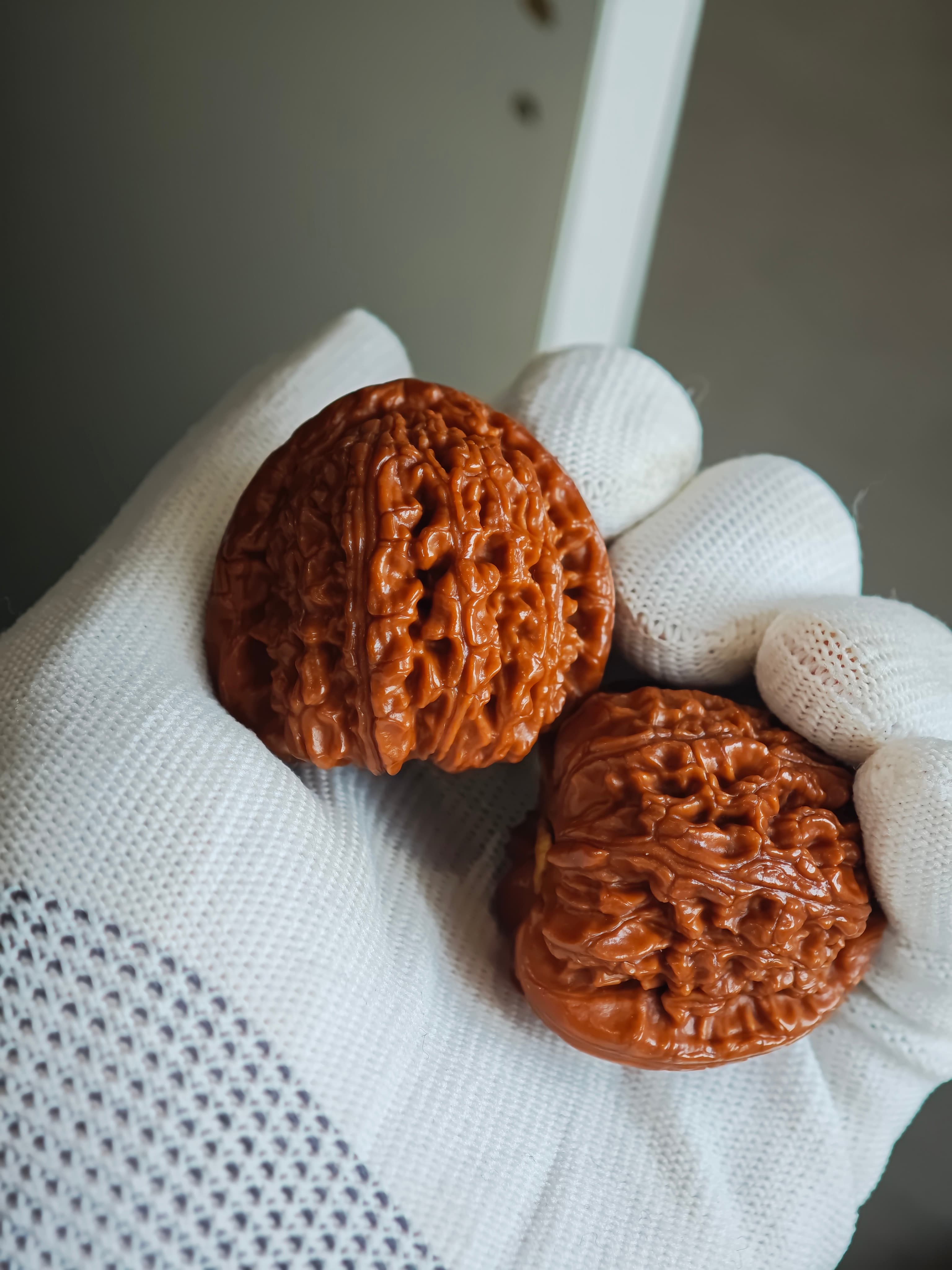
Ref. 2 / Shape Reference
Gloved Pair Showing Side and Base Views (Photo 2)
Trace the main ridge from top to base on each shell and compare how the two outlines widen near the lower half.
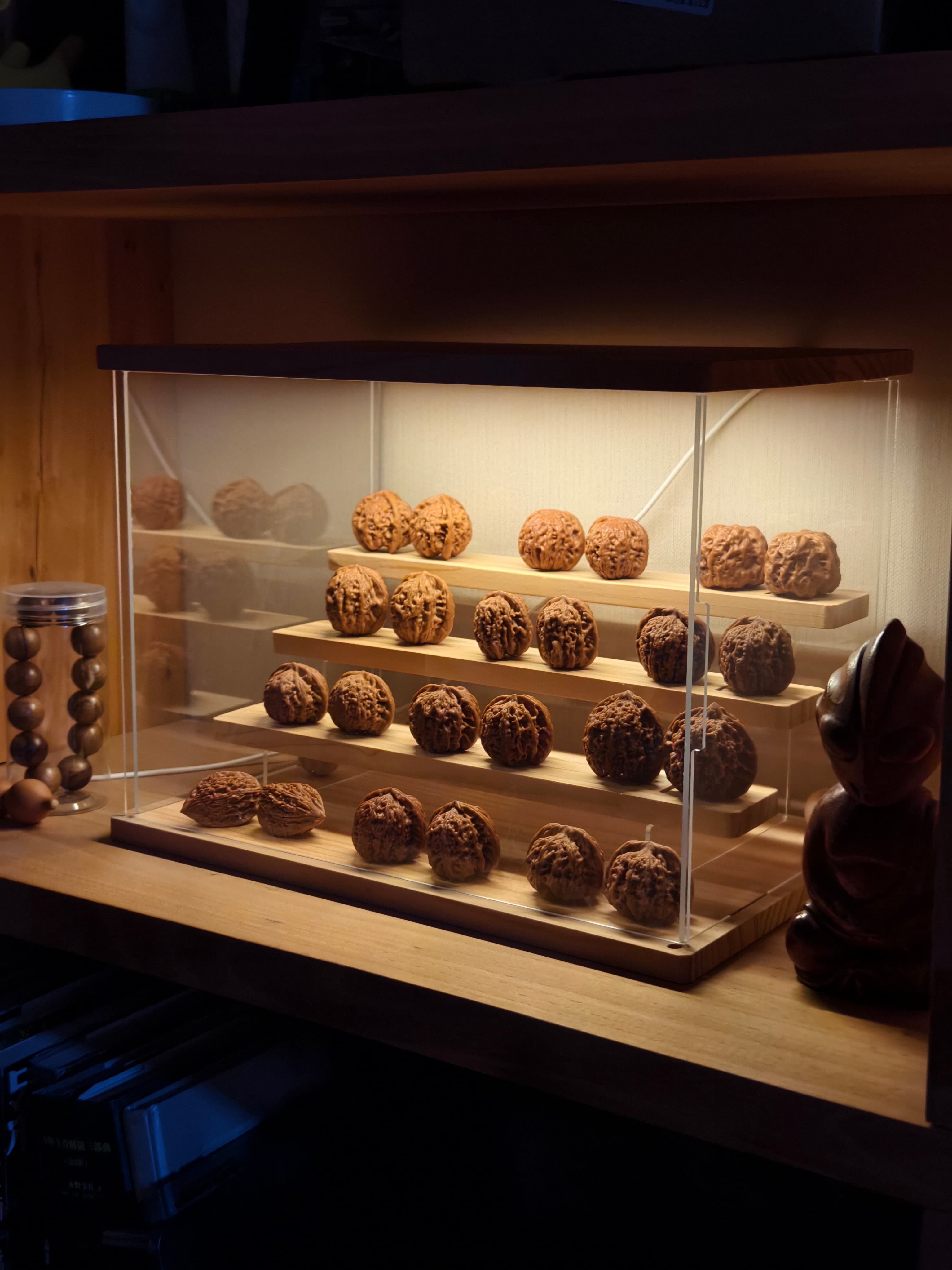
Ref. 3 / Display Reference
Walnut Pairs Inside a Lit Display Case (Photo 3)
Study the spacing and viewing angles, but do not compare colour across rows as if the warm display light were neutral daylight.
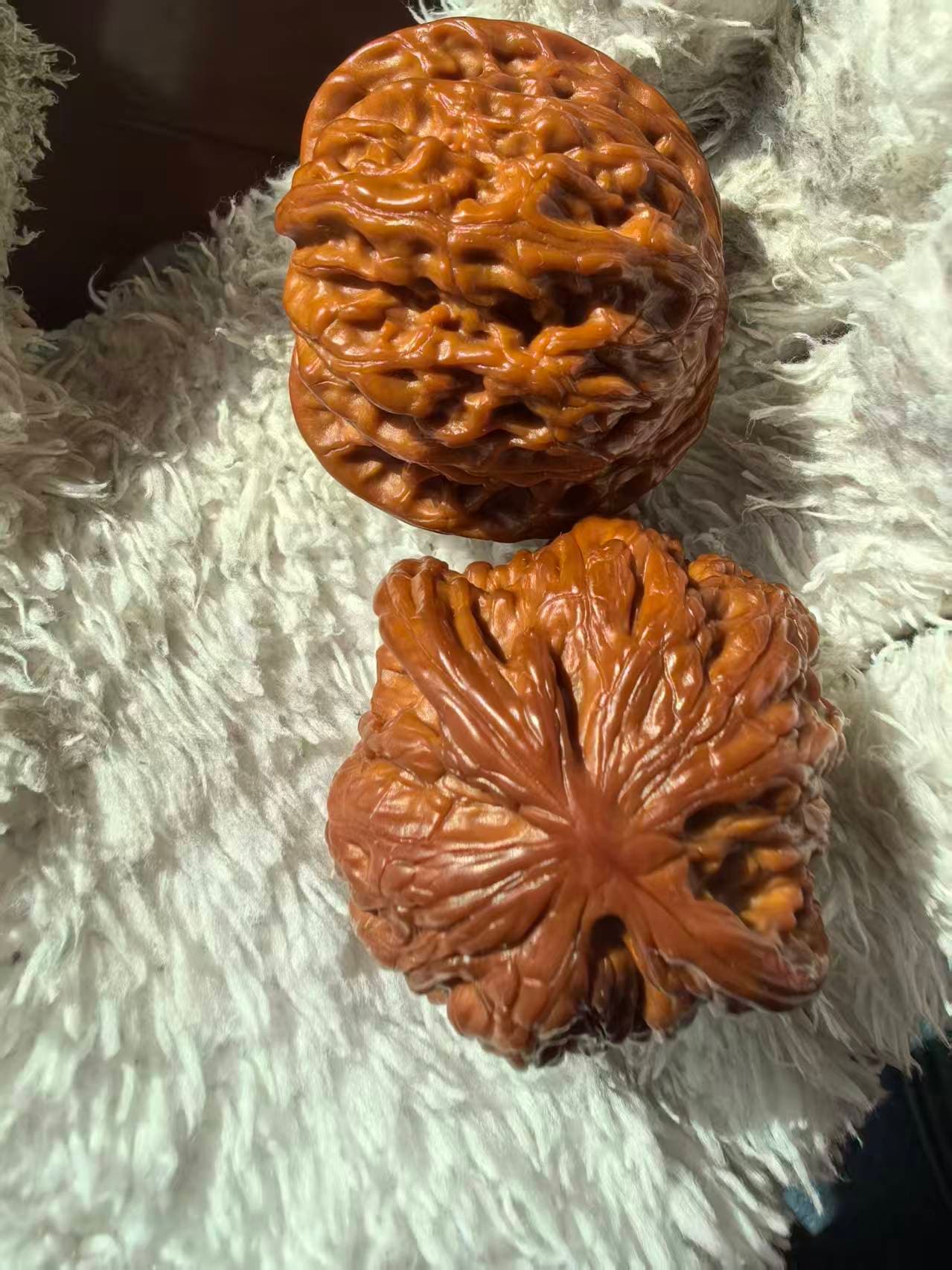
Ref. 4 / Shape Reference
Top and Base Comparison on Textured Fabric (Photo 4)
Compare the crown opening, main ridge direction, and base footprint instead of trying to assign a variety from this single photograph.
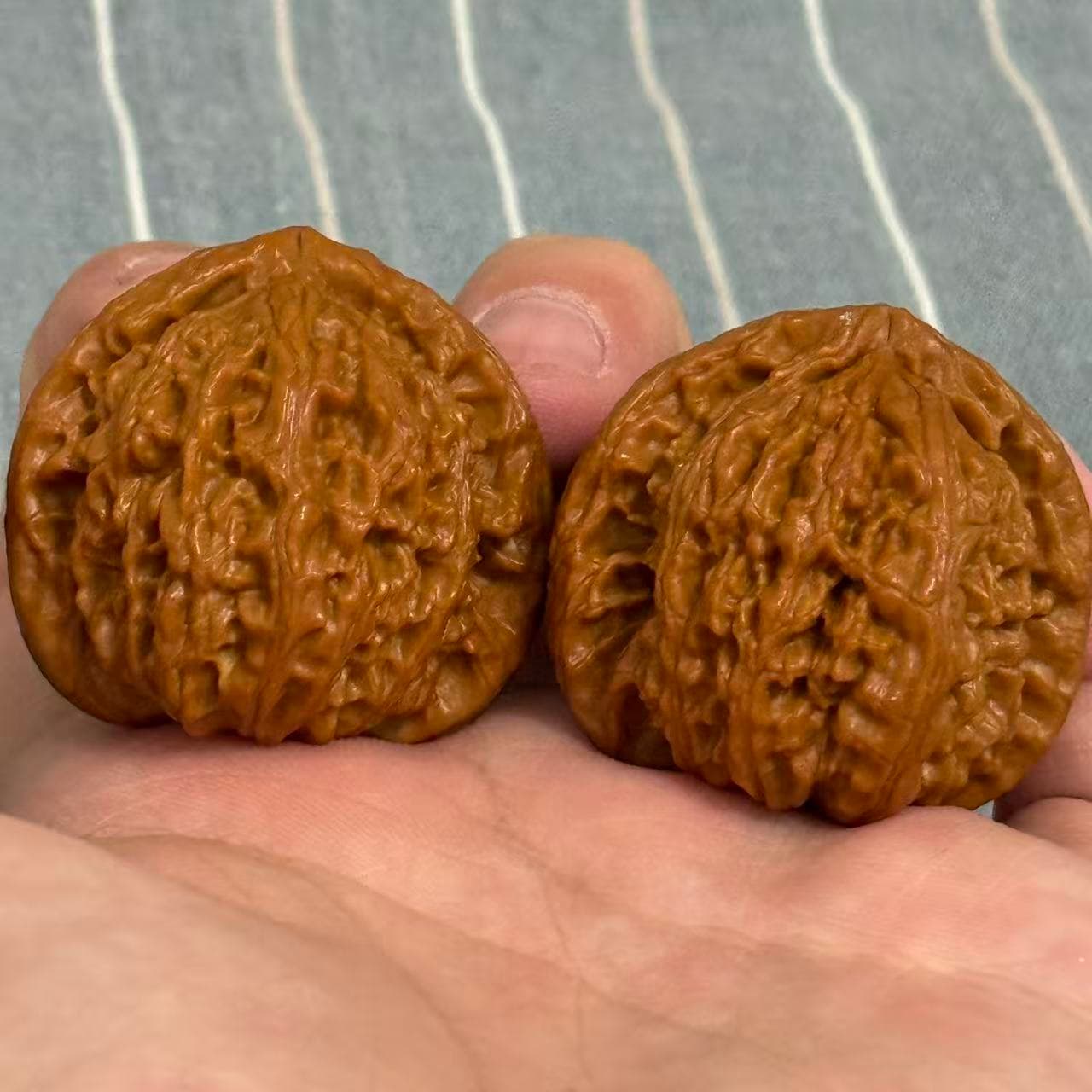
Ref. 5 / Pairing Reference
Rounded Pair Resting in a Palm (Photo 5)
Compare maximum width, shoulder height, base line, and texture scale; the palm gives context but is not a precise measurement tool.
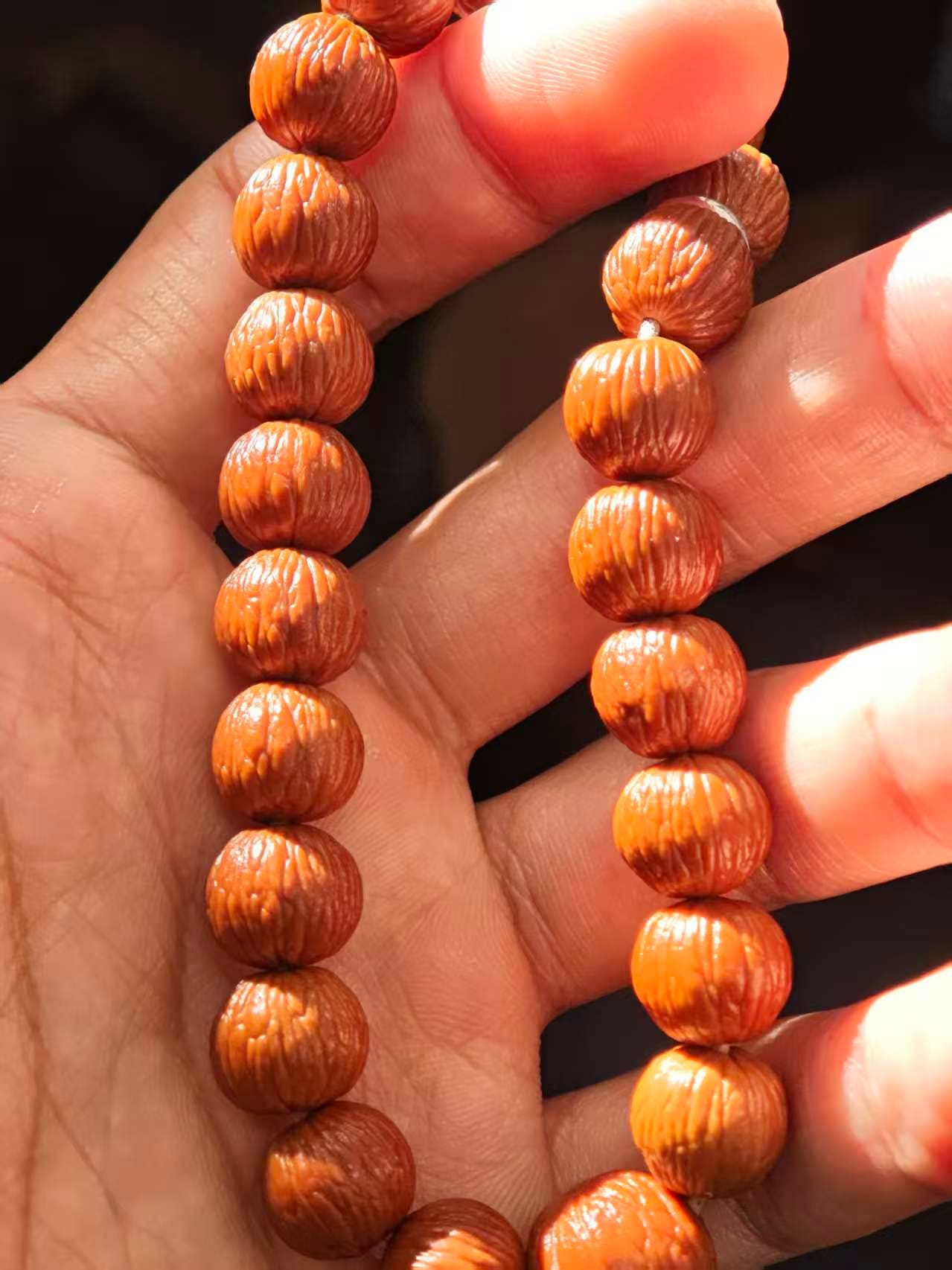
Ref. 6 / Walnut Bead Reference
Two Walnut-Bead Strands Held Side by Side (Photo 6)
Notice the repeated bead scale and hole alignment, and keep this object type separate from paired whole shells when learning terminology.
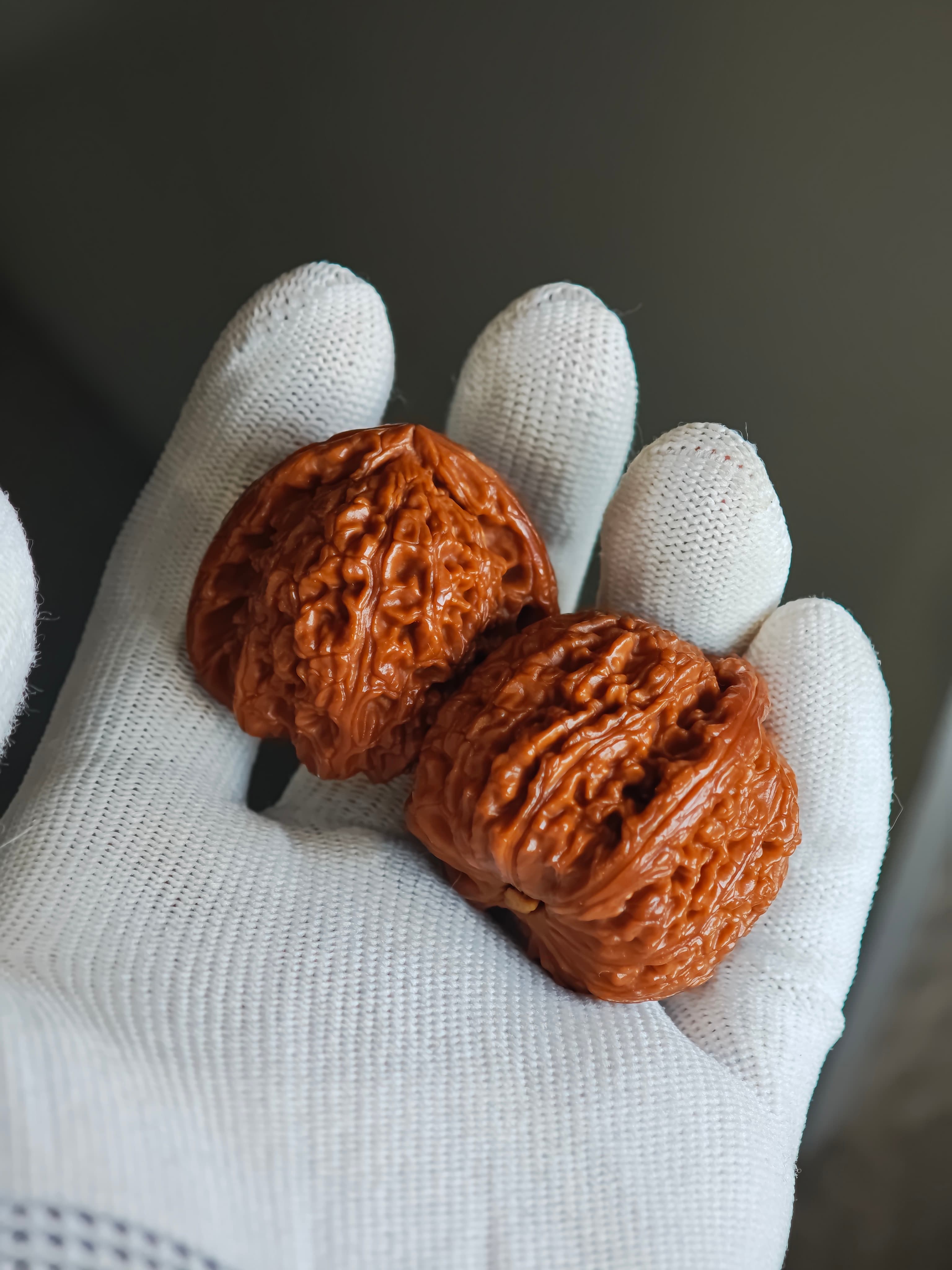
Ref. 7 / Shape Reference
Gloved Walnut Pair at Opposing Angles (Photo 7)
Use the opposing angles to identify which apparent differences come from viewpoint and which remain part of the actual outline.
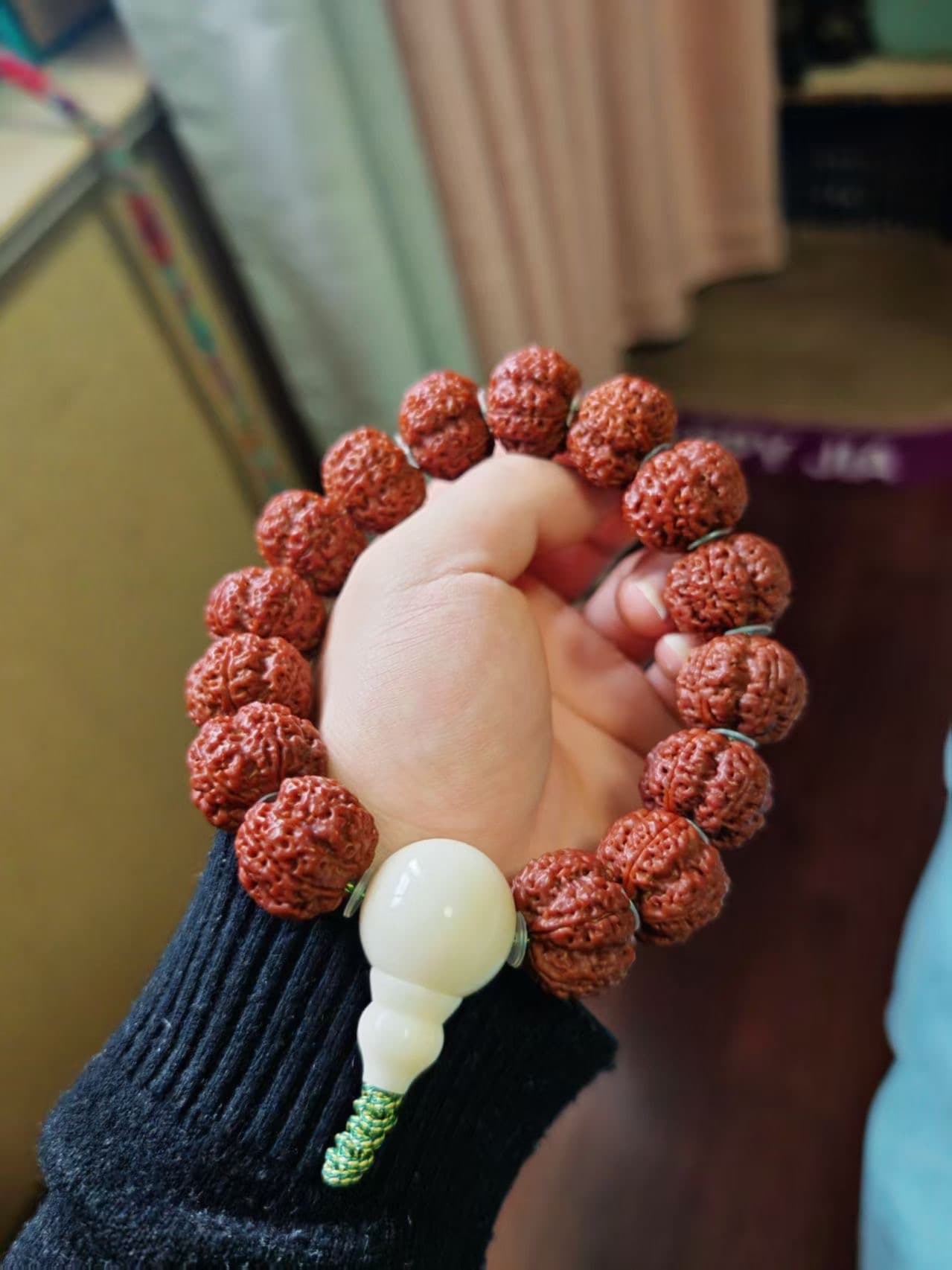
Ref. 8 / Walnut Bead Reference
Walnut-Bead Bracelet Around a Hand (Photo 8)
Read the strand as a complete wearable object: bead spacing, colour variation, and the contrast created by the accent bead.
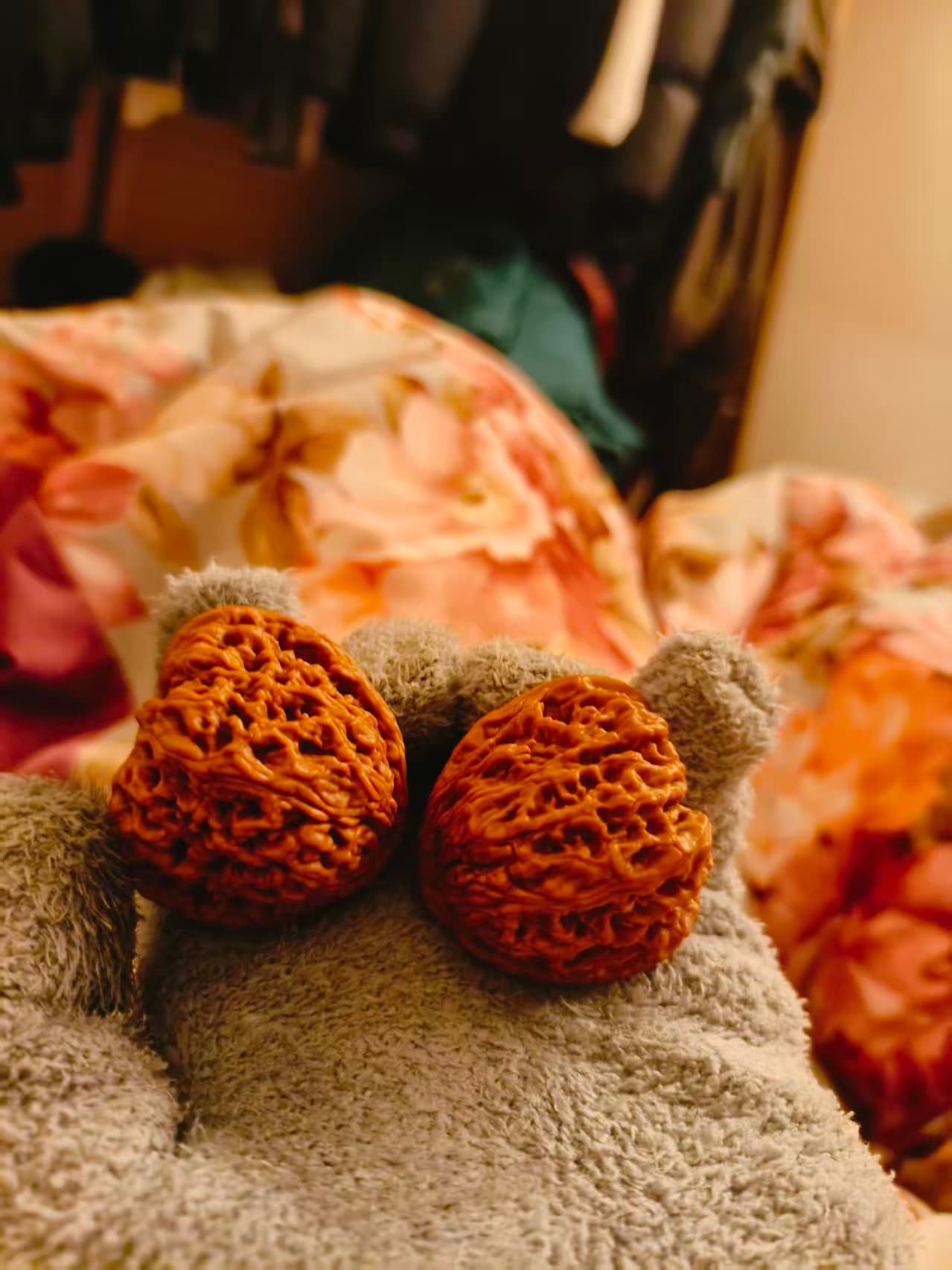
Ref. 9 / Pairing Reference
Small Pair on Folded Neutral Fabric (Photo 9)
Compare the gap between the shells, the direction of each top, and the apparent height without treating the blurred background as evidence of scale.
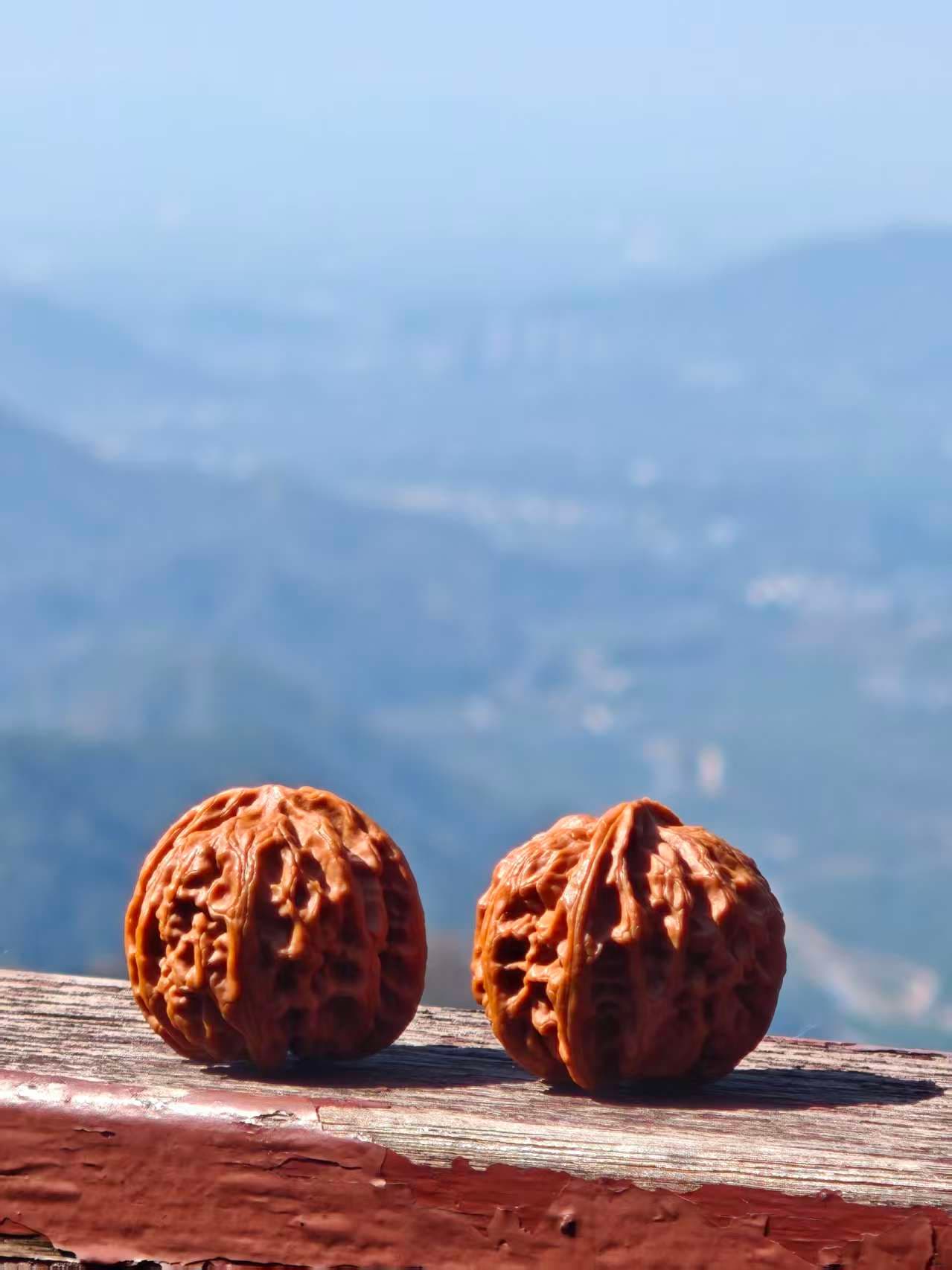
Ref. 10 / Lighting Reference
Walnut Pair Photographed Outdoors Against Mountains (Photo 10)
Use this as a lighting lesson: bright sky and distance haze make an attractive image but are poor conditions for judging exact surface colour.
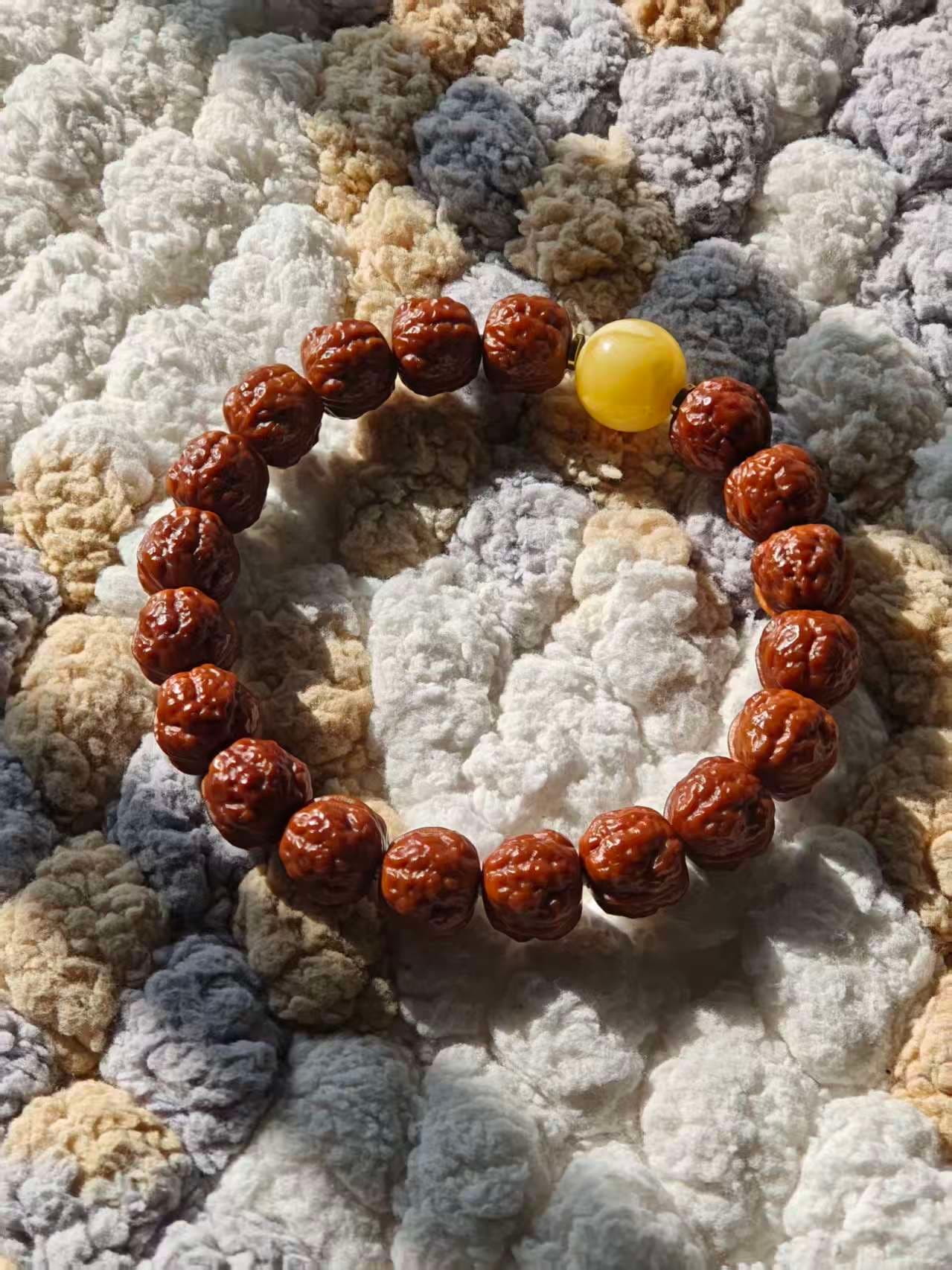
Ref. 11 / Walnut Bead Reference
Walnut-Bead Bracelet on Grey Plush Fabric (Photo 11)
Follow the sequence around the bracelet and compare bead size and surface rhythm rather than judging the strand from one focal bead.
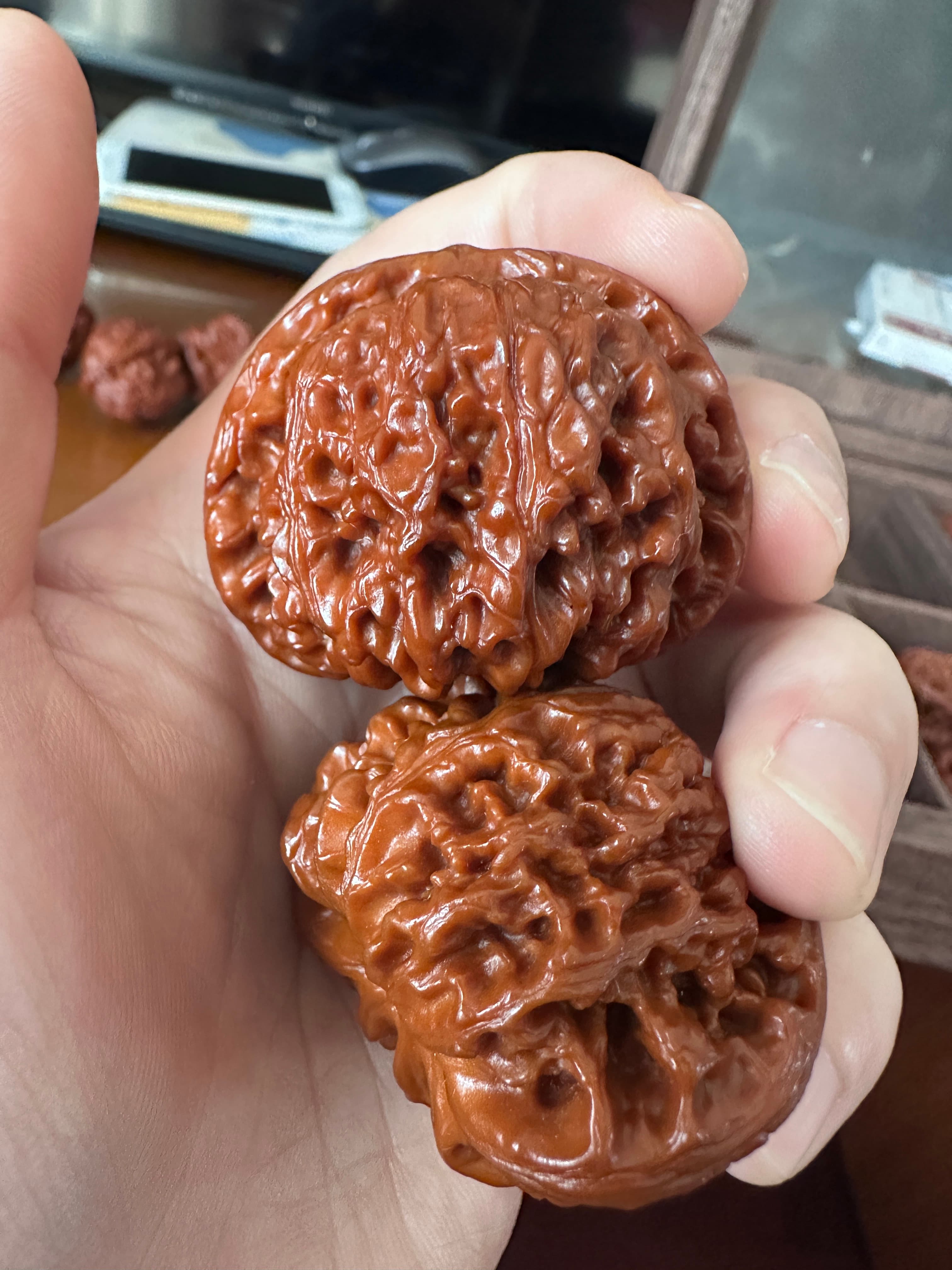
Ref. 12 / Pairing Reference
Broad Rounded Pair in Direct Palm View (Photo 12)
Check whether the main ridge spacing, shoulder width, and lower curves read as related while allowing for natural asymmetry.
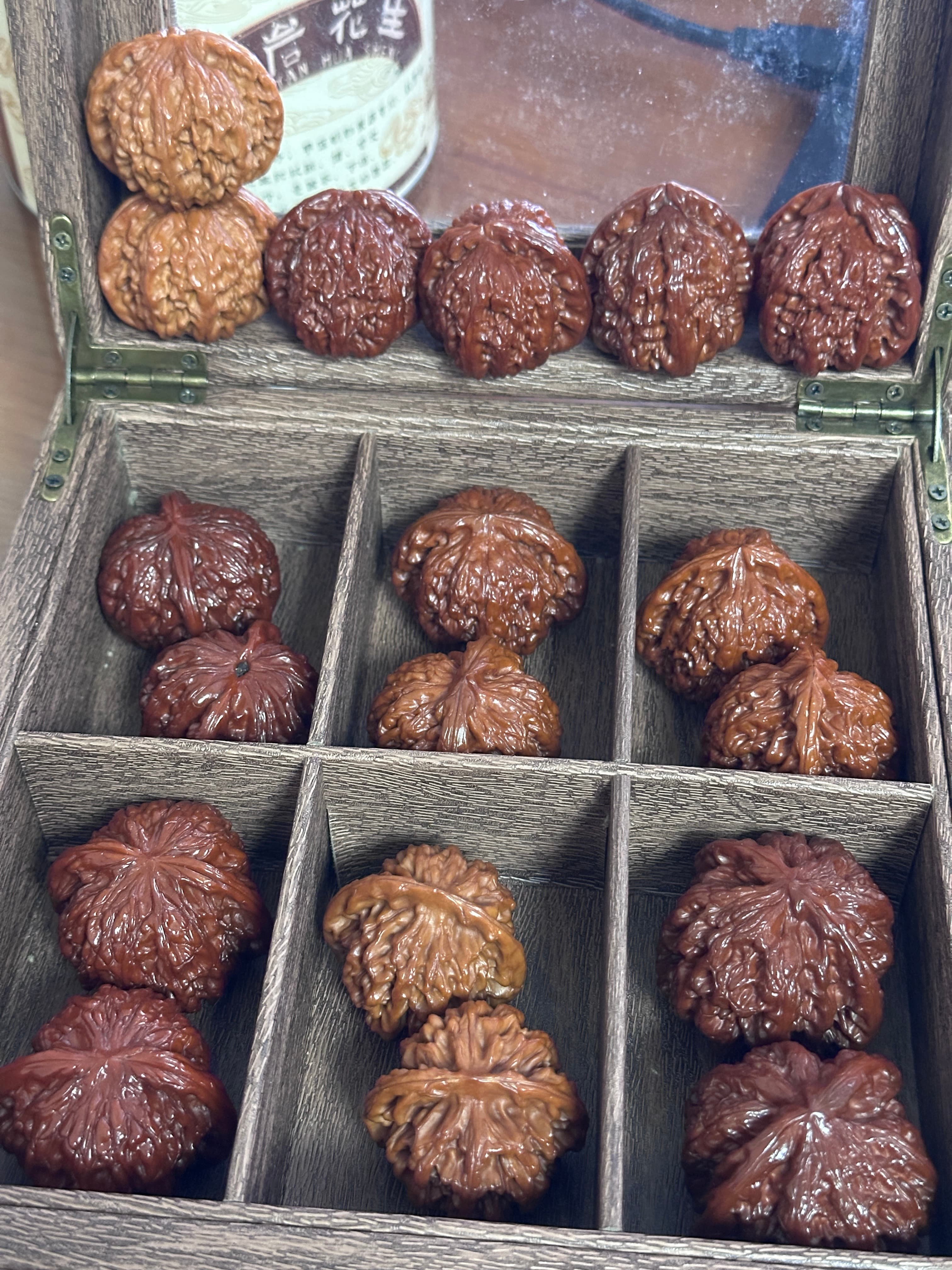
Ref. 13 / Storage Reference
Multiple Pairs Separated in Storage Compartments (Photo 13)
Notice how separation reduces contact between objects; the photograph does not show humidity control, padding quality, or long-term storage results.
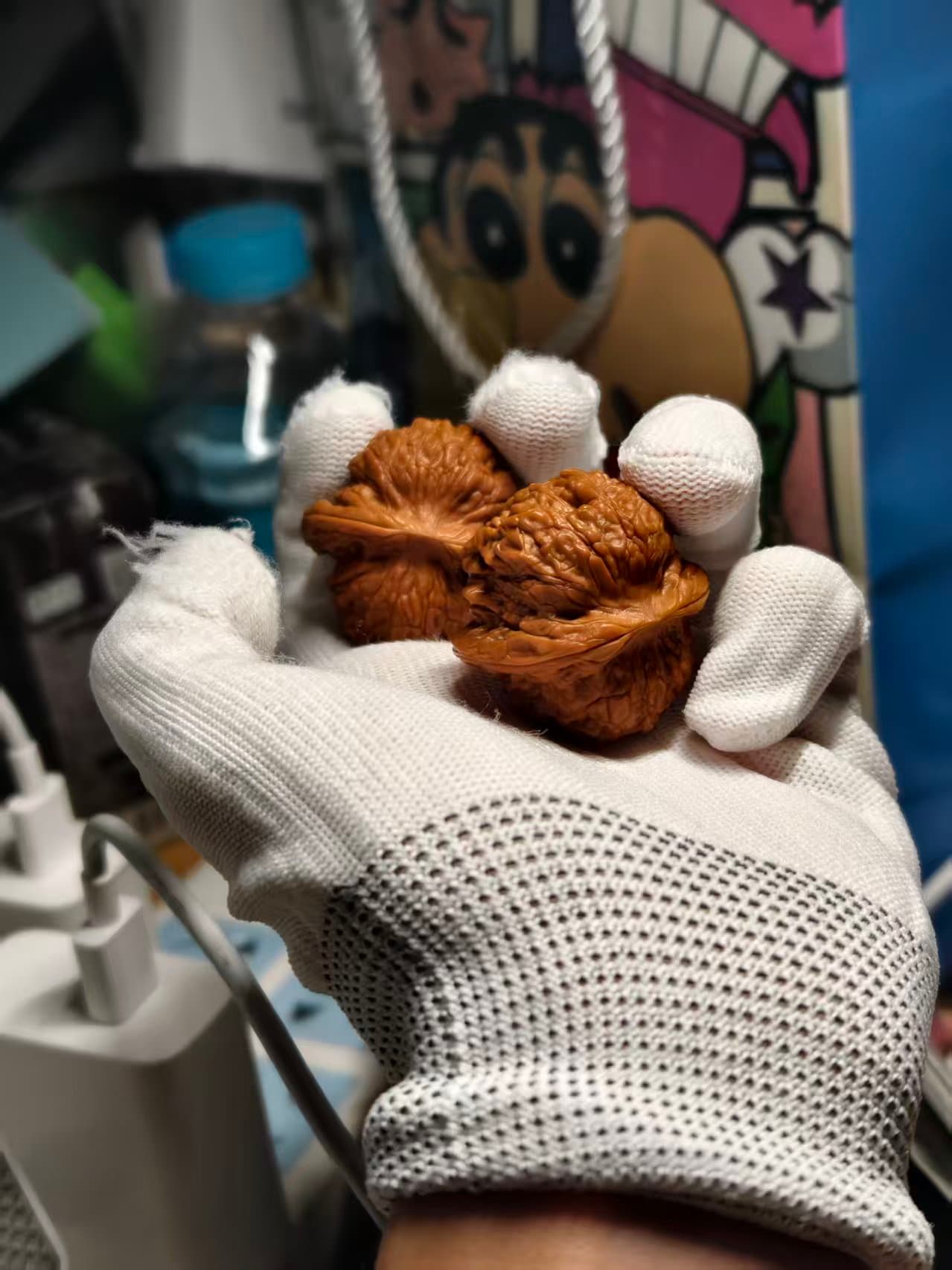
Ref. 14 / Shape Reference
Gloved Pair with Crown and Side Exposed (Photo 14)
Separate the visible angle from the underlying shape by following the outer contour before focusing on the deep internal grooves.
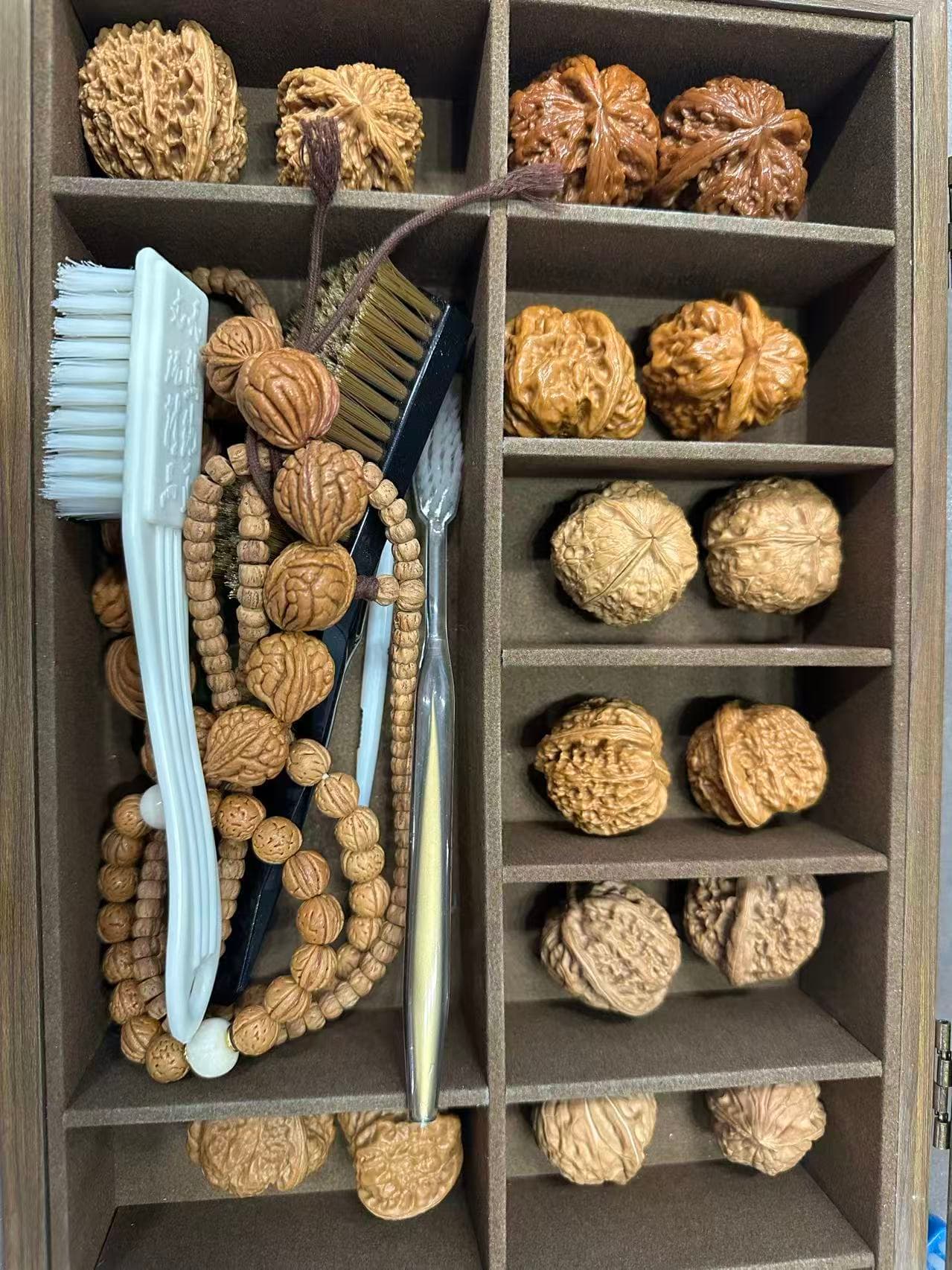
Ref. 15 / Storage Reference
Open Walnut Storage Box with Brushes and Beads (Photo 15)
Inventory what is actually present and note that an open-box photograph cannot confirm ventilation, cleanliness, or safe storage during transport.
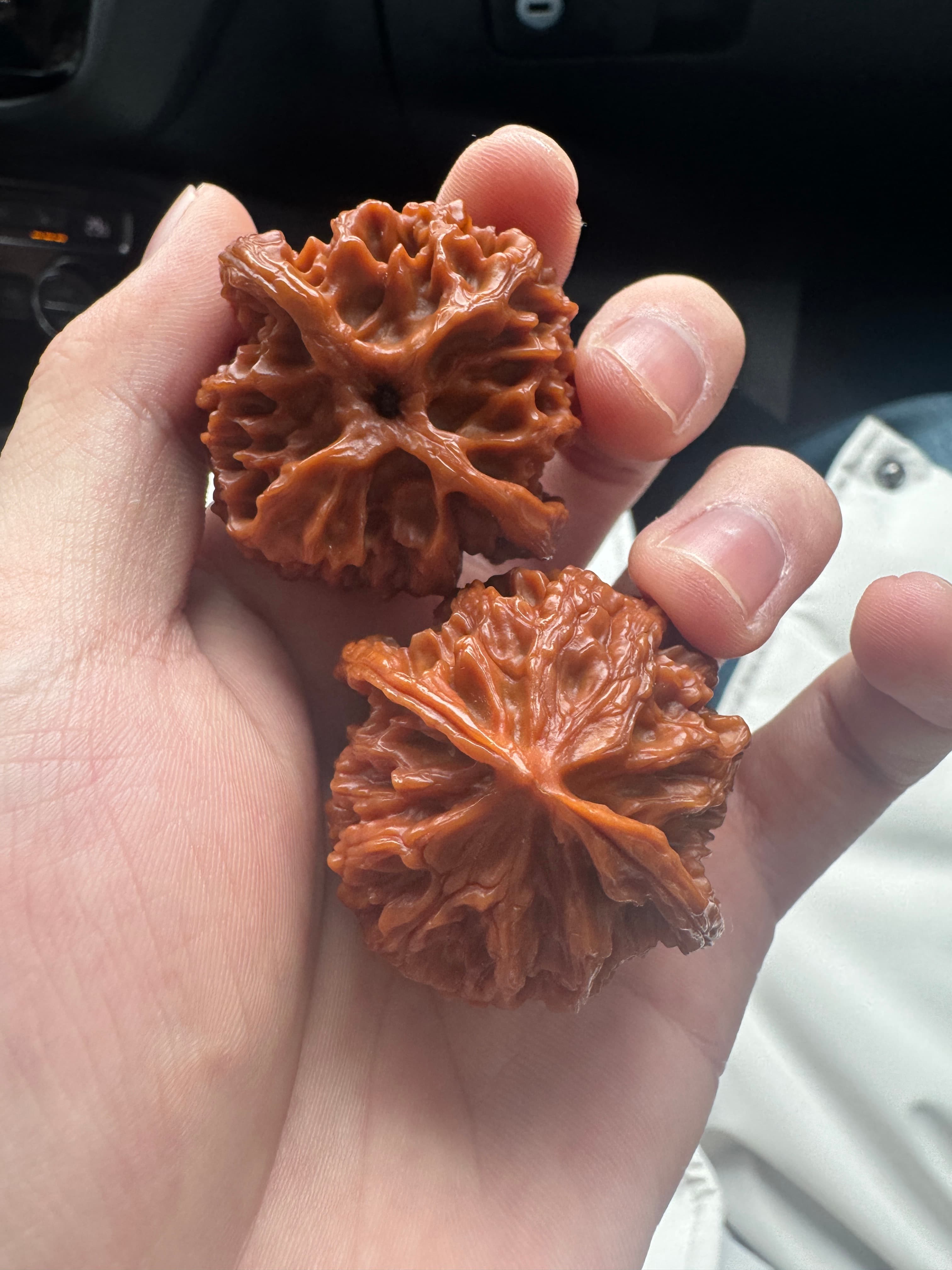
Ref. 16 / Shape Reference
Deep-Ridged Pair Showing Crown and Base (Photo 16)
Compare the depth and direction of major channels, then inspect how those channels terminate at the crown and base.
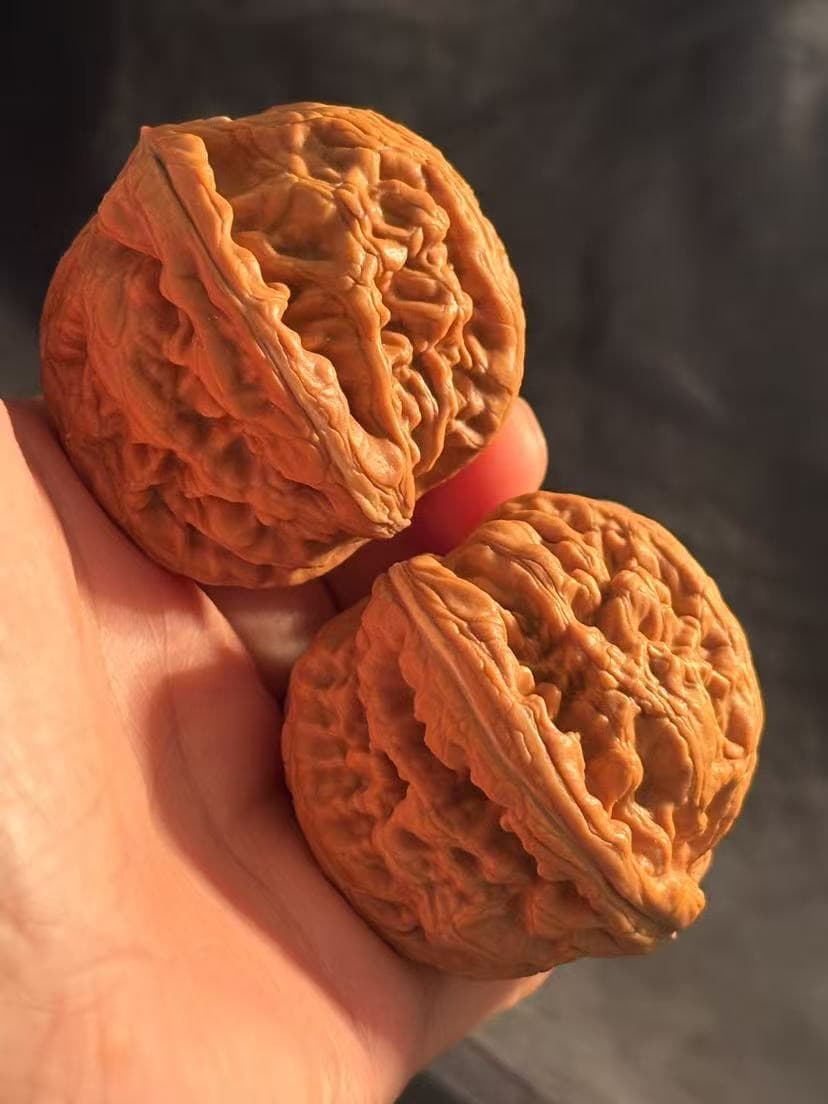
Ref. 17 / Texture Reference
Close Pair with Long Vertical Channels (Photo 17)
Follow one channel from top to bottom on each shell and compare branching patterns without assuming colour equals age or treatment history.
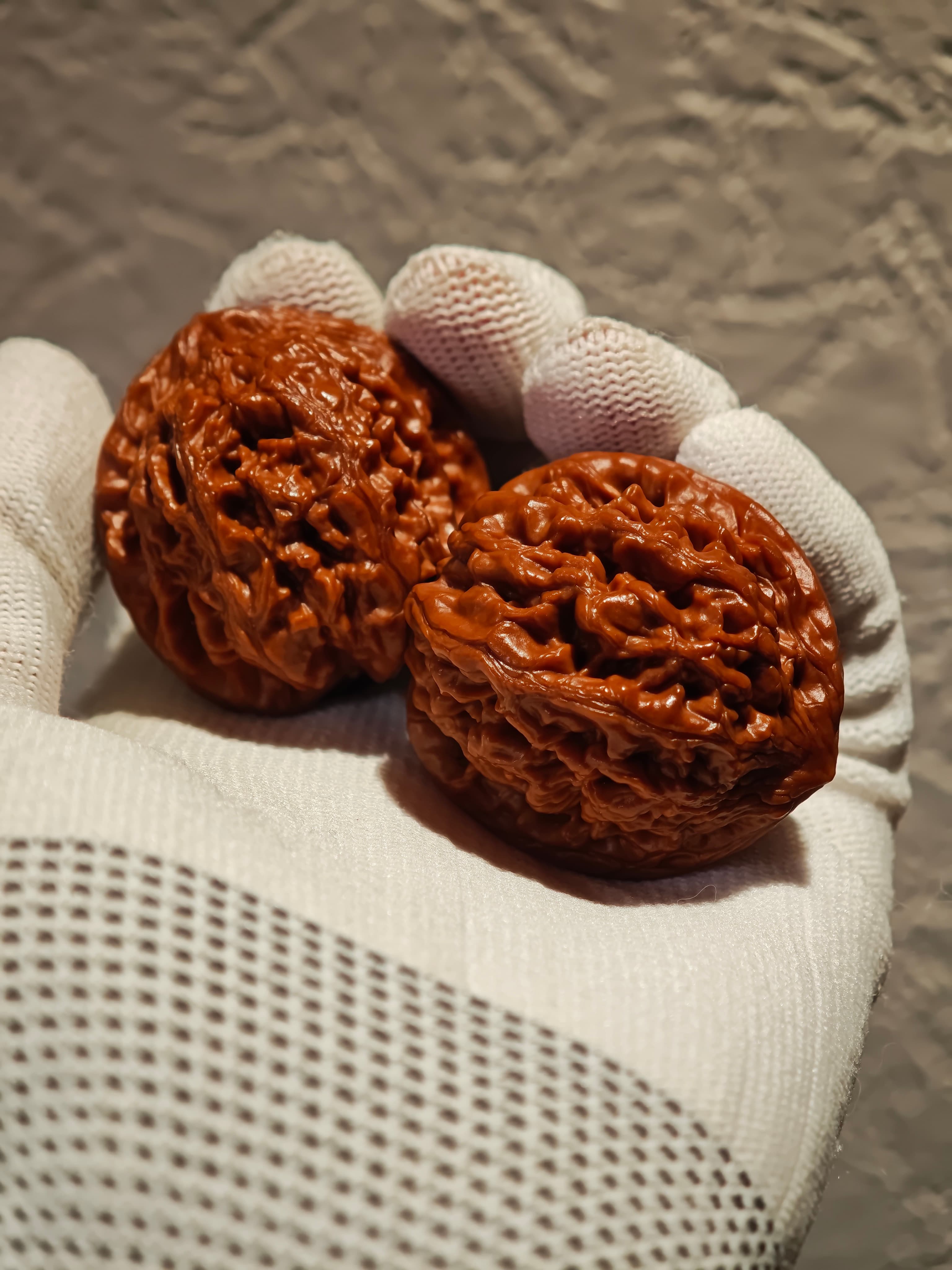
Ref. 18 / Pairing Reference
Gloved Pair with Complementary Side Profiles (Photo 18)
Compare outer contour and ridge density separately; similar colour can make two objects feel more matched than their shapes actually are.
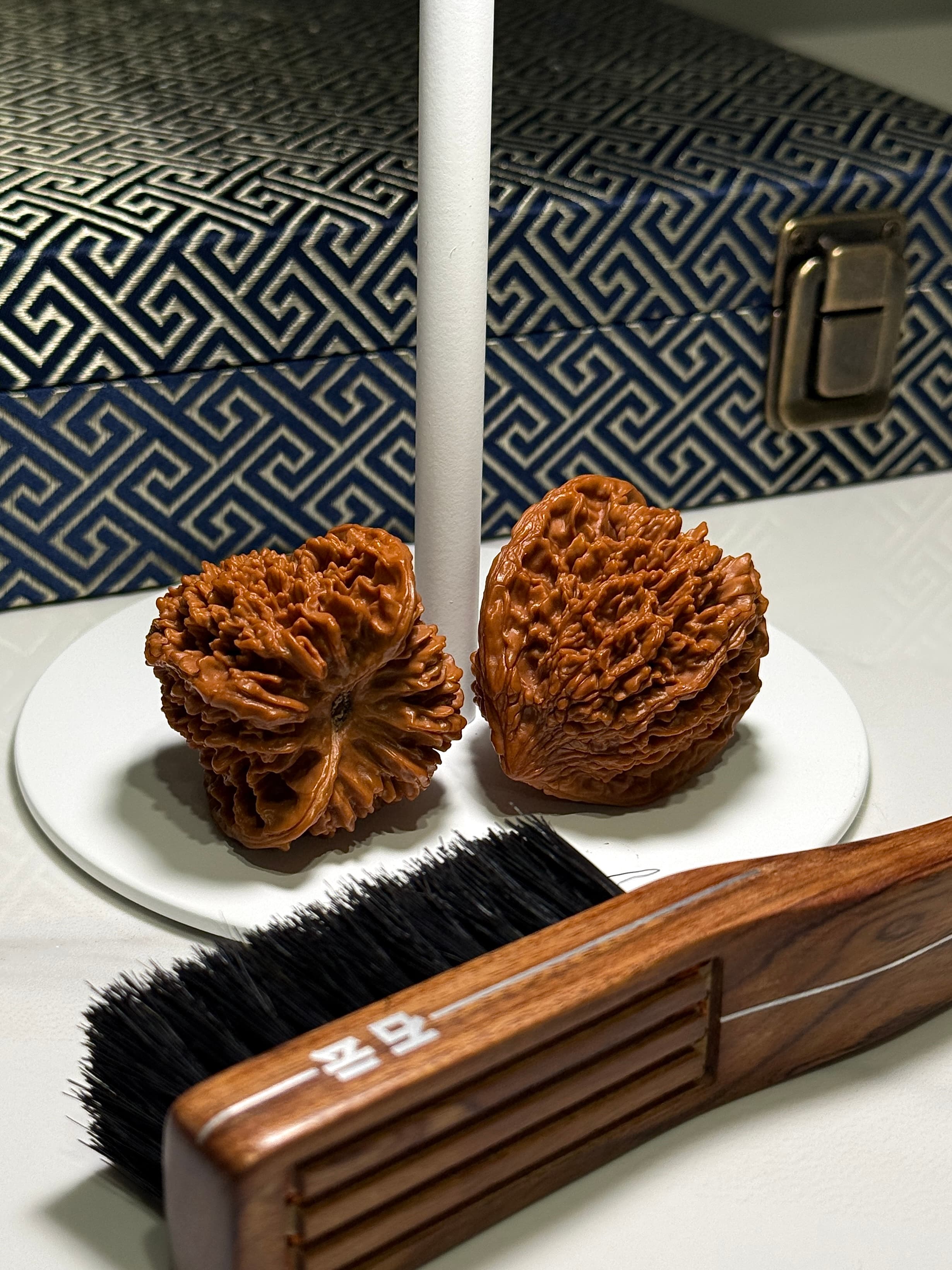
Ref. 19 / Display Reference
Small Pair on Dishes Beside a Hand Brush (Photo 19)
Treat the brush as context only: the photograph does not reveal bristle softness, cleaning method, or whether the shells were brushed.
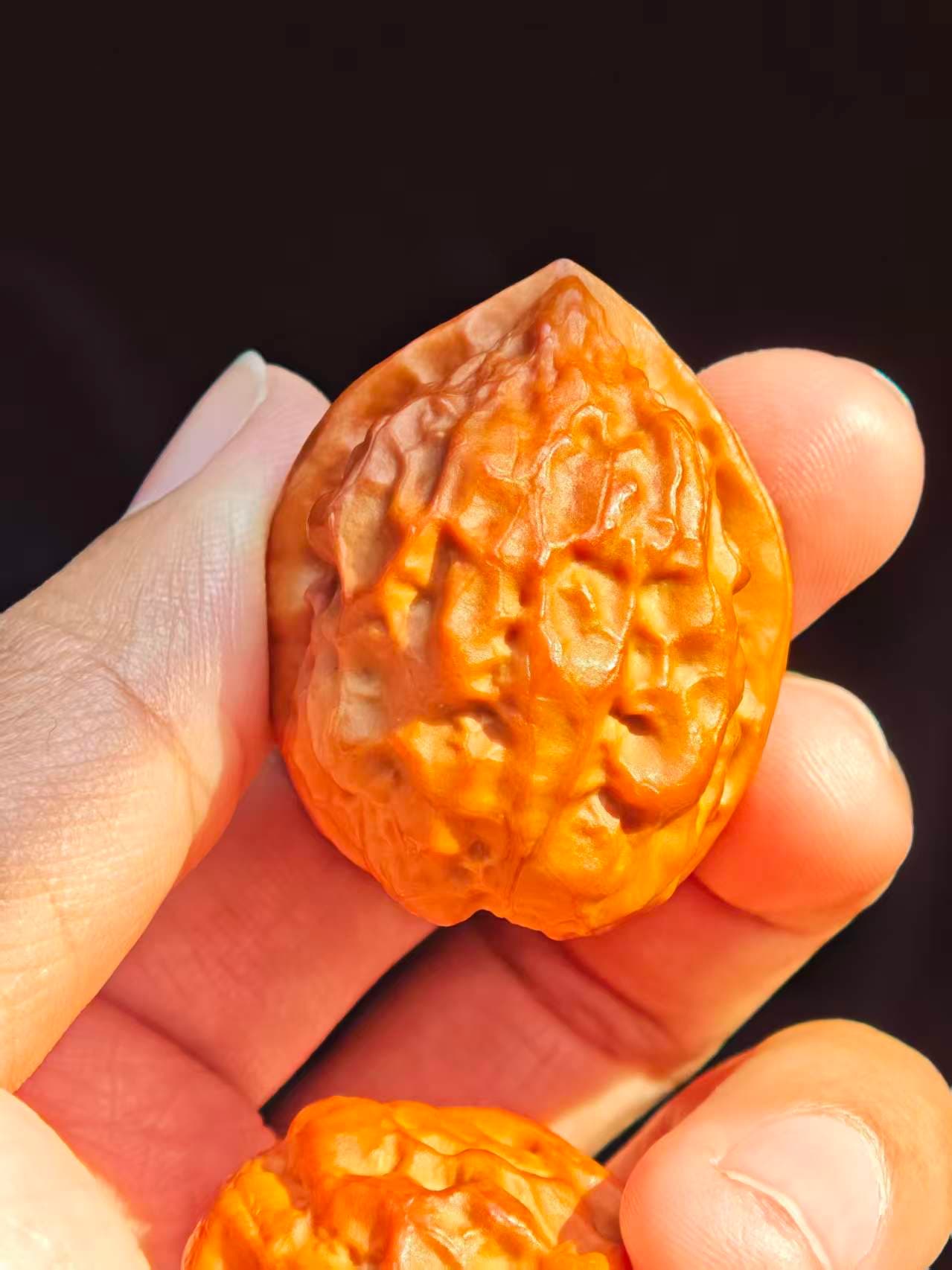
Ref. 20 / Lighting Reference
Single Light-Brown Shell in Strong Sunlight (Photo 20)
Watch the bright highlights and deep shadows; this contrast reveals relief but makes precise colour and condition comparison harder.
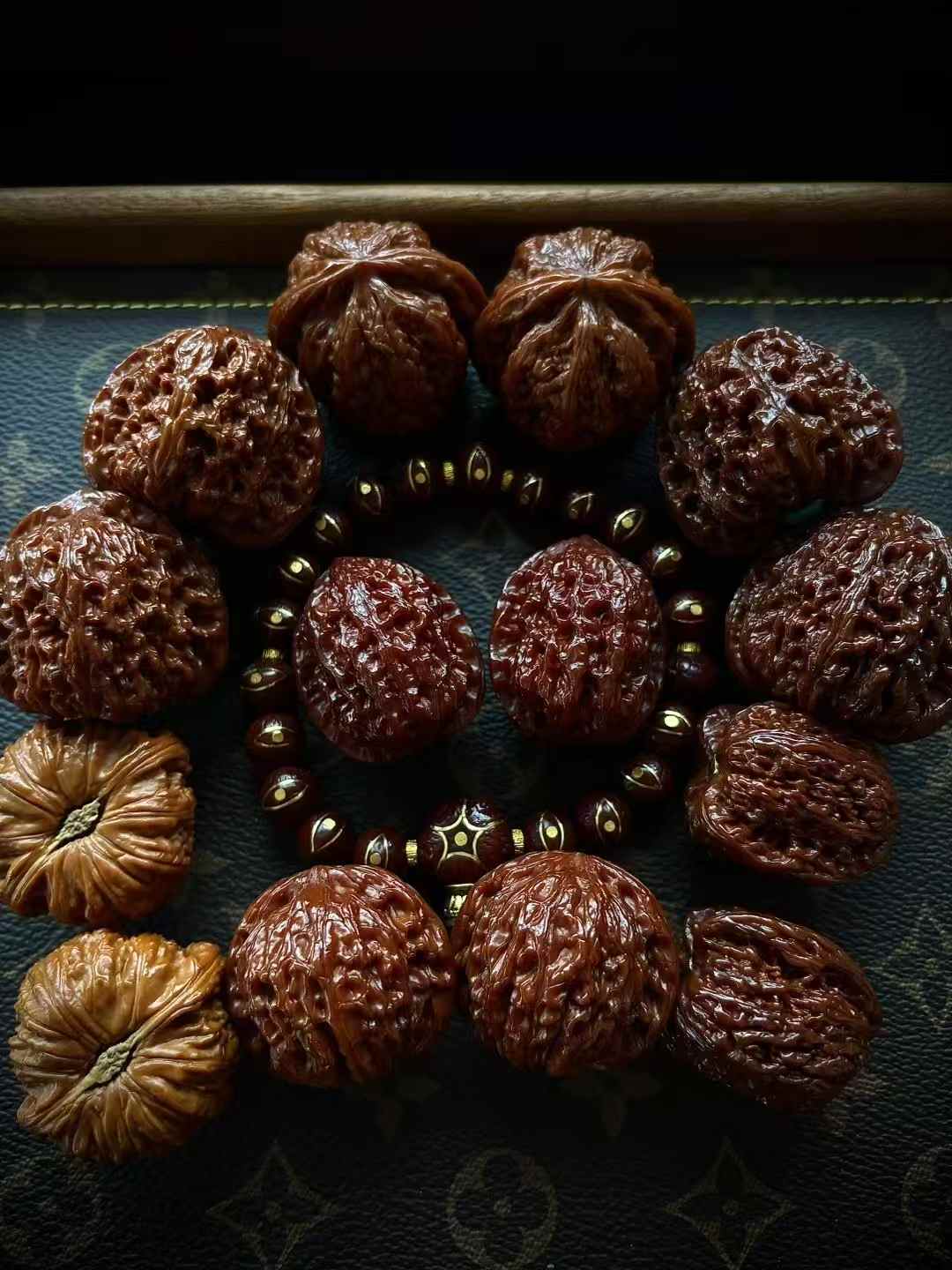
Ref. 21 / Collection Reference
Dark Tray with Mixed Walnut Pairs and Beads (Photo 21)
Group the visible objects by pair, strand, and loose shell before comparing them; overlapping objects can hide bases and condition details.
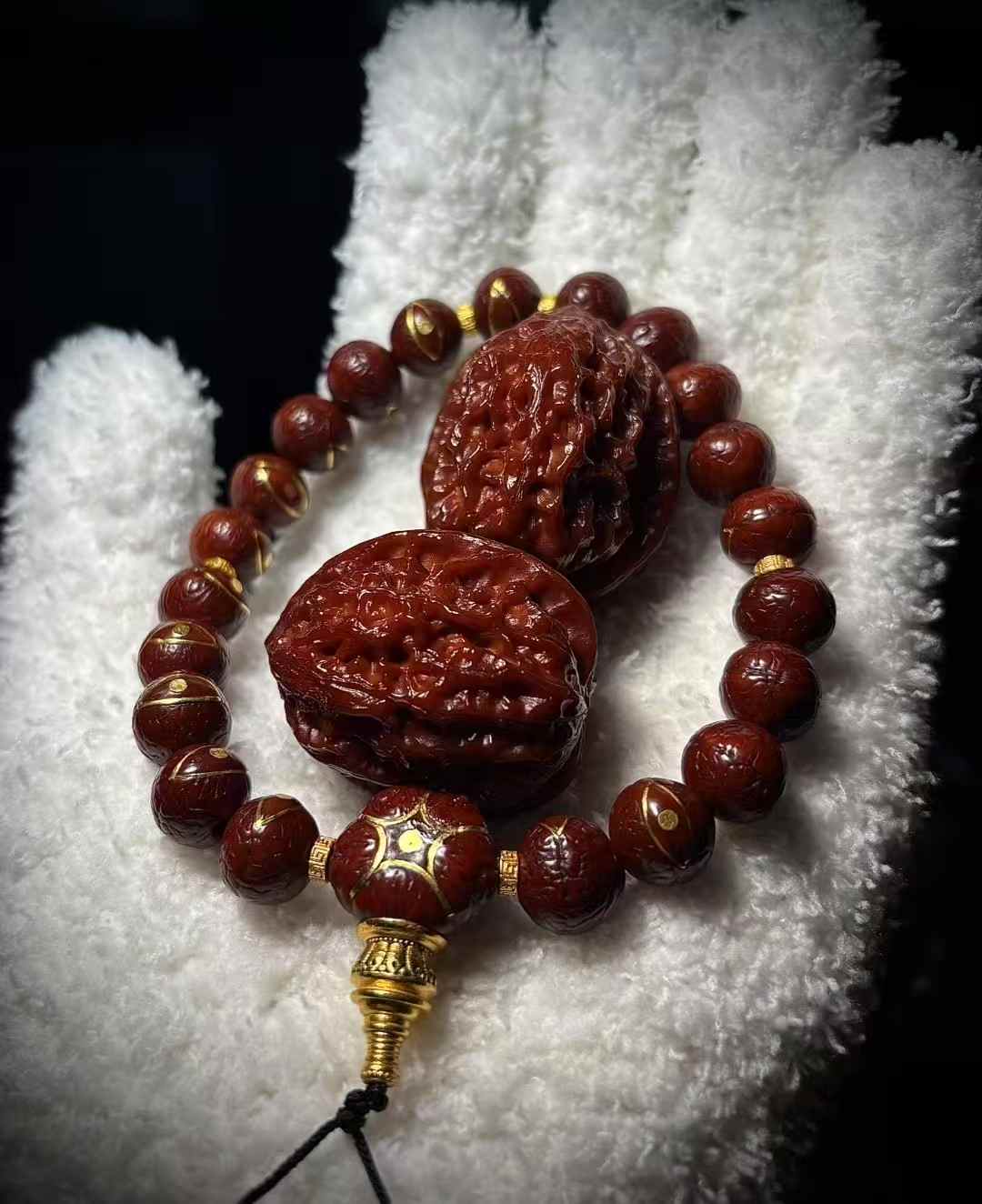
Ref. 22 / Walnut Bead Reference
Walnut-Bead Strand with a Large Focal Shell (Photo 22)
Compare the scale of the focal shell with the surrounding beads and note how the white background increases apparent colour saturation.
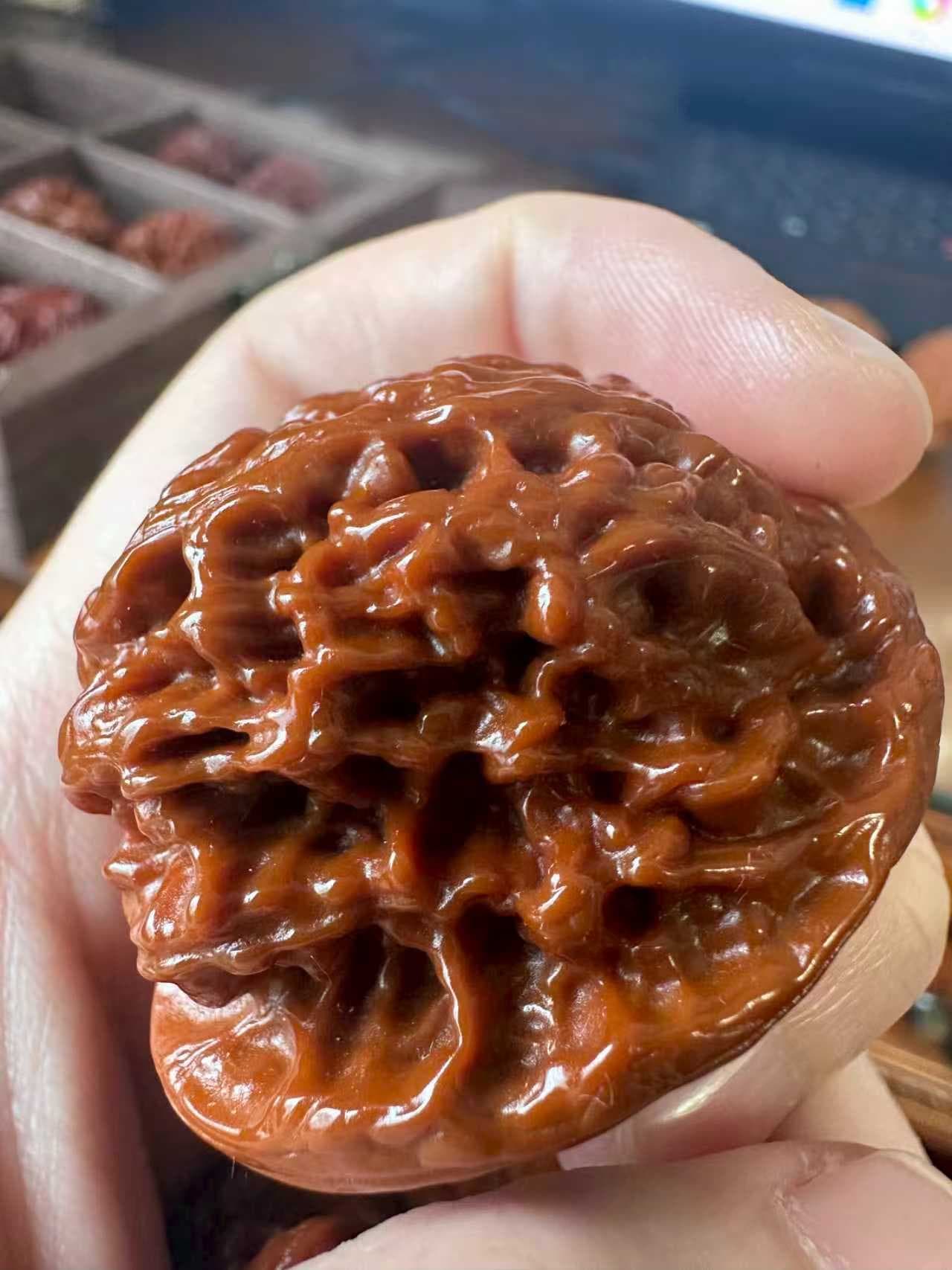
Ref. 23 / Surface Reference
Glossy Oval Shell in Close Palm View (Photo 23)
Separate reflected light from surface colour; one glossy photograph cannot establish age, natural patina, oil use, or previous polishing.
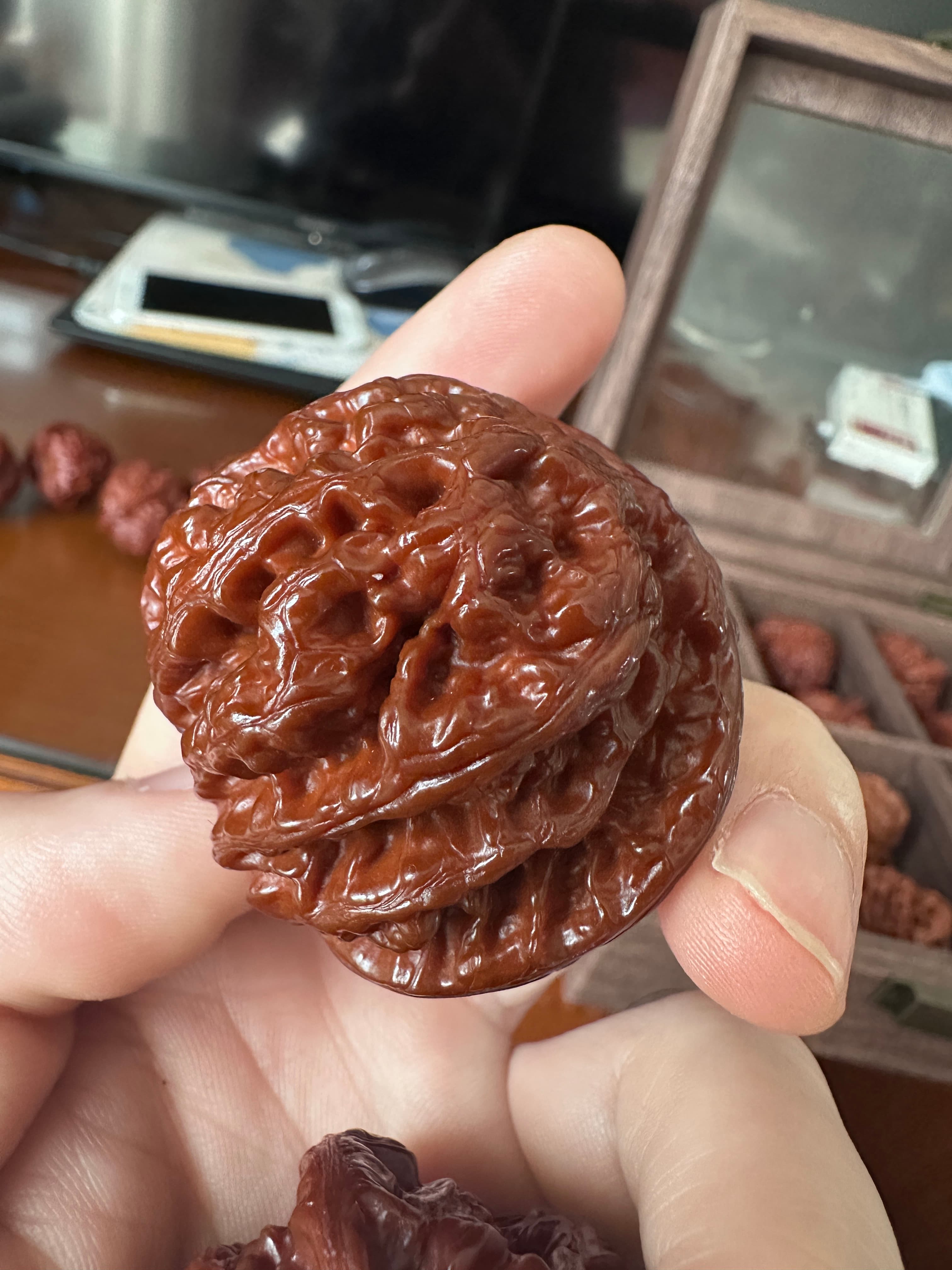
Ref. 24 / Pairing Reference
Compact Dark Pair Held Near a Window (Photo 24)
Compare the pair within the same frame, then account for the strong side light that brightens one edge more than the other.
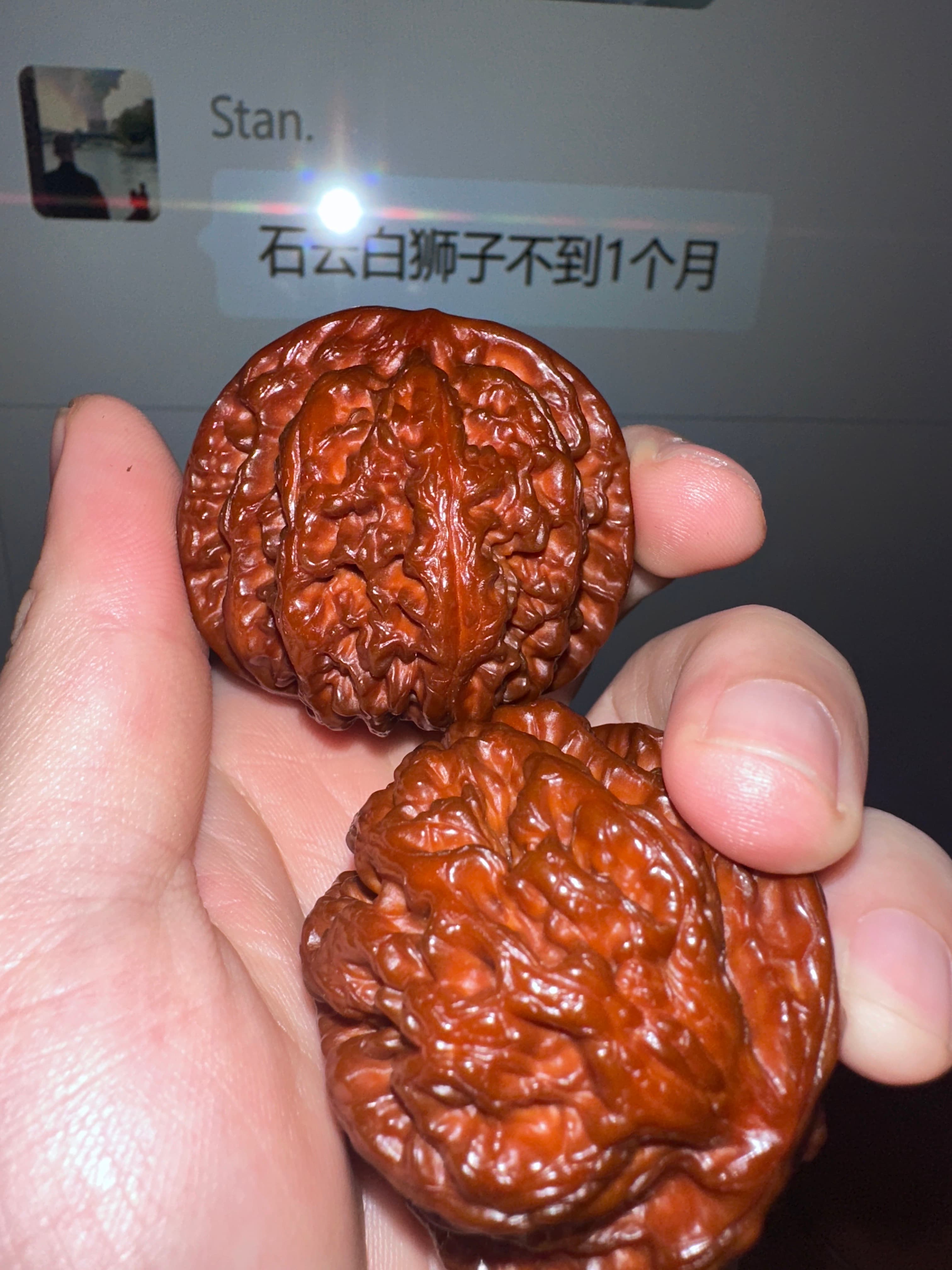
Ref. 25 / Scale Reference
Reddish Pair Held Beside a Printed Scale Card (Photo 25)
A partly hidden card is not a reliable measurement; request calliper readings for both shells and the exact measurement direction.
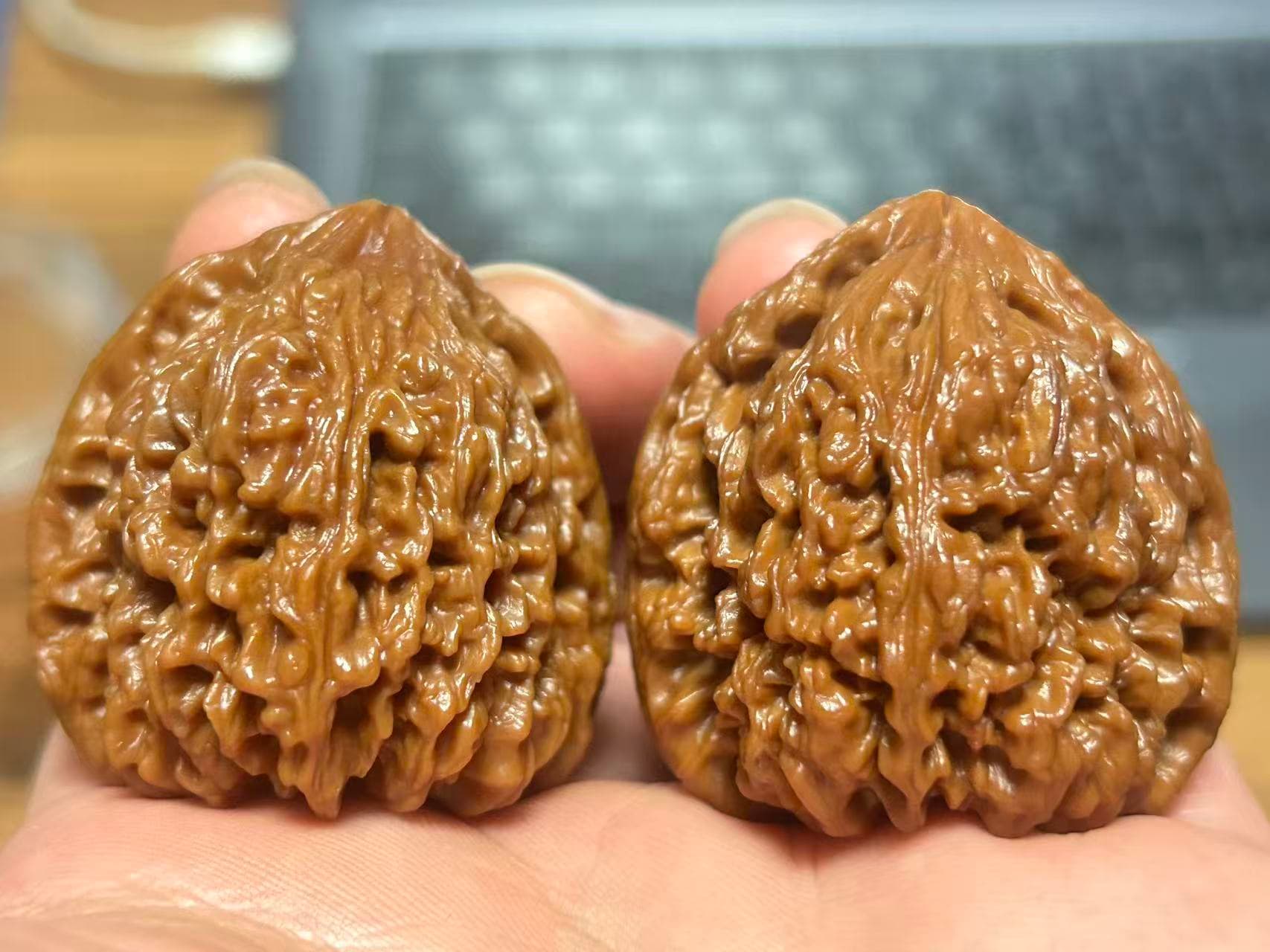
Ref. 26 / Pairing Reference
Light-Brown Pair with Matching Front Views (Photo 26)
Check left-right outline, crown height, and base width in sequence; similar positioning makes this frame useful for pairing practice.
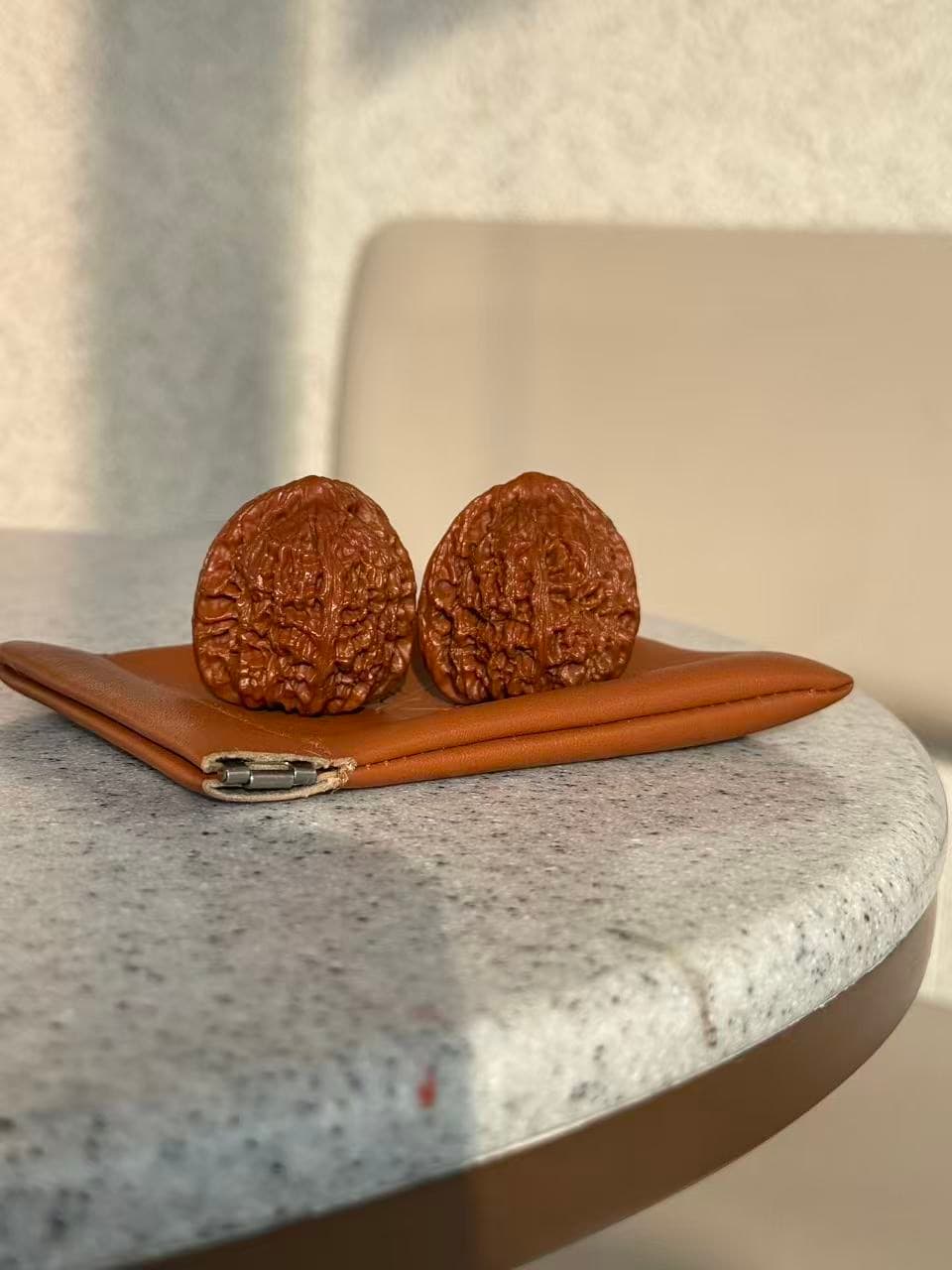
Ref. 27 / Display Reference
Small Pair Standing on a Curved Wooden Rest (Photo 27)
Use the common support to compare height and stance, while remembering that the rest can conceal part of each base.
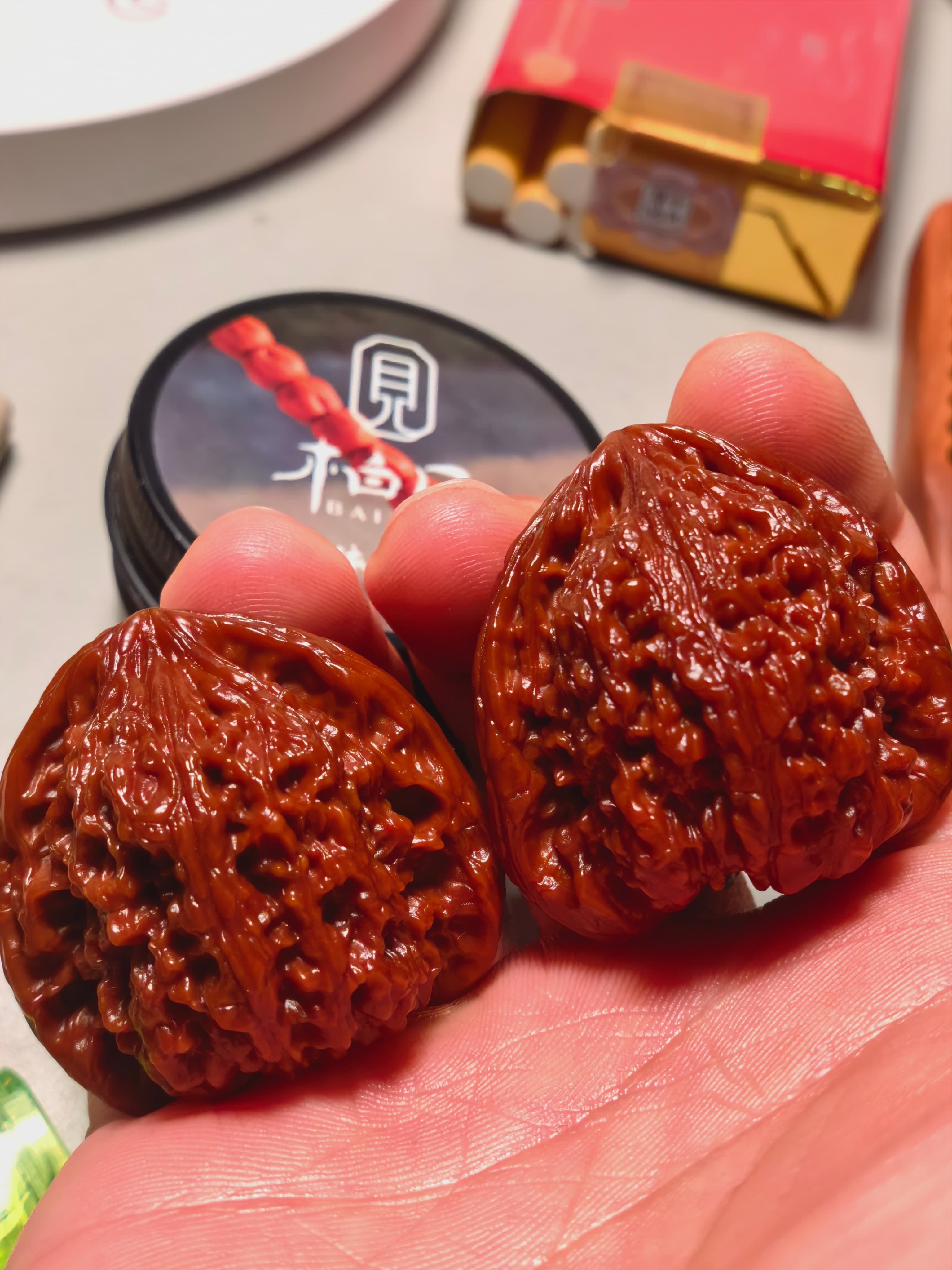
Ref. 28 / Lighting Reference
Red-Brown Pair Under Warm Indoor Light (Photo 28)
Treat the red tone as camera-and-light dependent; ask for neutral daylight views before comparing colour or surface treatment.