
Evidence-led beginner guide
How Wenwan Walnut Patina Develops Without Shortcuts
Collectors use “patina” for the surface appearance that develops as a pair is handled, stored, and observed over time. The word is useful, but it can invite false certainty. A dark glossy shell is not automatically old, authentic, naturally handled, or valuable. The safest way to understand change is to compare the same pair under controlled conditions.
Background
New owners often search for a product that creates patina. That reverses the learning goal. Oil, dye, wax, aggressive polishing, and image editing can all create a fast appearance while hiding the starting surface. Clean handling and a photo record make change slower but more interpretable. Scientific research identifies complex walnut lineages, yet there is limited direct research that measures the exact chemistry of Wenwan hand patina. This guide therefore separates visible observations from unproven chemical stories.
In plain terms
On this site, patina means the visible combination of colour development, changing sheen, and smoothing of high-contact areas over time. It does not prove age, species, provenance, treatment history, rarity, or price.
Why it matters
Patina is one of the main reasons people keep a personal pair, but it is also one of the easiest terms for sellers to misuse. A conservative definition protects beginners from paying for a claimed story that the surface cannot verify.
A step-by-step approach
- Record the untreated starting point. Before applying anything, photograph the pair from consistent angles in neutral light and note any known seller treatment.
- Handle with clean, dry hands. This reduces contamination and lets you observe the effect of ordinary contact without adding an unknown coating.
- Brush only loose dust. Use a clean dry brush appropriate to the condition. Stop if fibres catch, colour transfers, or a repair looks unstable.
- Keep storage stable. Avoid direct sun, heaters, hot cars, damp storage, and abrupt wet-dry cycles that can confuse or damage the surface.
- Repeat the same photographs. Compare matching views every few months, not different pairs or seller images made under different lighting.
- Document every added substance. If the pair already has oil, wax, dye, or polish, record that fact. Do not describe later shine as purely hand-developed.
How to judge it
- Look for gradual change that is explainable by contact and the known history of the pair.
- Compare high points, protected grooves, and the two halves rather than judging overall darkness.
- Treat sudden uniform gloss, sticky residue, strong odour, or colour transfer as reasons to ask about treatment.
- Use matched photographs because camera settings can make the same surface look warmer, darker, or shinier.
Original photo evidence
These photographs were taken for Play Walnut. The notes describe only what the image can support and state what remains unknown.
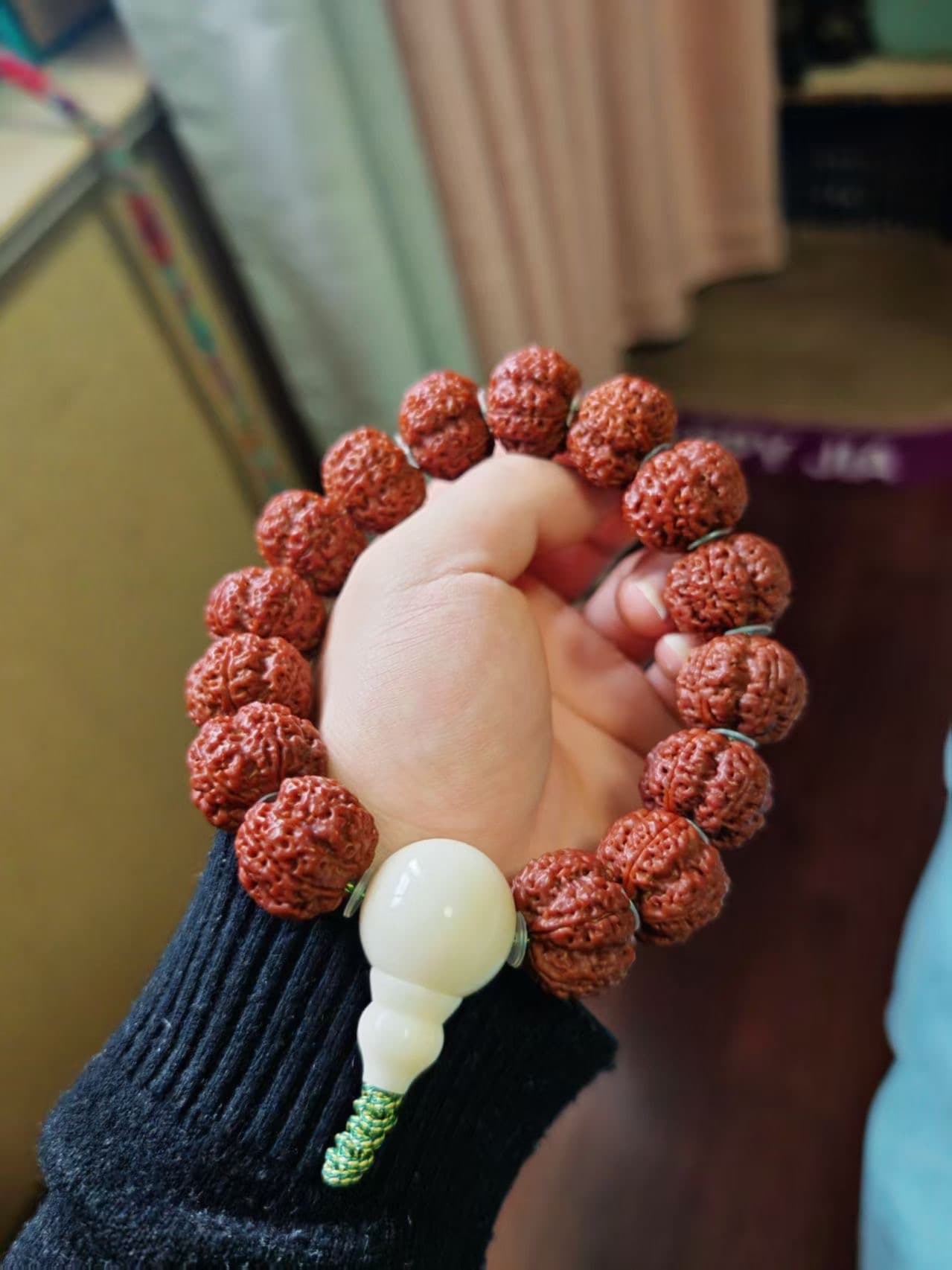
Original patina-study photograph
What to observe: Compare the sheen of raised areas with protected relief, and record the lighting before interpreting colour.
What this photo cannot prove: The image cannot prove how the appearance developed, how old the pair is, or whether a substance was applied.
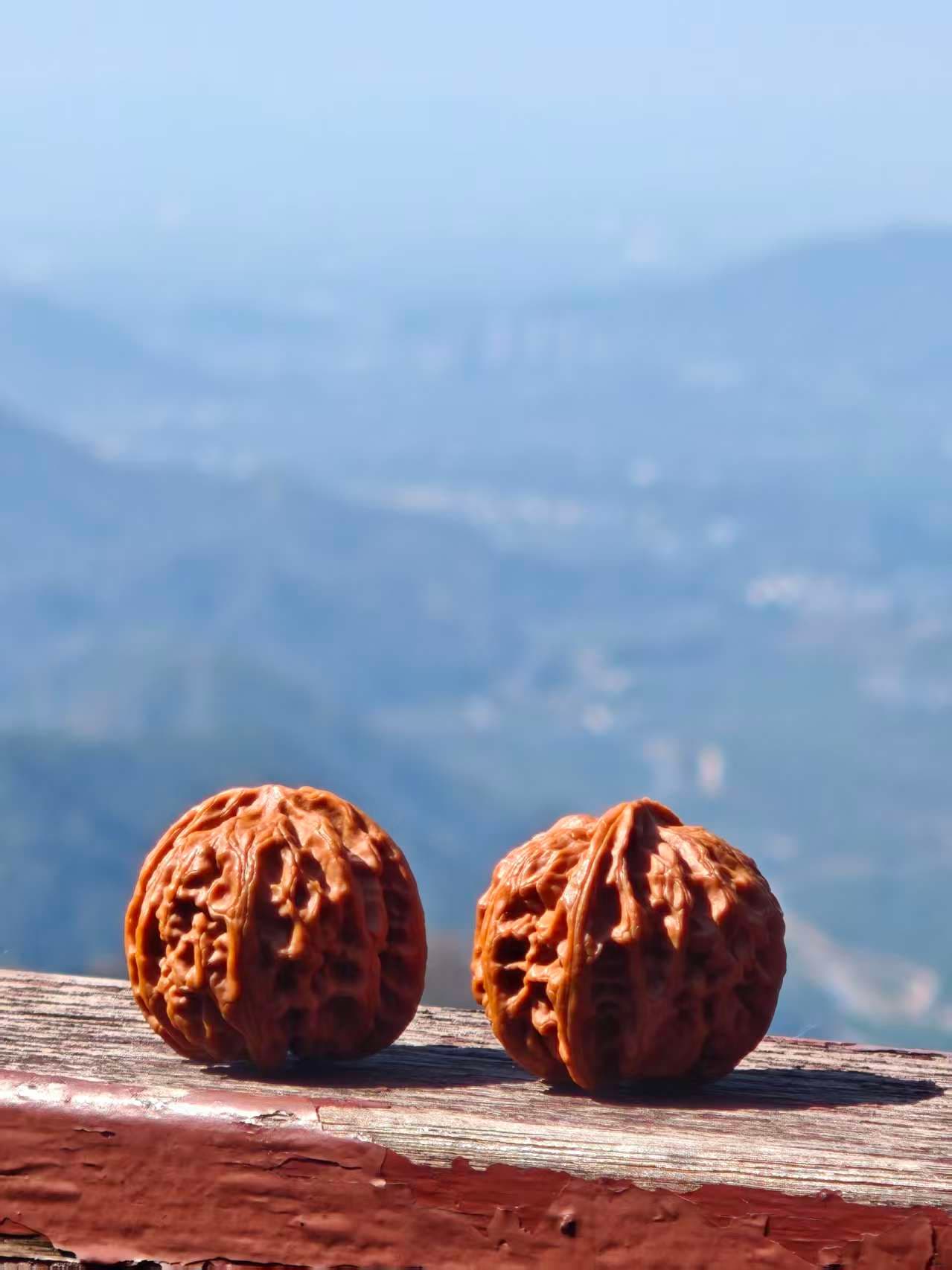
Original reference for questioning uniform gloss
What to observe: Look for transitions around grooves and the base instead of using overall darkness as the only signal.
What this photo cannot prove: A visual flag is not proof of forced treatment; additional angles and history are required.
Original photography and editorial analysis by Play Walnut Editor.
Real-world examples
- A pair looks much darker in a new photograph, but the background and white balance also changed. A matched-light photo shows only a modest physical difference.
- Raised ridges become slightly smoother while deep grooves remain lighter. The pattern fits unequal contact and does not need to be “fixed” with oil.
- A seller describes a uniformly glossy pair as decades old. Without provenance or treatment history, the surface is an observation, not proof of age.
Common mistakes
- Calling every shiny surface natural patina.
- Using frequent oil or wax to chase a colour target.
- Promising that every pair will change on the same schedule.
- Ignoring seller-applied polish or earlier restoration.
- Using patina as proof of authenticity, rarity, or investment value.
Advice for first-time owners
Choose interpretability over speed. If you do not know what a product will do, leave it off. Keep photographs, record treatment history, and let protected areas differ from high-contact areas. A personal pair does not need to match an online colour target to be meaningful.
Key takeaways
- Patina is a visible collector term, not automatic proof of age or authenticity.
- Matched photographs and known treatment history are essential for honest comparison.
- Gradual high-point change is more informative than instant uniform gloss.
- Do not invent a guaranteed chemical mechanism or timetable for every pair.
Frequently asked questions
Does oil create real patina?
Oil can change colour and shine, but it also changes the evidence. This site does not label an oiled appearance as purely hand-developed. Beginners should avoid adding substances when the treatment history is unclear.
Why is one walnut darker?
Starting condition, contact, storage position, photography, or earlier treatment can differ. Record the pattern and history before trying to make the halves identical.
Can patina prove age?
No. Appearance alone cannot establish a date. Reliable age claims need provenance and documentation beyond surface colour or gloss.
The short version
The honest way to study patina is to know the starting point, keep the routine simple, record treatments, and compare the same pair over time. Slow, documented change teaches more than a fast surface whose history is unknown.
Sources, method, and limitations
- Play Walnut documented-observation standard — Claims are limited to visible change and known handling history because direct research on Wenwan hand patina chemistry is limited.
- Peer-reviewed Wenwan walnut identity study — Used for the cautious point that collector names can cover more than one Juglans lineage and cannot prove species by appearance alone.