
Evidence-led beginner guide
How to Clean Wenwan Walnuts Without Overdoing It
Cleaning a collectible shell is not the same as washing an eating walnut. The aim is to remove loose contamination while preserving evidence of condition and avoiding abrupt moisture or chemical exposure. When the treatment history is unknown, the safest first action is documentation, not a deep clean.
Background
Wenwan grooves collect dust and fibres, but aggressive cleaning can create a second problem. Water can enter seams or damaged areas, solvents can change coatings, and stiff tools can catch fragile relief or repair. A seller may also need to see the arrival condition before a return. The cleaning method should therefore match a specific problem: loose surface dust, an isolated dirty groove, dampness, or a suspected substance.
In plain terms
Conservative cleaning removes loose dust with the least force and the fewest added variables. It stops before the shell becomes soaked, scratched, polished, discoloured, or harder to compare with its starting photographs.
Why it matters
Over-cleaning can erase visible history, spread an unknown coating, expose a weak repair, or make a return dispute harder. Prevention through clean hands and storage usually provides more value than repeated restoration-style cleaning.
A step-by-step approach
- Photograph before touching. Record the top, sides, base, seams, and dirty areas. If the pair just arrived, compare it with the listing before any cleaning.
- Identify the material. Decide whether you see loose dust, packed dry debris, sticky residue, mould-like growth, or an unknown coating. Do not use one method for every problem.
- Start with air and a clean dry brush. Use gentle strokes that follow the grooves. Work over a light surface so transferred particles or colour are visible.
- Use a dry cloth on broad high areas. Wipe lightly without trying to create shine. Avoid snagging tips, seams, or repaired sections.
- Stop at warning signs. Pause if colour transfers, the surface becomes sticky, fibres catch, a crack opens, a repair moves, or an unusual smell appears.
- Let accidental dampness dry naturally. Stop handling, blot surface moisture without rubbing, and place the pair in a ventilated shaded area away from direct heat. Document any change.
How to judge it
- Successful routine cleaning removes loose dust without changing the overall colour or sheen.
- Grooves do not need to look newly cut; protected areas naturally differ from high-contact areas.
- A sticky, coloured, or odorous residue requires identification before more cleaning.
- Suspected mould, unstable repair, or structural cracking may require specialist advice rather than experimentation.
Original photo evidence
These photographs were taken for Play Walnut. The notes describe only what the image can support and state what remains unknown.
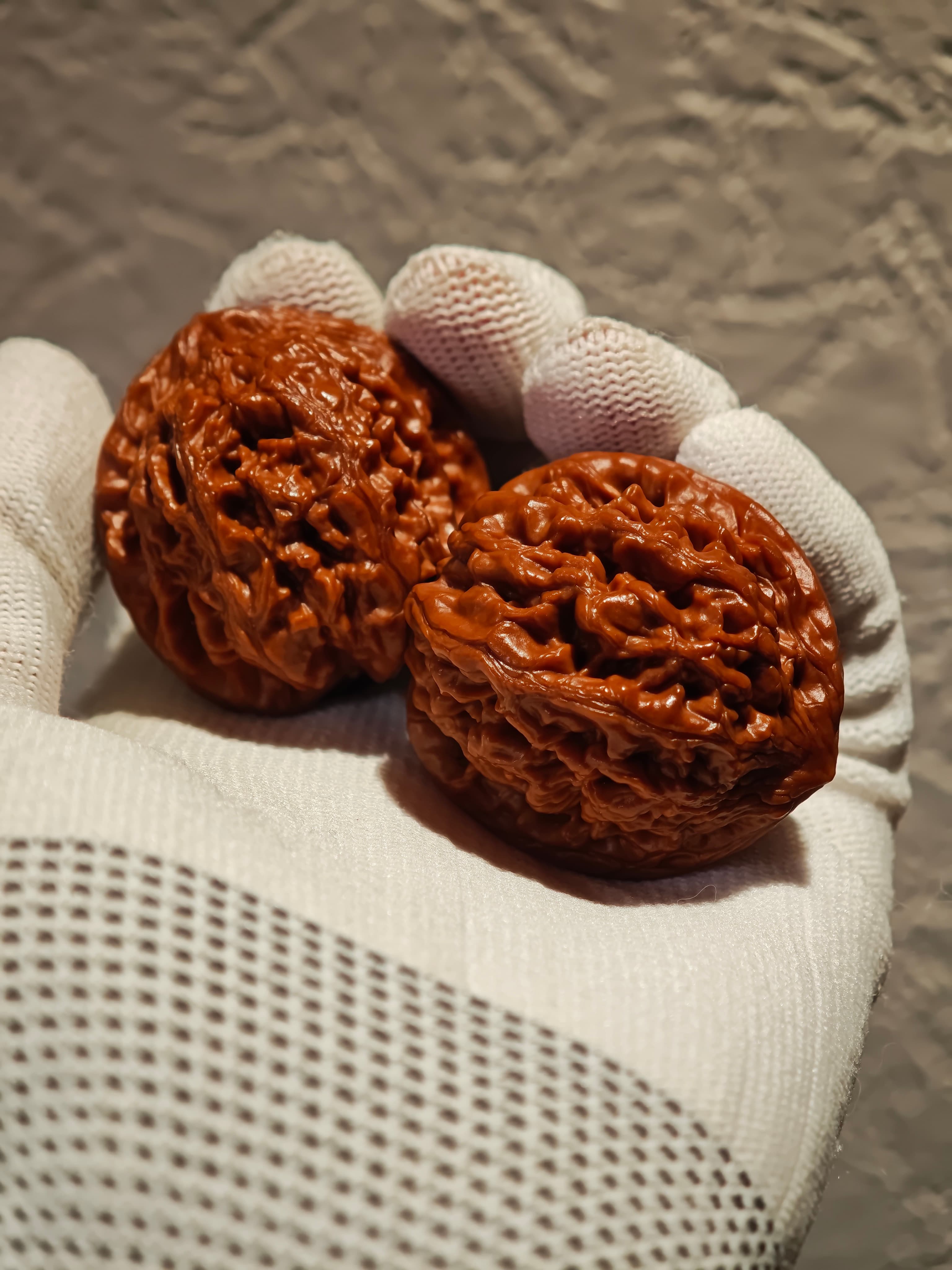
Original condition reference before cleaning
What to observe: Photograph the grooves and high points first so removed dust is not confused with a change in the shell.
What this photo cannot prove: An image cannot identify the composition of sticky residue, filler, dye, or suspected biological growth.
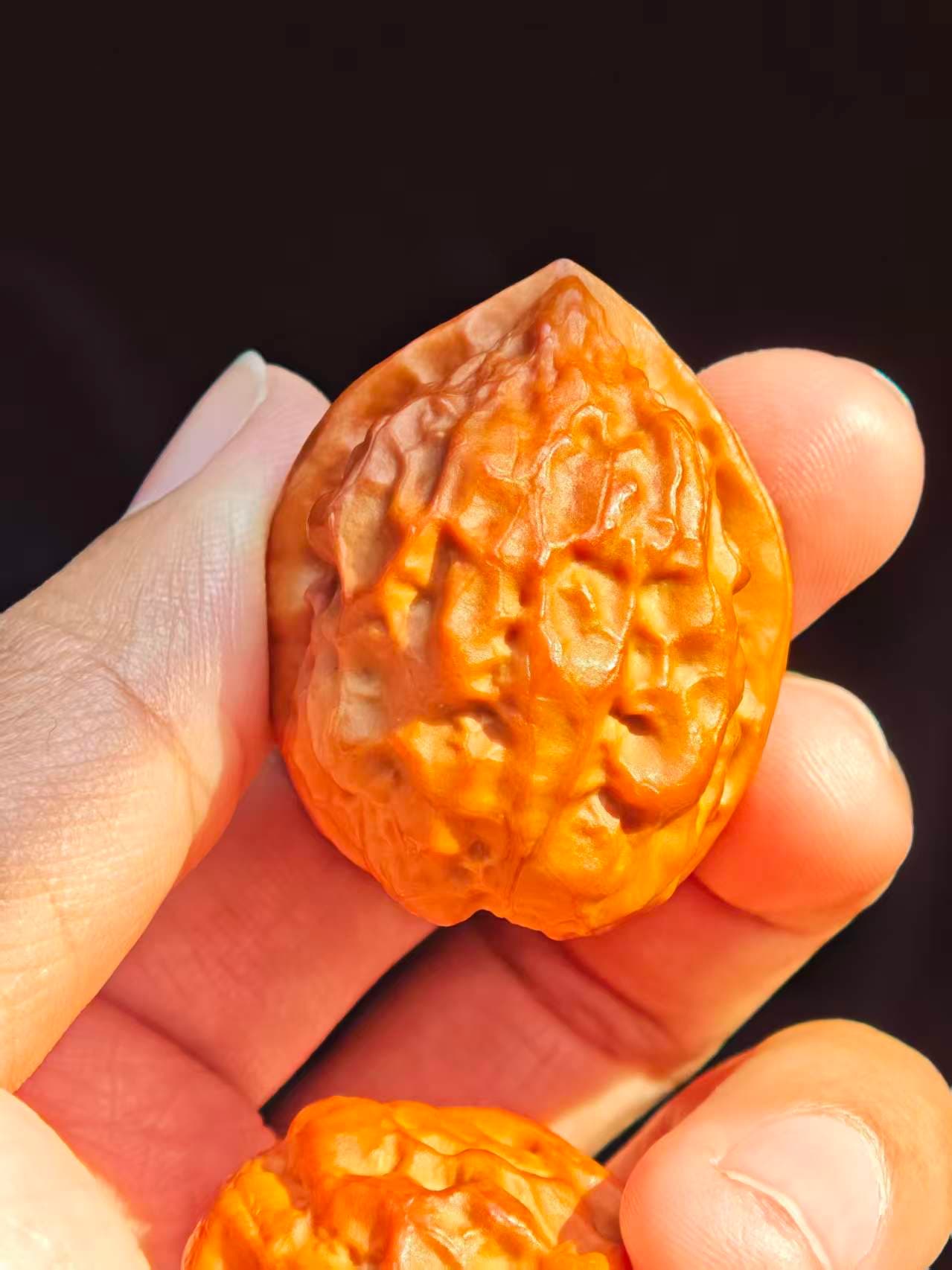
Original texture reference for brush direction
What to observe: Follow the natural ridge and groove direction with light strokes rather than scrubbing across fragile relief.
What this photo cannot prove: The photograph does not establish which brush stiffness is safe for every shell or repair.
Original photography and editorial analysis by Play Walnut Editor.
Real-world examples
- Loose pale dust collects in deep grooves after storage. A clean dry brush removes it without changing the darker raised surface.
- A newly purchased pair feels sticky. Instead of adding alcohol or water, the buyer documents it and asks whether oil, wax, or polish was applied.
- One shell is accidentally splashed. The owner stops handling, blots the surface, lets it dry away from heat, and photographs the seam rather than using a hair dryer.
Common mistakes
- Soaking the pair or rinsing it without knowing the condition of seams and repairs.
- Using alcohol, household cleaner, essential oil, abrasive paste, or an unknown product.
- Brushing aggressively because protected grooves remain lighter.
- Trying to polish every mark into a uniform shine.
- Cleaning before documenting a mismatch with the seller’s listing.
Advice for first-time owners
Keep the routine dry, local, and reversible. If a clean brush does not solve the problem, do not automatically escalate to liquid. First identify what you are trying to remove and whether the shell has cracks, filler, dye, wax, or oil. The right answer may be to stop, ask the seller, or consult a conservator rather than trying another household method.
Key takeaways
- Document before cleaning, especially after a purchase.
- Use the least force and fewest substances needed for a defined problem.
- Clean hands and proper storage reduce future cleaning.
- Stop for colour transfer, stickiness, structural movement, or unknown residue.
Frequently asked questions
Can I wash Wenwan walnuts with water?
This guide does not recommend routine soaking or rinsing. Water can enter seams, cracks, or repairs, and rapid drying can add stress. Use a dry method first and seek condition-specific advice when necessary.
What brush should I use?
Use a clean brush that does not scratch, shed heavily, or catch fragile relief. Brush choice depends on condition; test gently in a small area and stop at any transfer or damage.
Should every groove become the same colour?
No. Grooves receive less contact and may retain a different appearance. Cleaning should remove loose contamination, not force visual uniformity.
The short version
Cleaning should preserve information, not manufacture newness. Photograph first, identify the problem, begin dry and gentle, and stop when the shell gives you a warning. Conservative care keeps the pair easier to understand and safer to enjoy.
Sources, method, and limitations
- Research on moisture-driven cracking in walnut shells — Supports the conservative advice to avoid abrupt wetting, intense heat, and rapid moisture change; the study is not a Wenwan care manual.
- Play Walnut conservative cleaning protocol — The method is preventive editorial guidance for intact collectible shells. It does not replace a conservator’s assessment of mould, unstable repair, or structural damage.