
Evidence-led beginner guide
How Wenwan Walnuts Change in the First Year
The first year is easier when progress is recorded instead of guessed. A new pair does not follow a universal colour calendar. Its starting condition, earlier treatment, shell structure, handling frequency, and storage all matter. The safest approach is to photograph the same views under the same light and look for slow, explainable change.
Background
Daily viewing makes gradual change difficult to notice. Memory fills the gap and often exaggerates either success or failure. New owners then apply oil, scrub a lighter groove, or increase handling because they believe the surface is “stuck.” A baseline and regular intervals replace that anxiety with evidence. They also help distinguish a new mark from one that was present on arrival.
In plain terms
First-year change is the developing record of contact, minor surface wear, colour variation, and sheen visible when the same pair is compared over time. This guide uses patina as a collector term for appearance, not as a claim about a single proven chemical mechanism.
Why it matters
Realistic expectations prevent two damaging reactions: abandoning a healthy pair because change seems slow, or forcing a surface because normal variation seems imperfect. A record also makes care advice more specific because you can show what changed and when.
A step-by-step approach
- Make a day-one set. Photograph the top, both sides, base, seam, and any existing marks in neutral light. Keep distance and background simple.
- Keep the routine conservative. Use clean, dry hands, short comfortable sessions, and a clean dry brush for loose dust. Avoid adding substances merely to create a faster photograph.
- Store consistently. Use the same breathable, shaded location away from heaters, direct sun, damp rooms, and hot vehicles.
- Repeat photographs monthly. Use the same background, direction, and approximate exposure. Do not compare a warm indoor photo with a cool daylight photo.
- Annotate events. Record drops, travel, unusual humidity, cleaning, or any product contact. This gives later changes a possible explanation.
- Review quarterly. Compare day one with months three, six, nine, and twelve. Longer intervals make subtle high-point changes easier to see.
How to judge it
- High points and frequently touched ridges may change before protected grooves.
- Both halves need not progress at exactly the same speed because contact and starting condition differ.
- A sudden smell, sticky coating, open crack, or dramatic unexplained colour shift deserves investigation.
- Consistent photographs are more reliable than memory or comparisons with another owner’s pair.
Original photo evidence
These photographs were taken for Play Walnut. The notes describe only what the image can support and state what remains unknown.
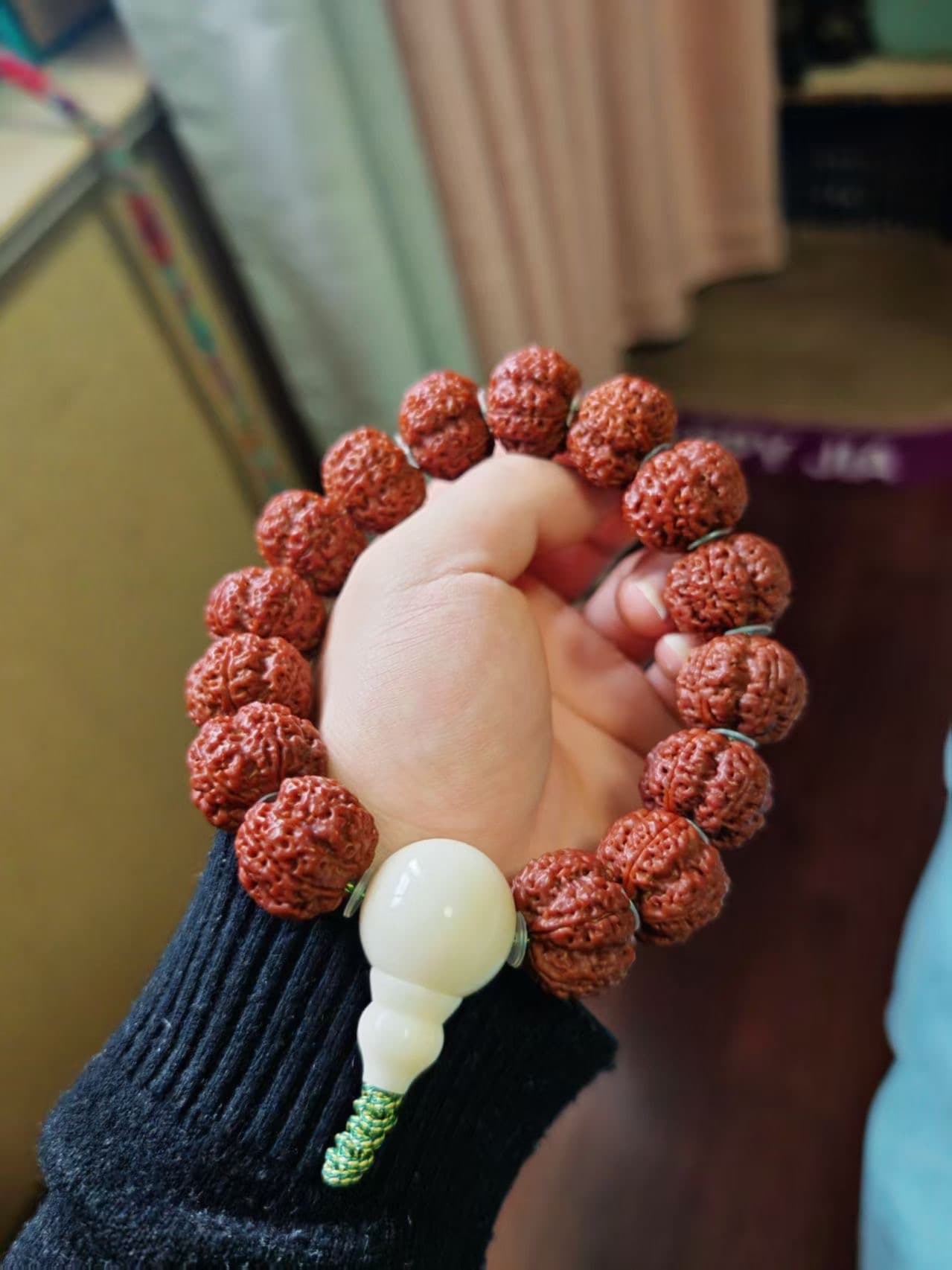
Original photograph used for a patina observation baseline
What to observe: The image records visible colour and sheen at one moment; repeated matching photographs would be needed to demonstrate change.
What this photo cannot prove: A single image cannot establish how long a surface took to develop or which treatments were used.
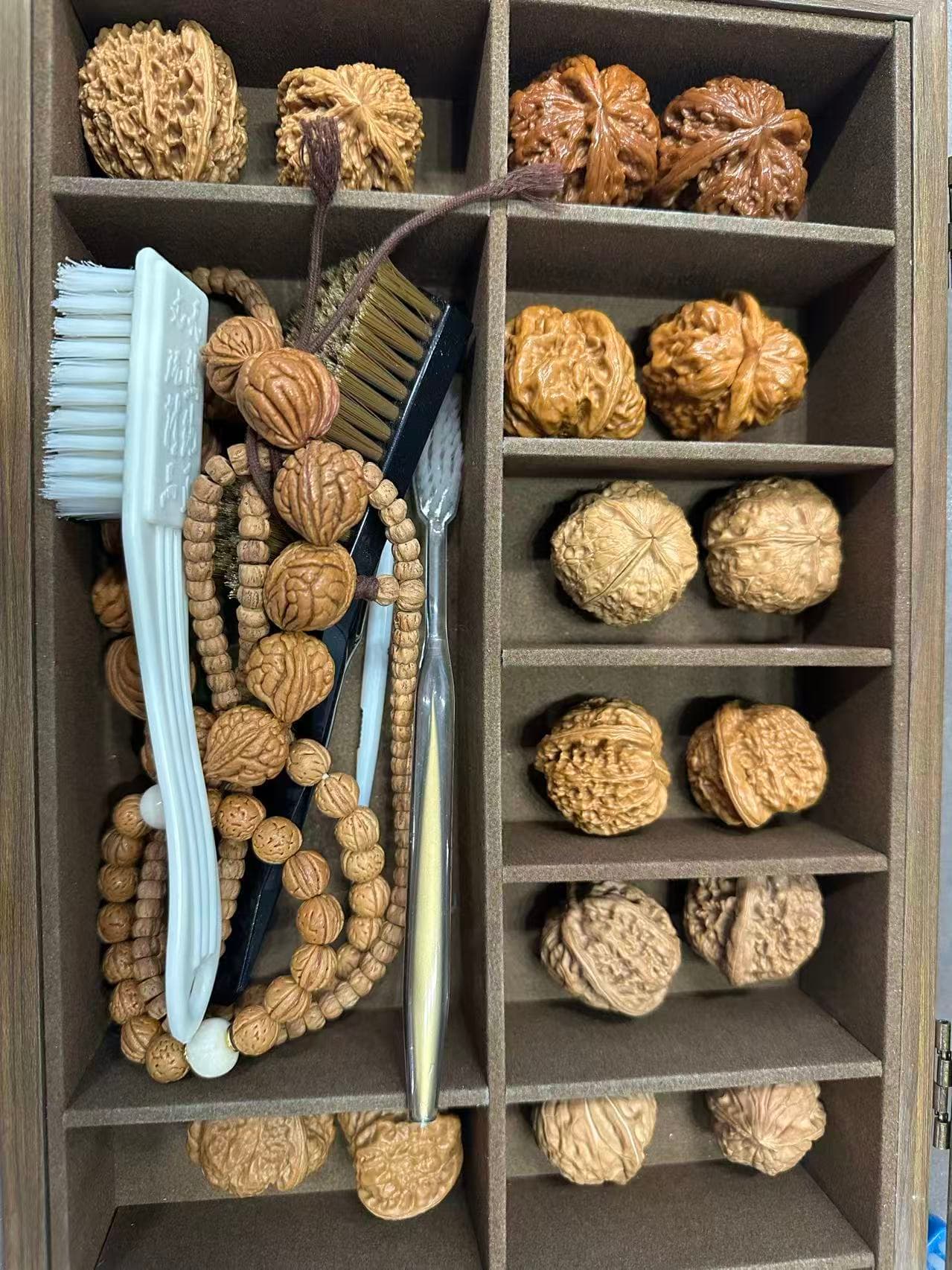
Original surface reference for comparing high points and grooves
What to observe: Compare raised areas with protected relief rather than expecting the whole surface to look identical.
What this photo cannot prove: Lighting and camera processing can change apparent colour, so cross-image comparison requires controlled conditions.
Original photography and editorial analysis by Play Walnut Editor.
Real-world examples
- At three months the pair looks unchanged during daily use. The baseline comparison shows slightly smoother high points and a modest colour shift that ordinary memory missed.
- One groove remains lighter. The owner resists oiling it and later sees the surrounding surface gradually become more balanced without a forced patch.
- A new line appears after travel in a hot vehicle. The event log identifies an environmental change and prompts the owner to stop handling and inspect the seam closely.
Common mistakes
- Expecting every pair to follow a fixed weekly patina schedule.
- Changing lighting and treating photographic colour differences as physical change.
- Applying oil to make protected grooves match high-contact ridges.
- Scrubbing normal unevenness until the surface loses its existing character.
- Changing several care habits at once and losing the ability to identify a cause.
Advice for first-time owners
The most useful first-year tool is not a product; it is a repeatable photo record. Keep the pair’s routine boring enough that changes have an understandable context. If a problem appears, pause, document it, and avoid adding another variable. This method will not guarantee a particular colour, but it will help you learn what happened to your own pair.
Key takeaways
- First-year change is individual and should not be judged against a universal timetable.
- Use consistent photographs and event notes instead of memory.
- Uneven contact can create normal uneven appearance.
- Sudden changes deserve documentation and a pause, not an immediate product.
Frequently asked questions
Why do the grooves stay lighter?
Deep grooves receive less direct contact and can retain dust or a different starting surface. A lighter groove is not automatically damage or proof that the pair needs oil.
How often should I photograph the pair?
Monthly is enough for a record, with quarterly side-by-side reviews. Daily photographs usually create noise rather than useful evidence.
What if the two walnuts change differently?
Check whether one shell receives more contact, had a different starting condition, or sits differently in storage. Small differences are natural; document sudden or structural changes.
The short version
A first year should be documented, not accelerated. Stable handling, stable storage, and consistent photographs show the pair’s real story. The record teaches more than any promised timetable and helps you act conservatively when something changes.
Sources, method, and limitations
- Play Walnut original photo-record method — The timeline is an editorial observation framework, not a scientific promise about patina speed or colour.
- Research on moisture-driven cracking in walnut shells — Supports the conservative advice to avoid abrupt wetting, intense heat, and rapid moisture change; the study is not a Wenwan care manual.