
Evidence-led beginner guide
Lion Head vs Official Hat Wenwan Walnuts: A Visual Comparison
Lion Head and Official Hat are widely used collector names, but beginners should treat them as shape language rather than botanical certificates. A useful comparison starts with outline, shoulders, top, base, and hand feel. It ends with a limitation: regional naming and natural variation mean one photograph may not settle the label.
Background
Research on Wenwan walnuts shows that collected shells can involve several Juglans lineages and complicated relationships. Market categories developed around visible form and local collecting traditions, so the same label can be applied differently by sellers and communities. Learning the typical contrast is still useful, as long as the name is not mistaken for proof of species, orchard, age, or value.
In plain terms
Lion Head usually describes a fuller rounded collector profile, while Official Hat usually describes a more structured outline with a distinctive upper form and shoulders. These are practical visual tendencies, not rigid biological diagnoses.
Why it matters
The comparison gives beginners two reference points for reading shape. It also teaches a larger skill: describe visible form first, then ask how confidently the seller’s name can be supported. That approach works for every Wenwan variety label.
A step-by-step approach
- Ignore the listing title first. Look at the photograph without the market name and write a plain outline description: rounded, tall, broad, tapered, flat-topped, or shoulder-heavy.
- Compare the upper form. Observe the tip, top width, and transition into the shoulders. Official Hat descriptions often emphasise this structured upper outline.
- Read body and base. Lion Head descriptions often emphasise a full body and stable base. Verify the base view rather than inferring it from the front.
- Check the pair internally. Whatever the label, compare the two shells for related size, outline, texture, and wear.
- Consider hand feel. A rounder or more angular profile changes contact points. Comfort and balance matter more for daily practice than winning a naming argument.
- Ask for naming evidence. Request source, seller explanation, parent-tree information when available, and multiple angles. Record uncertainty when evidence stops at appearance.
How to judge it
- A label should match the visible outline across front, side, and base views, not one flattering angle.
- Natural variation means not every example will fit a diagram perfectly.
- Pairing, condition, measurement, and comfort remain important even when the shape name is convincing.
- Botanical identity and provenance require evidence beyond market morphology.
Original photo evidence
These photographs were taken for Play Walnut. The notes describe only what the image can support and state what remains unknown.
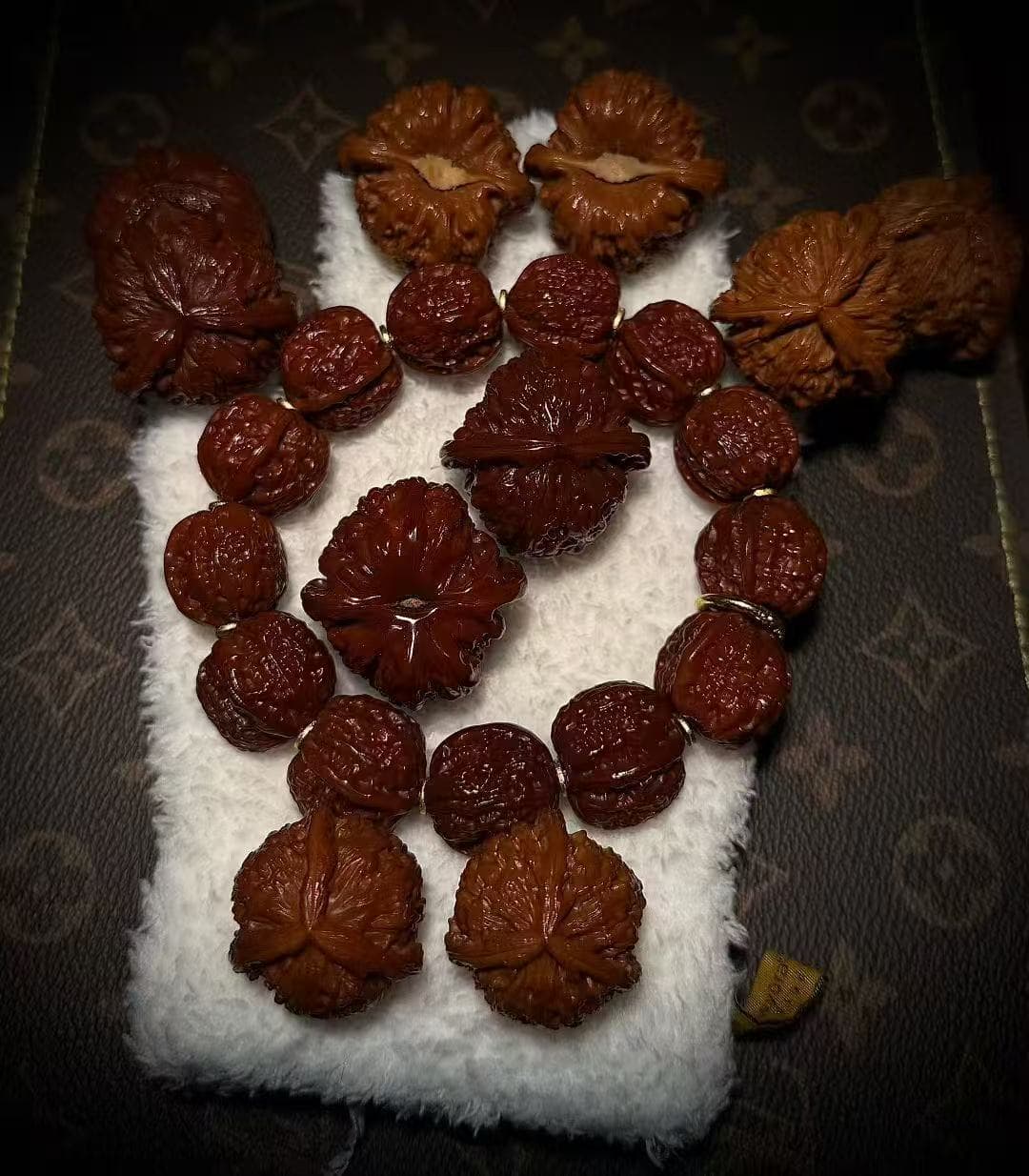
Original reference for describing a fuller outline
What to observe: Describe the visible body, shoulders, and base relationship before applying a collector label.
What this photo cannot prove: This photograph is not presented as a certified Lion Head specimen and cannot prove species or provenance.
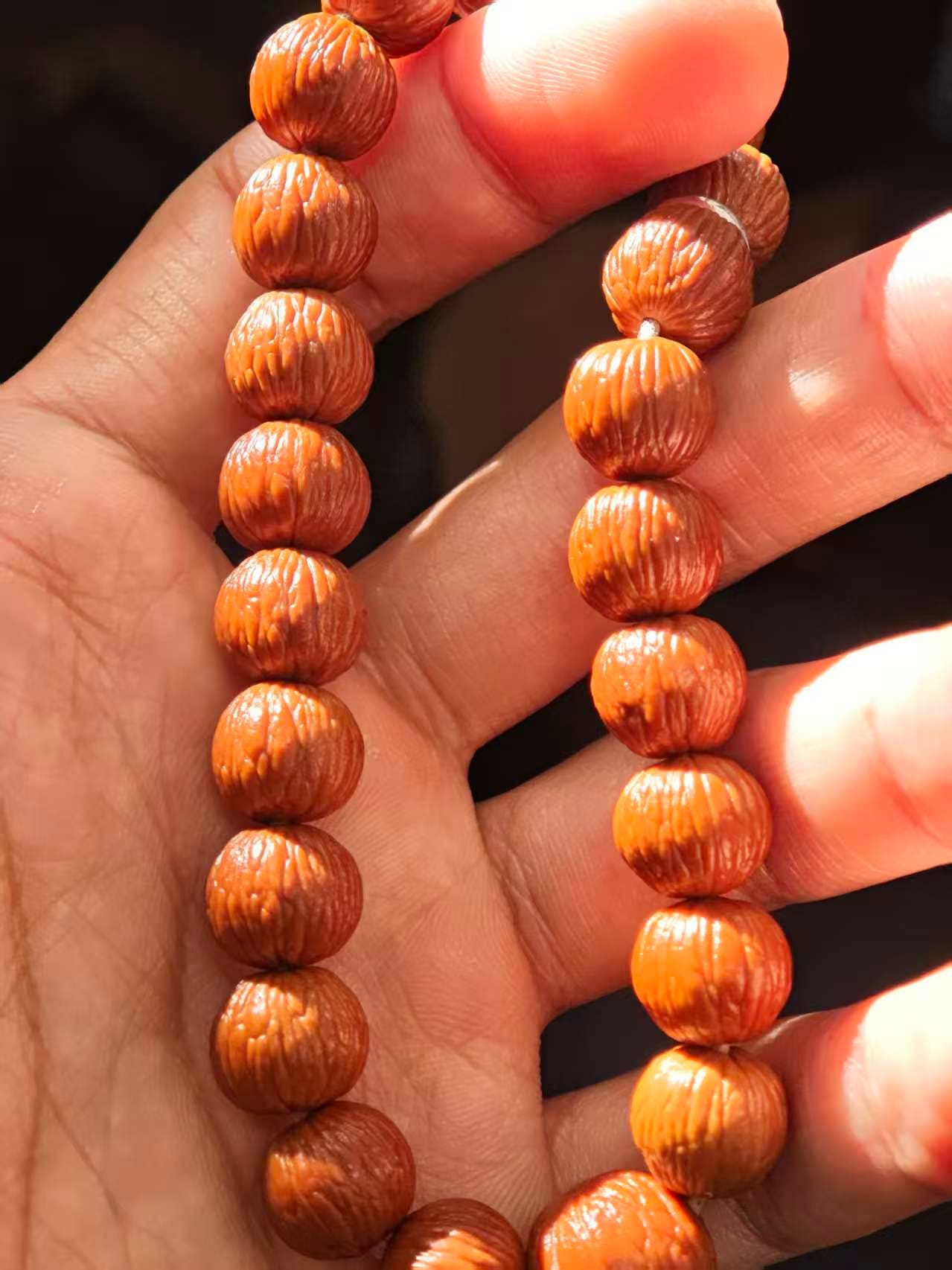
Original reference for comparing upper form and body
What to observe: Use the top-to-shoulder transition as one part of a multi-angle shape description.
What this photo cannot prove: A second angle, base view, measurements, and documented naming context are needed for a stronger classification.
Original photography and editorial analysis by Play Walnut Editor.
Real-world examples
- A pair is sold as Official Hat because the top looks flat in one image. Side and base photographs reveal a fuller round profile, so the label remains uncertain rather than proven.
- A Lion Head pair has the expected full body, but the two shells differ strongly in height and wear. The name does not compensate for weak internal pairing.
- Two sellers use different English names for similar outlines. Writing the visible features allows a buyer to compare the objects without depending on translation alone.
Common mistakes
- Treating collector names as exact species labels.
- Using one front photograph to confirm a three-dimensional shape.
- Assuming a famous name guarantees quality, comfort, or price.
- Ignoring regional naming differences and seller-specific terminology.
- Choosing a label rather than the better-condition pair.
Advice for first-time owners
Use Lion Head and Official Hat as training categories, not identity verdicts. Practise describing the shape in plain English and compare several documented examples. When the photos are incomplete, say “consistent with” or “listed as” rather than stating certainty. That honest language is more useful to another beginner than an unsupported confident label.
Key takeaways
- Lion Head tends toward a fuller rounded profile; Official Hat tends toward a more structured upper form.
- Multiple angles are necessary for a meaningful shape comparison.
- Collector naming varies and cannot prove botanical identity.
- Condition, pairing, size, and comfort still decide whether a pair suits the buyer.
Frequently asked questions
Which shape is better for beginners?
Neither name is universally better. Choose the pair with clearer condition, suitable size, good internal matching, and comfortable contact points.
Can a photograph prove Lion Head or Official Hat?
It can support a collector description when several angles agree, but naming conventions vary and appearance does not prove species or provenance.
Why do examples online look different?
Natural variation, subtype terms, regional vocabulary, camera angle, and seller labelling all contribute. Compare visible features instead of expecting a single rigid template.
The short version
The value of this comparison is not choosing a winner. It is learning to read shape across several views and to separate a useful collector label from a scientific or commercial guarantee. That distinction makes every later variety comparison more honest.
Sources, method, and limitations
- Peer-reviewed Wenwan walnut identity study — Used for the cautious point that collector names can cover more than one Juglans lineage and cannot prove species by appearance alone.
- Genomic research on Juglans hopeiensis — Used to explain why botanical identity is more complicated than a market label or shell outline.
- Play Walnut naming policy — Collector names are presented as practical morphology terms with explicit uncertainty, not as botanical, provenance, or valuation certificates.