
Evidence-led beginner guide
How to Compare Two Wenwan Walnut Pairs Side by Side
Comparing two pairs is harder than judging one because the most dramatic feature tends to dominate attention. A structured side-by-side check fixes the lighting, viewing angles, and criteria before you decide. The result is not a universal grade; it is a transparent decision about which pair better fits your purpose and hand.
Background
Sellers often photograph each pair under different conditions. One image may use warmer light, a darker background, or stronger sharpening, making colour and texture appear more impressive. Memory adds another problem: after switching between listings, a buyer remembers the strongest detail and forgets the weak areas. Placing both pairs under the same conditions—or requesting the same views—turns visual persuasion into comparable evidence.
In plain terms
A side-by-side comparison means judging both pairs with the same sequence: visible condition, internal match, size, shape, texture, handling feel, and documentation. The stronger choice should perform well across several criteria, not win only because of one bright photograph.
Why it matters
A fixed method reduces impulse buying and reveals trade-offs. Pair A may have clearer texture but weaker matching. Pair B may be less dramatic yet more comfortable and better documented. Once those differences are visible, the buyer can choose according to use rather than hype.
A step-by-step approach
- Define the purpose. Decide whether the pair is mainly for daily hand practice, visual study, or collecting. Comfort receives more weight for daily use; documentation and condition may receive more weight for a study example.
- Match the viewing conditions. Use neutral light, similar distance, and the same background. Ask for top, side, base, and close-up groove views of both pairs.
- Reject serious condition problems first. Before scoring beauty, check for open cracks, insect holes, heavy repairs, uncertain coatings, or missing views. A hidden structural issue outweighs small differences in texture.
- Compare the two halves within each pair. Look at width, height, outline, base, texture direction, and visible wear. Natural matching means related, not identical.
- Compare measurements and feel. Verify the width of both shells separately. If possible, handle each pair for several minutes and notice strain, slipping, pressure points, and balance.
- Write the trade-off in one sentence. For example: Pair A has clearer texture; Pair B has better condition and fit. This sentence prevents a single attractive trait from erasing the rest of the evidence.
How to judge it
- Condition is a gate: unresolved cracks or repairs should be understood before cosmetic scoring.
- Pairing is assessed within each pair, not by comparing one attractive walnut from each listing.
- Measurements from the seller are more useful than adjectives such as large, premium, or rare.
- The best pair for daily practice is the one that remains comfortable after the novelty fades.
Original photo evidence
These photographs were taken for Play Walnut. The notes describe only what the image can support and state what remains unknown.
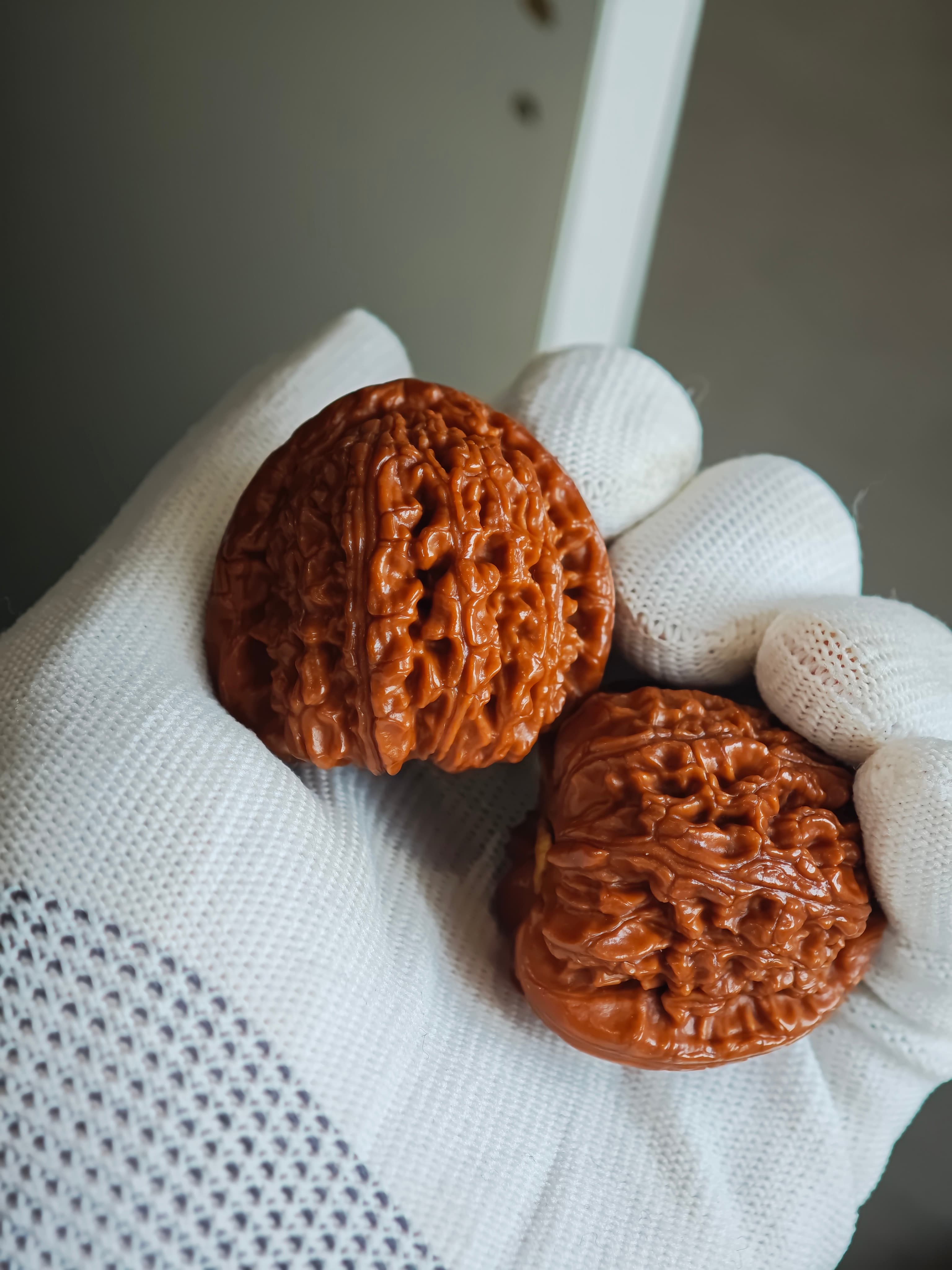
Original pairing-study reference
What to observe: Read the two shells as one set: compare outline and visible surface character before focusing on colour.
What this photo cannot prove: Weight, exact dimensions, underside condition, and treatment history cannot be established from this view.
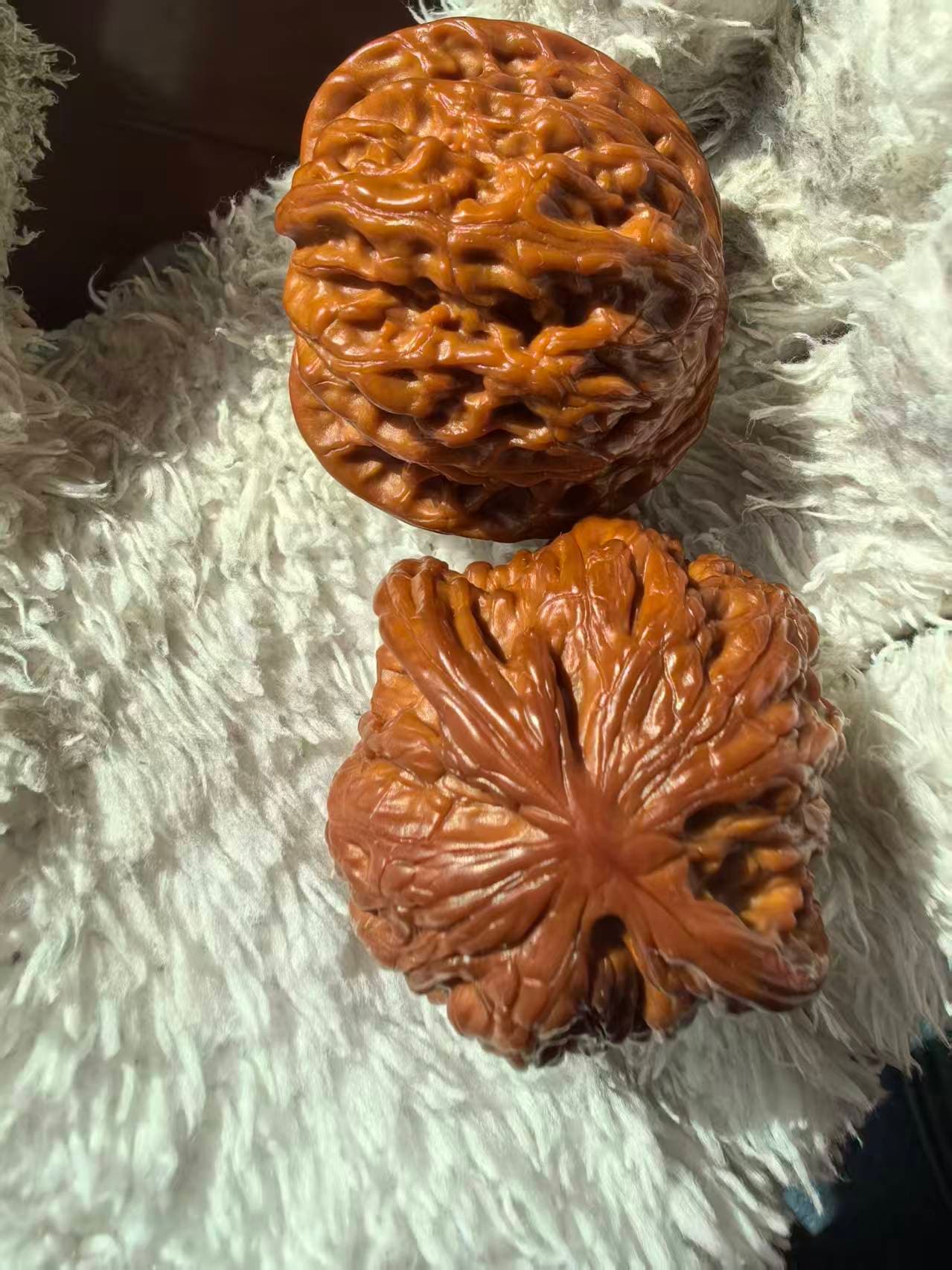
Original reference for repeating the same comparison order
What to observe: Use outline, high points, grooves, and base area as a consistent sequence so another pair can be judged the same way.
What this photo cannot prove: The category describes a study task, not a certified variety or commercial grade.
Original photography and editorial analysis by Play Walnut Editor.
Real-world examples
- Pair A appears darker in a warm listing photo, but neutral-light images reveal uneven coating around the base. Pair B is lighter but has a clearer untreated surface and complete views.
- Two pairs share similar widths. One has a noticeable height mismatch between its halves; the other is visually quieter but rotates more evenly in the hand.
- A seller gives precise measurements and photographs of a small defect. Another seller offers only praise and cropped top views. Better documentation makes the first pair easier to judge even if it is not flawless.
Common mistakes
- Comparing colour across photographs made with different lighting or editing.
- Scoring variety names as if they guarantee species, origin, or quality.
- Ignoring the underside because the top view looks balanced.
- Using price as a substitute for condition evidence.
- Choosing the more photogenic pair despite poorer fit in the hand.
Advice for first-time owners
Use a simple sheet with five headings: condition, pairing, size, texture, and comfort. Write one fact for each pair under every heading. Leave a field blank when the evidence is missing rather than guessing. A blank field is a reason to ask for another photograph or measurement, not a reason to assume the best.
Key takeaways
- Equal viewing conditions make comparison fairer.
- Condition and documentation should be checked before shine or name.
- Write down trade-offs so one dramatic feature cannot control the decision.
- The right choice depends on intended use, especially comfort for daily handling.
Frequently asked questions
Should the better-matched pair always win?
Not if it has poorer condition or is uncomfortable. Pairing is one criterion. An honest natural pair can show small differences and still be the better overall choice.
Can I compare colour from seller photographs?
Only cautiously. White balance, exposure, background, and editing change perceived colour. Ask for both pairs under the same neutral light and request unedited views when possible.
What breaks a close tie?
For a first daily pair, use condition and comfort. Those are difficult to improve later, while preferences about dramatic texture may change with experience.
The short version
A side-by-side decision becomes easier when the process stays the same for both pairs. Fix the conditions, check structural issues first, compare the two halves within each pair, and make the final choice according to use. The method is more valuable than any single score.
Sources, method, and limitations
- Peer-reviewed Wenwan walnut identity study — Used for the cautious point that collector names can cover more than one Juglans lineage and cannot prove species by appearance alone.
- Play Walnut original comparison protocol — The scorecard is an editorial method designed for beginner consistency. It does not produce an official grade, authenticity decision, or price.