
Evidence-led beginner guide
Wenwan Walnut Size Guide for Beginners
Size is easy to advertise and easy to misunderstand. A width in millimetres does not tell you how a pair will feel unless you also consider height, shape, texture, and the size difference between the two shells. For a beginner, fit matters more than owning the largest pair in a listing.
Background
Wenwan sellers commonly report the widest horizontal measurement. That number helps compare shells, but two walnuts with the same width may have very different heights, shoulders, bases, and contact points. The shape changes how much space the pair occupies in the palm and how far the fingers must travel. A moderate, well-matched pair can therefore feel more substantial and controlled than a larger but awkward one.
In plain terms
Size is the combination of measured width, height, overall proportions, and how closely the two walnuts match. Hand fit is the practical result: whether the pair can be rotated without strain, slipping, or constant repositioning.
Why it matters
An uncomfortable pair gets used less. Less use means fewer opportunities to learn movement, condition, and gradual surface change. Size also affects online buying because a single measurement can hide a mismatch or an unusual profile.
A step-by-step approach
- Ask how the measurement was taken. Request the widest width of each walnut separately and, when possible, height and thickness. A photograph of the calliper placement is more useful than a rounded number.
- Compare both halves. A small difference may be natural, but the seller should disclose the dimensions of both shells. Do not assume one listed number applies equally to the pair.
- Consider the profile. A broad low walnut and a tall narrow walnut can share a width while occupying the hand differently. Compare side views, shoulders, base, and tip.
- Use a hand-fit reference. If you cannot try the pair, hold two similarly sized rounded objects. The exercise is imperfect but reveals whether your fingers must stretch or whether the objects disappear in the palm.
- Test with slow movement. Rotate a comparable pair for several minutes. Look for pinching, numbness, forced grip, repeated slipping, or one shell dominating the movement.
- Choose the comfortable middle. When uncertain, prefer a moderate size with clear measurements and good internal matching. Experience with that pair will teach whether your next pair should be larger or smaller.
How to judge it
- A suitable pair fills the palm without forcing the fingers apart.
- Both shells should move with small finger adjustments rather than whole-hand repositioning.
- The two walnuts should be close enough in dimensions that one does not consistently dominate.
- Several minutes of slow practice should not create pain, numbness, or sharp pressure.
Original photo evidence
These photographs were taken for Play Walnut. The notes describe only what the image can support and state what remains unknown.
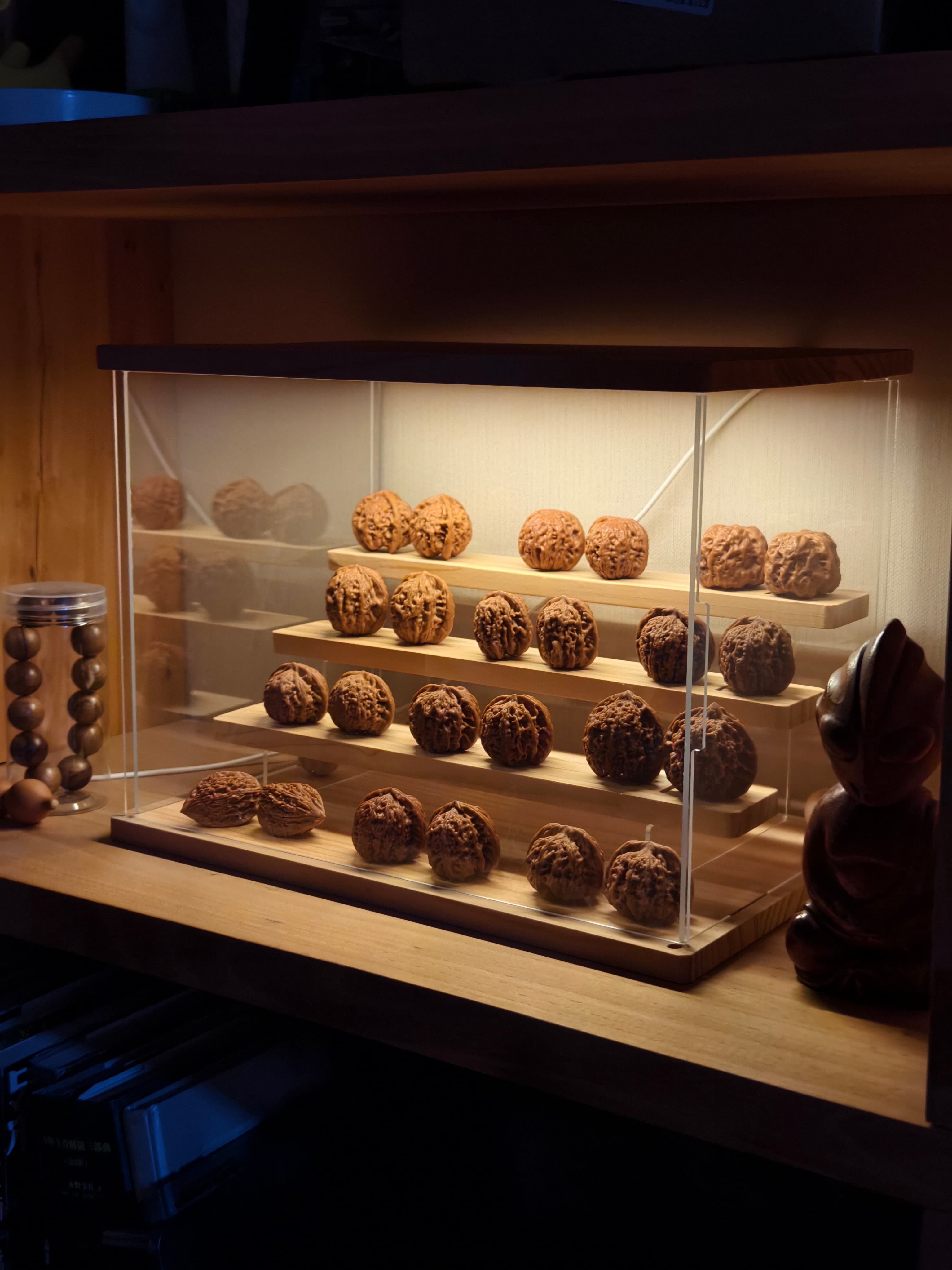
Original texture reference without a measurement scale
What to observe: The photograph is useful for studying the relationship between outline and texture, but it should not be used to estimate millimetres.
What this photo cannot prove: Without a ruler, calliper, or known object in the same plane, exact size cannot be inferred from the image.
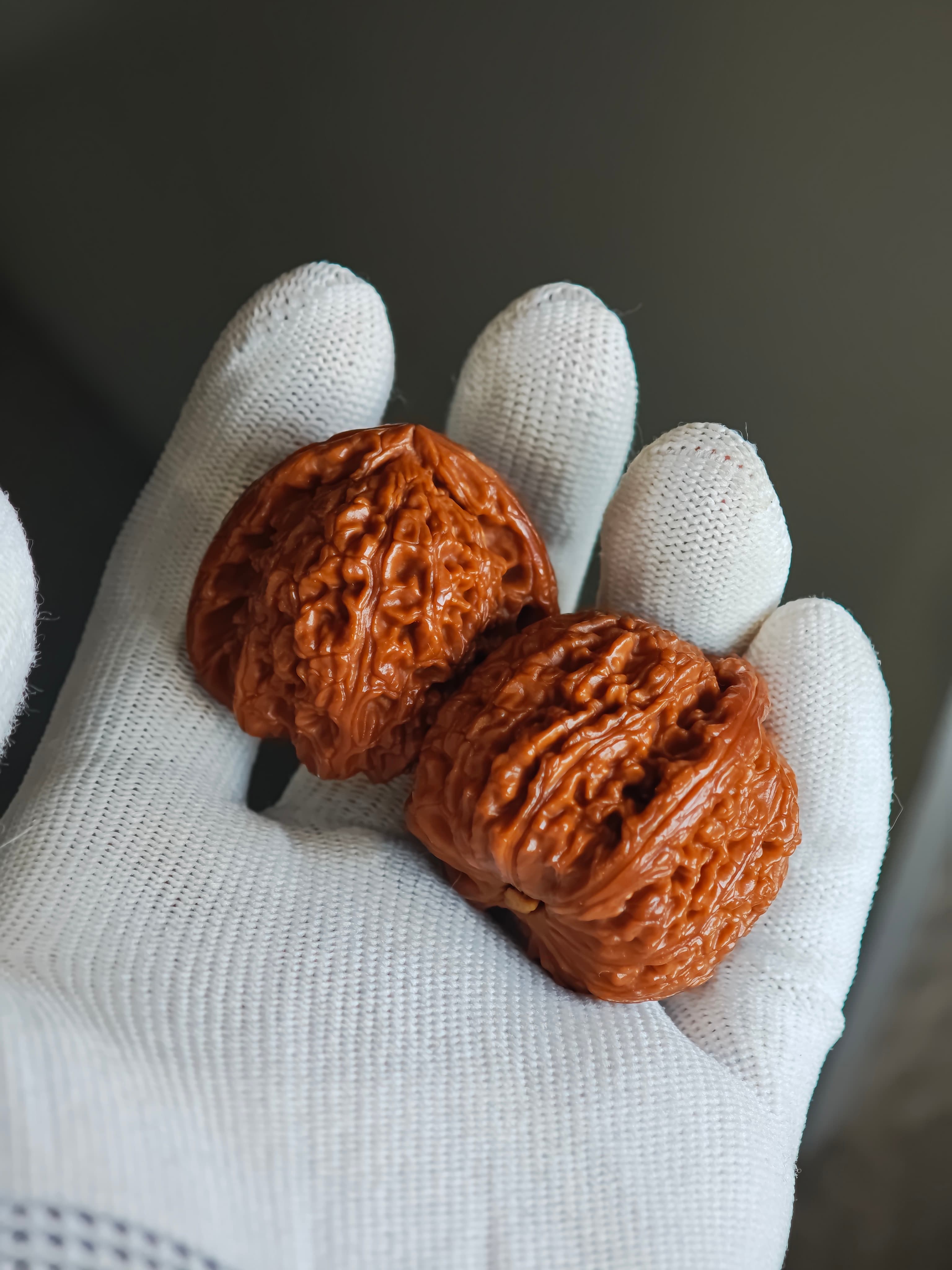
Original reference for shape-versus-size awareness
What to observe: Notice how profile and relief change perceived bulk; two shells with equal width can still feel different.
What this photo cannot prove: A photograph cannot establish weight, balance, hand fit, or the dimensions of an unseen second shell.
Original photography and editorial analysis by Play Walnut Editor.
Real-world examples
- A buyer with a smaller hand chooses a fashionable oversized pair. It looks impressive on a table but requires a tight grip, so practice becomes tiring after two minutes.
- Two pairs are both advertised at the same width. Side views show that one is much taller, making it feel more crowded between the fingers.
- A listing provides one width for the pair. On arrival, one shell is visibly larger and heavier. Separate measurements would have revealed the mismatch before purchase.
Common mistakes
- Assuming bigger automatically means better, rarer, or more valuable.
- Comparing only width while ignoring height and profile.
- Accepting one measurement without confirming both shells.
- Ignoring comfort because the pair photographs well.
- Using a universal recommended number without considering the individual hand.
Advice for first-time owners
There is no single correct beginner size. Start with accurate measurements and a profile that does not require strain. If you already own a pair, record its dimensions and note exactly what feels comfortable or awkward. That personal reference is more useful than a seller’s claim that a certain size suits everyone.
Key takeaways
- Width is useful, but height, profile, and internal matching complete the picture.
- Fit and comfort matter more than the largest available number.
- Ask for measurements of both walnuts and a clear view of the calliper placement.
- Stop handling if the pair causes pain, numbness, or persistent irritation.
Frequently asked questions
What millimetre size is best for beginners?
There is no universal figure because hand size and walnut profile vary. A moderate pair you can rotate without strain is a safer starting point than a large pair chosen for status.
How closely should the two walnuts match in size?
Natural variation is expected. The important question is whether the difference is visible or disruptive in the hand. Ask for separate measurements and decide with the full profile, not one number.
Does a bigger pair develop patina faster?
Size alone does not determine surface change. A large uncomfortable pair may be handled less, so it can change more slowly in practice.
The short version
Treat size as ergonomics, not status. Measure both shells, look at the profile, and let comfort decide. A pair that fits will be handled, studied, and enjoyed more consistently than a larger pair that fights the hand.
Sources, method, and limitations
- Play Walnut measurement protocol — The method prioritises separate measurements, multiple angles, and comfort. It is an editorial buying aid rather than an industry grading standard.
- Peer-reviewed Wenwan walnut identity study — Used for the cautious point that collector names can cover more than one Juglans lineage and cannot prove species by appearance alone.