
Evidence-led beginner guide
Wenwan Walnut Texture Guide: How to Read the Surface
Texture is more than how deep a shell looks in a dramatic photograph. Beginners need to read how ridges flow, where grooves end, how the two shells relate, and whether polish, filler, or lighting is hiding the surface. A slow scan is more useful than calling a pattern rare or premium.
Background
Collector vocabulary often compresses several observations into one word. “Deep” may refer to contrast, shadow, ridge height, or image sharpening. “Natural” may mean irregular flow rather than mechanical repetition. Because market names and botanical identity do not map neatly from appearance, texture should first be described as visible evidence. Variety identification requires more context than a single close-up.
In plain terms
Texture is the three-dimensional pattern of ridges, grooves, seams, high points, and transitions across the shell. Texture clarity describes whether those features remain readable without heavy polish, filler, dirt, or photographic manipulation.
Why it matters
Texture affects feel, visual comparison, cleaning difficulty, and the way high-contact areas change. It also provides places where cracks, residue, or repair can hide. Learning to scan the whole surface helps buyers ask better questions without pretending a photograph can certify a name.
A step-by-step approach
- Start with the silhouette. Look at the complete outline before zooming in. This prevents one striking groove from being mistaken for the character of the whole shell.
- Follow several ridges. Trace them from top toward base. Natural flow can branch and vary; a photograph that shows only one patch is not enough for comparison.
- Inspect protected grooves. Look for abrupt colour changes, glossy filler, packed residue, or edges that disappear unnaturally.
- Compare high points. Raised areas receive more contact and can become smoother. Compare both walnuts to see whether the pattern of wear is understandable.
- Change the light direction. Side light reveals relief; flat light reveals colour and possible surface work. Ask for both instead of relying on a single dramatic image.
- Separate description from identity. Write what you can see—broad ridge, narrow groove, worn high point—before attaching any variety or value claim.
How to judge it
- Readable texture continues across more than one angle rather than appearing only in a cropped patch.
- Natural irregularity can exist within an overall related pattern; identical repetition is not required for a good pair.
- Grooves should be examined for residue, filler, and hidden structural lines.
- Texture quality does not override serious condition problems or poor fit.
Original photo evidence
These photographs were taken for Play Walnut. The notes describe only what the image can support and state what remains unknown.
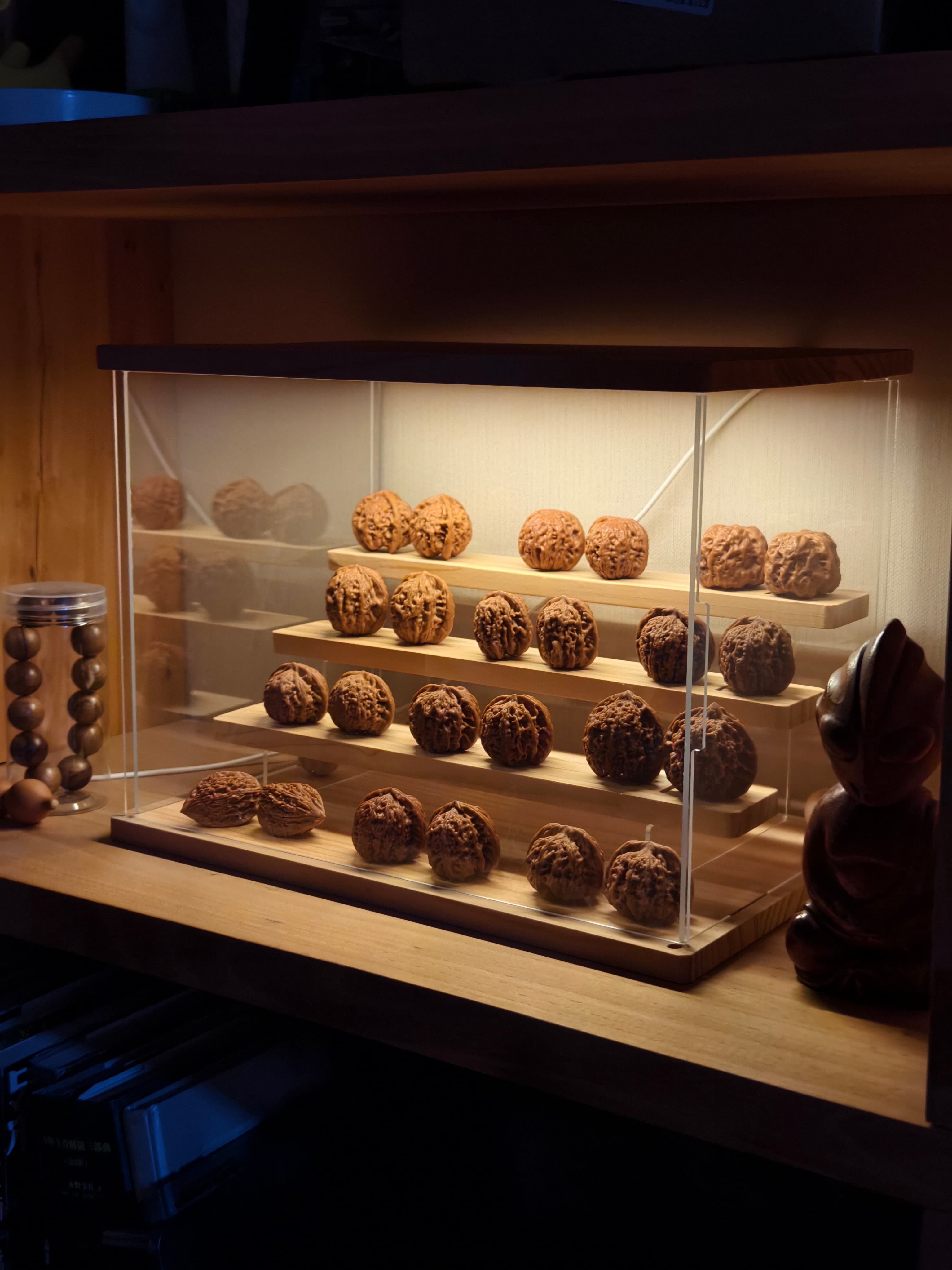
Original texture-study photograph
What to observe: Trace more than one ridge and note how the grooves branch instead of judging the darkest shadow alone.
What this photo cannot prove: The image supports texture practice but cannot certify species, origin, rarity, or treatment history.
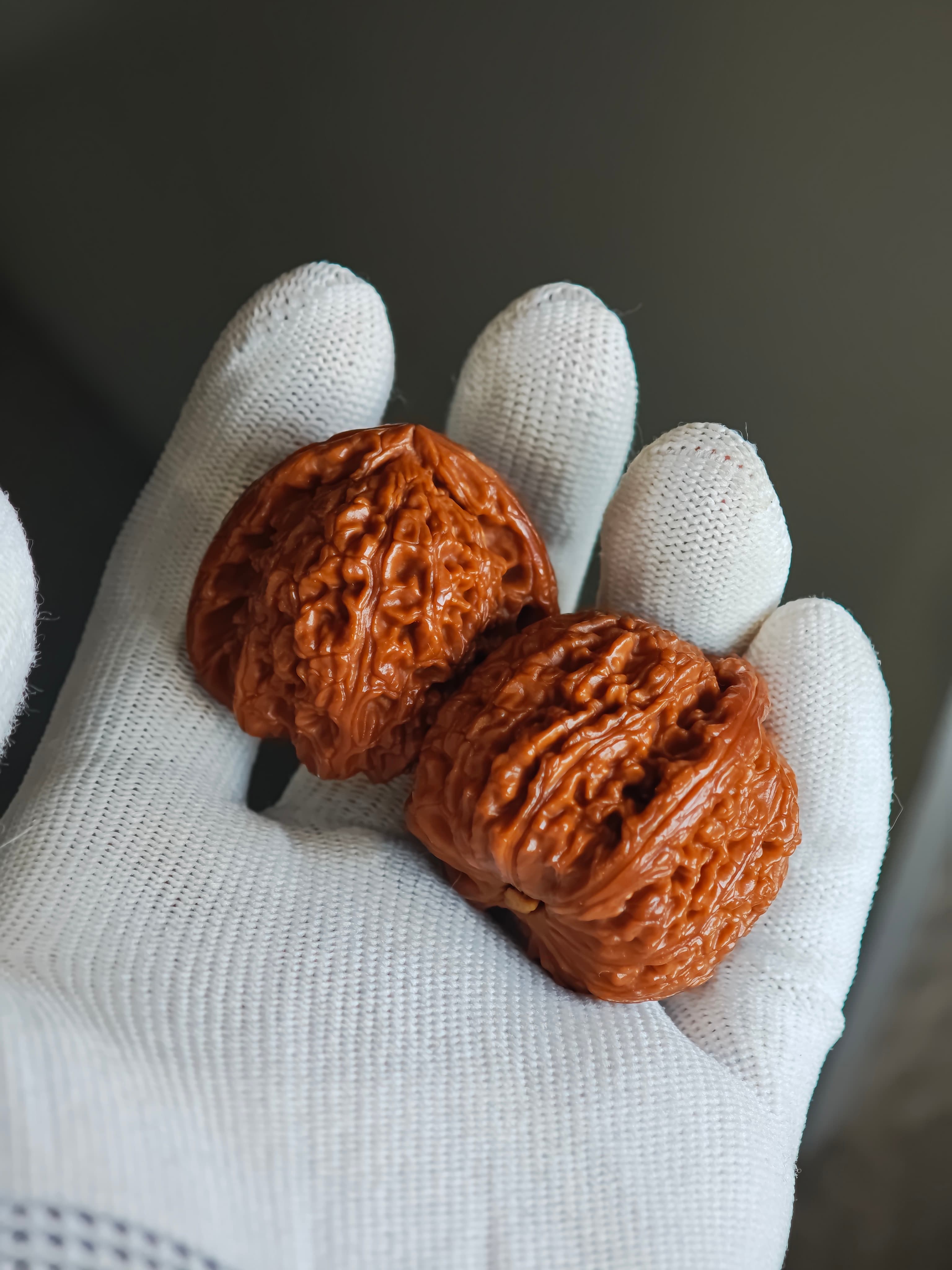
Original relief comparison reference
What to observe: Compare the clarity of raised and protected areas, then look for transitions that may be hidden by glare.
What this photo cannot prove: Depth cannot be measured reliably without scale, multiple light directions, and additional angles.
Original photography and editorial analysis by Play Walnut Editor.
Real-world examples
- A listing uses sharp side light that makes shallow relief look dramatic. A second flat-light photograph shows that the surface is readable but less deep than the first image suggested.
- Two shells share a similar outline, yet one has heavily softened high points and the other retains crisp relief. The difference may reflect starting condition or treatment and deserves disclosure.
- A glossy patch bridges a groove instead of following it. The buyer asks for a macro side view before deciding whether it is residue, filler, or only reflected light.
Common mistakes
- Using the word deep without comparing scale, angle, or lighting.
- Assuming an irregular shell is fake or a very regular shell is authentic.
- Ignoring condition because the relief looks impressive.
- Cleaning grooves aggressively to make the texture look sharper.
- Declaring a species or origin from a single close-up photograph.
Advice for first-time owners
Practise with several original photographs and describe each one without variety names. Use plain nouns and comparisons: wider groove, rounded ridge, worn high point, filled-looking gap. Once the visible observations are clear, consult the Wiki and research for terminology. This order keeps a label from controlling what your eyes actually see.
Key takeaways
- Read the whole shell before judging one dramatic patch.
- Use different light directions to separate relief from colour and shine.
- Texture, condition, and pairing should be considered together.
- Appearance alone cannot prove botanical identity or provenance.
Frequently asked questions
Does deeper texture mean a better pair?
Not by itself. Clarity, condition, pairing, fit, and personal preference matter. Very deep grooves can also hold more dust and make inspection harder.
Can texture identify a Wenwan walnut species?
Texture can support a collector description, but research shows Wenwan walnuts involve complex Juglans relationships. A photograph is not genetic or provenance evidence.
Why are some high points smoother?
Raised areas receive more contact and may have been brushed, polished, or handled differently. Compare both halves and ask about treatment rather than assuming one cause.
The short version
Texture reading is a discipline of description. Follow the surface across angles, inspect protected areas, and record what is visible before deciding what a market name might mean. That habit produces better questions and safer comparisons.
Sources, method, and limitations
- Peer-reviewed Wenwan walnut identity study — Used for the cautious point that collector names can cover more than one Juglans lineage and cannot prove species by appearance alone.
- Genomic research on Juglans hopeiensis — Used to explain why botanical identity is more complicated than a market label or shell outline.
- Play Walnut visual inspection method — The scan order is based on original photographs and conservative description. It is not a laboratory identification method.