
Evidence-led beginner guide
How to Play With Wenwan Walnuts: A Safe Beginner Routine
Playing Wenwan walnuts means rotating a pair in one hand with controlled finger movements. The goal is not speed, loud contact, pain tolerance, or a promised health effect. A beginner should first learn how the pair sits, how each shell travels, and how to stop before the hand becomes strained.
Background
The English phrase “play walnut” can sound like a game or application, but this site uses it for the hand practice associated with Chinese Wenwan walnuts. People may enjoy the movement, the tactile surface, collecting, or observing gradual change. Those cultural and personal reasons do not make the practice a medical treatment. Any claim about curing disease or guaranteeing hand health requires evidence beyond this hobby guide.
In plain terms
A basic rotation places two walnuts in one palm and moves them around each other with the thumb and fingers. The shells may touch lightly, but forceful striking is unnecessary and can chip tips or create stress at weak areas.
Why it matters
A gentle movement protects the shell and helps the beginner notice fit, balance, and pressure points. Starting slowly also makes it easier to distinguish normal unfamiliarity from pain, numbness, or irritation that should end the session.
A step-by-step approach
- Inspect the pair first. Check for open cracks, sharp broken areas, loose repair, sticky coating, or grit. Do not practise with a shell that may worsen or cut the skin.
- Wash and dry your hands. Clean, dry hands reduce residue in the grooves and give a more predictable grip. Avoid applying hand cream immediately before practice.
- Set the pair in the palm. Let one walnut sit nearer the thumb and the other nearer the outer fingers. The hand should remain relaxed rather than clamped.
- Move one shell at a time. Use the thumb to advance the near shell while the fingers guide the other back. Small movements are easier to control than a whole-hand squeeze.
- Practise for a few minutes. Pause after two to five minutes during the first sessions. Notice slipping, sharp pressure, skin rubbing, or fatigue.
- Stop and document problems. End the session for pain, numbness, swelling, persistent redness, a new crack, or a loose repair. Do not train through a warning sign.
How to judge it
- The hand remains mostly relaxed and the fingers guide rather than crush the shells.
- The pair can rotate without repeated hard collisions.
- Movement becomes smoother with practice but does not need to become fast.
- A suitable pair does not create persistent pain, numbness, or sharp pressure.
Original photo evidence
These photographs were taken for Play Walnut. The notes describe only what the image can support and state what remains unknown.
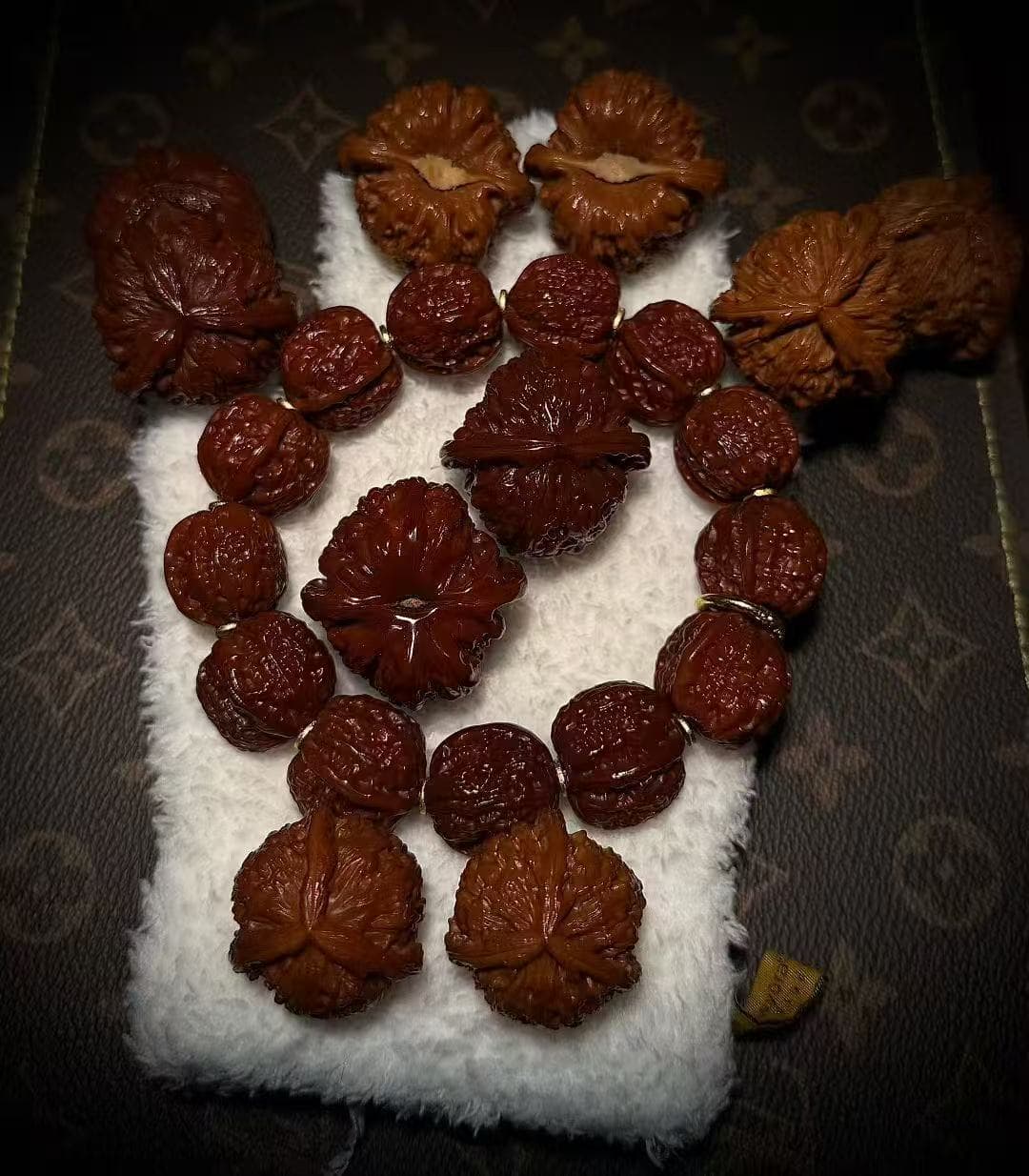
Original whole-pair reference before handling
What to observe: Use the photograph as a pre-session condition record and note any existing marks before movement begins.
What this photo cannot prove: A still image cannot show weight, grip, motion quality, or whether the pair is safe for a particular hand condition.
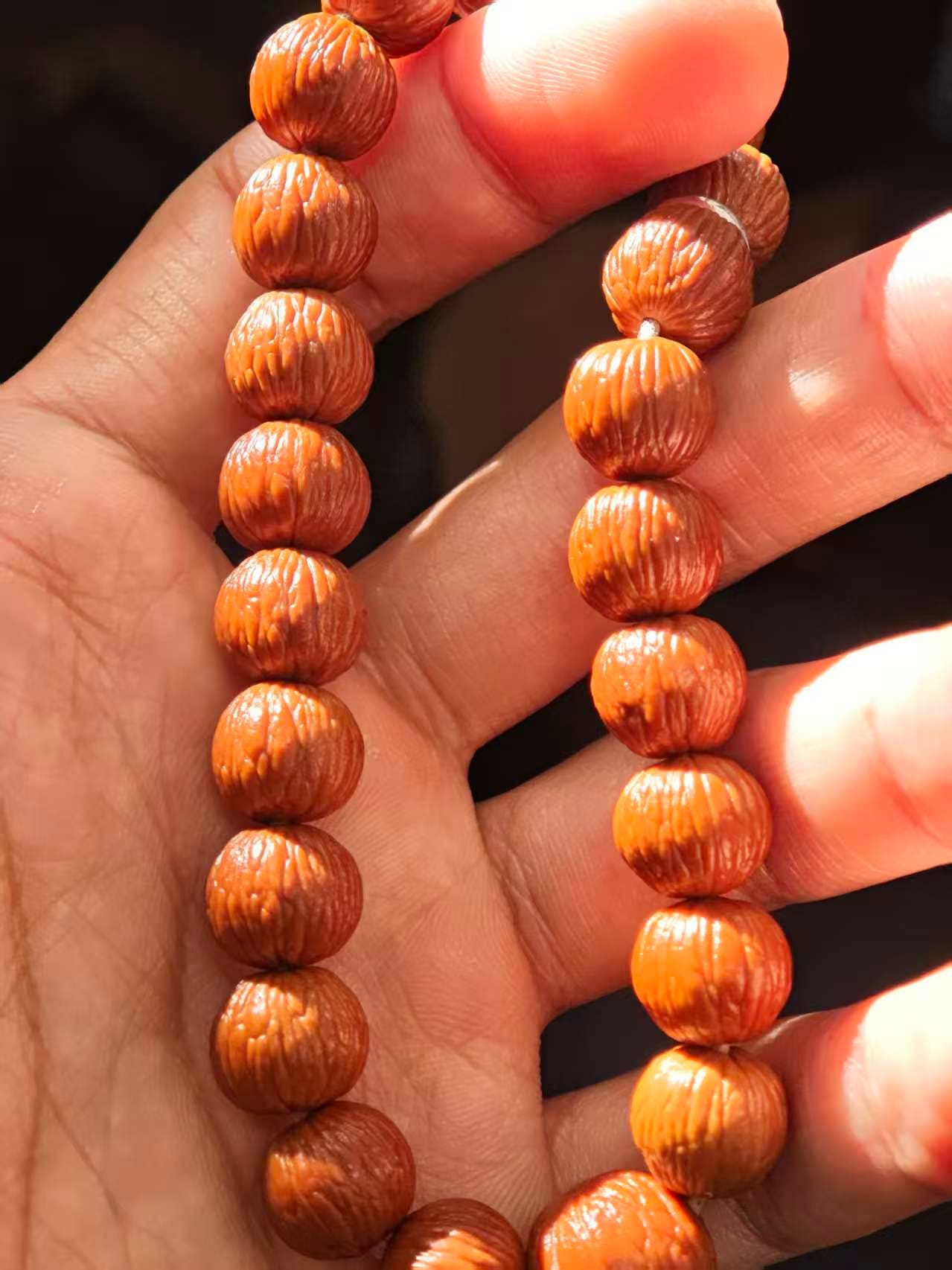
Original reference for learning the pair as one object
What to observe: Study how the two shells relate in outline before deciding where each should sit in the palm.
What this photo cannot prove: The image is educational and does not demonstrate a medical benefit or a universal grip.
Original photography and editorial analysis by Play Walnut Editor.
Real-world examples
- A beginner tries to copy a fast video and repeatedly strikes the tips. Slowing to one controlled movement at a time makes the path understandable and protects the pair.
- A large pair forces the fingers apart and produces numbness. Changing to a smaller reference pair solves the fit problem; more practice would not have fixed the size.
- Hand cream makes the shells slippery and attracts dust. Clean, dry hands restore control without adding a grip product.
Common mistakes
- Squeezing hard because the pair slips.
- Treating speed or noise as proof of skill.
- Allowing repeated forceful tip-to-tip collisions.
- Practising through pain, numbness, or broken skin.
- Using the hobby as a substitute for medical assessment or rehabilitation advice.
Advice for first-time owners
Begin with the slowest movement that keeps both shells under control. If the pair is too large, too angular, damaged, or coated, solve that problem before increasing practice. A quiet five-minute session repeated comfortably teaches more than a long session driven by speed. People with an existing hand condition should ask a qualified clinician whether repetitive gripping is appropriate for them.
Key takeaways
- Control and comfort matter more than speed or sound.
- Use clean, dry hands and inspect the pair before practice.
- Stop for pain, numbness, skin damage, or a new shell defect.
- Wenwan handling is a cultural and collecting hobby, not a medical treatment.
Frequently asked questions
Should the walnuts hit each other?
Light incidental contact may occur, but forceful repeated collisions are unnecessary. Slow the motion if tips or edges strike hard.
How long should a beginner practise?
Start with a few comfortable minutes and stop before fatigue changes the movement. There is no required daily duration.
Can playing walnuts treat hand pain?
This site makes no medical claim. Repetitive gripping can be unsuitable for some conditions. Stop for symptoms and consult a qualified health professional when needed.
The short version
A safe beginner routine is simple: inspect the pair, clean and dry the hands, move slowly, keep the grip relaxed, and stop at warning signs. The purpose is to learn a tactile tradition and enjoy the pair, not to prove speed or endurance.
Sources, method, and limitations
- Play Walnut beginner handling protocol — This routine is intentionally conservative and based on comfortable practice with original walnut pairs. It is not medical or rehabilitation advice.
- Peer-reviewed Wenwan walnut identity study — Used for the cautious point that collector names can cover more than one Juglans lineage and cannot prove species by appearance alone.